Hong Kong launches offshore yuan bond index to advance currency internationalization
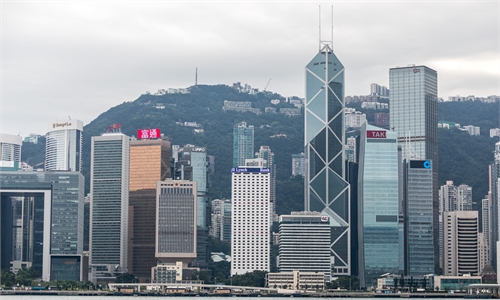
Hong Kong file photo
Hong Kong Exchanges and Clearing Limited (HKEX) on Monday launched the HKEX Offshore RMB Bond Index, giving global investors a benchmark for yuan-denominated bonds issued in Hong Kong and laying the groundwork for new funds that could accelerate yuan's use in international investment, the Securities Times reported.
The index is HKEX's first branded fixed-income index and Hong Kong's first benchmark for locally issued dim sum bonds, as yuan-denominated bonds issued outside the Chinese mainland are known. It covers eligible offshore yuan-denominated bonds, government-related and corporate bonds listed on the Stock Exchange of Hong Kong, lodged with the Central Money markets Unit (CMU), or both, said the report.
The report noted that the Bloomberg Index Services Limited will administer and calculate the benchmark, which will serve as the parent index for a series of co-branded indices. Several asset managers have already arranged to license the indices from Bloomberg and are preparing products such as exchange-traded funds (ETFs) and index funds. Such products could give investors exposure to a basket of offshore yuan bonds through a single fund.
HKEX Chief Executive Officer Bonnie Y Chan said in the report that a widely recognized benchmark would make offshore yuan assets more visible and easier to invest in. Broader participation by international investors could deepen the market and improve liquidity, helping advance the internationalization of the yuan.
The launch comes as the yuan gains ground as a funding currency in Hong Kong, a trend Hong Kong Financial Secretary Paul Chan Mo-po highlighted in his blog on Sunday.
Dim sum bonds accounted for 38 percent of total issuance of Hong Kong-listed bonds in the first three quarters of 2026, surpassing US dollar bonds for the first time. The yuan became the largest issuance currency in the city's listed bond market, with issuers ranging from mainland technology companies to overseas governments and financial institutions, according to Chan.
Hong Kong handles about three-quarters of global offshore yuan payments and has a yuan liquidity pool of about 1.3 trillion yuan. Demand from trade underpins the currency's ever-growing offshore use. The share of China's goods trade settled in yuan rose from about 18 percent in 2022 to nearly 30 percent in the first half of 2026, Chan said.
Global Times
RELATED ARTICLES