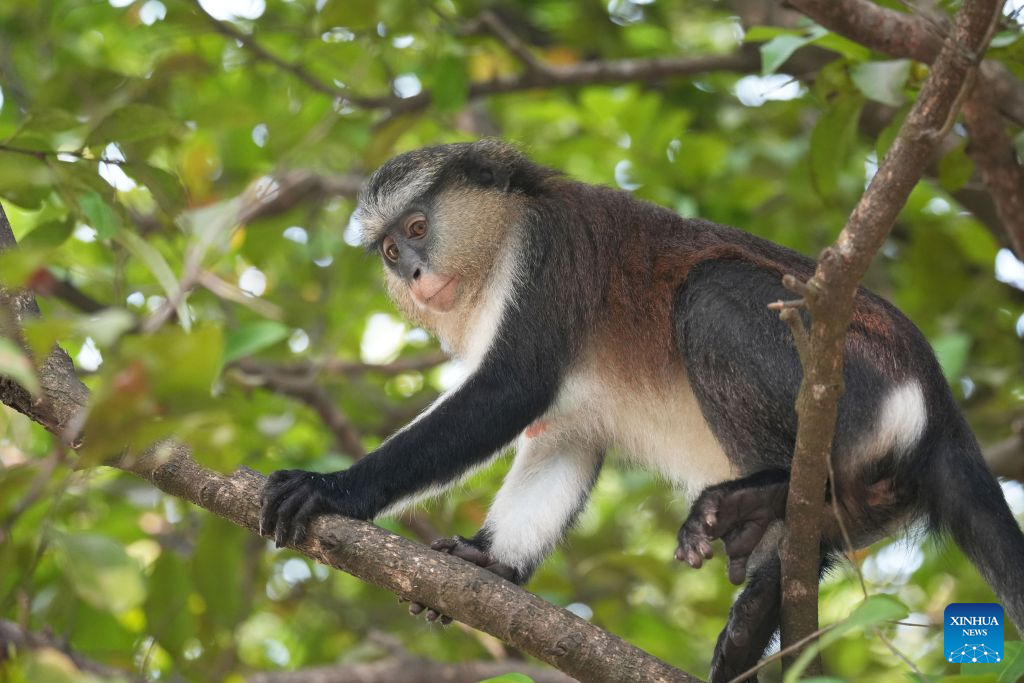
This photo taken on Nov. 17, 2026 shows a Mona monkey at the Lekki Conservation Centre in Lagos, Nigeria. The Mona monkey, known as Cercopithecus mona, is a primate native to West Africa. It mainly inhabits lowland forests but can also adapt to riverine forests and mangroves. The species has a varied diet consisting mainly of fruits and seeds, as well as leaves, flowers and insects. Despite its ability to adapt to different habitats, it faces threats from habitat loss and hunting. (Xinhua/Hong Zehua)
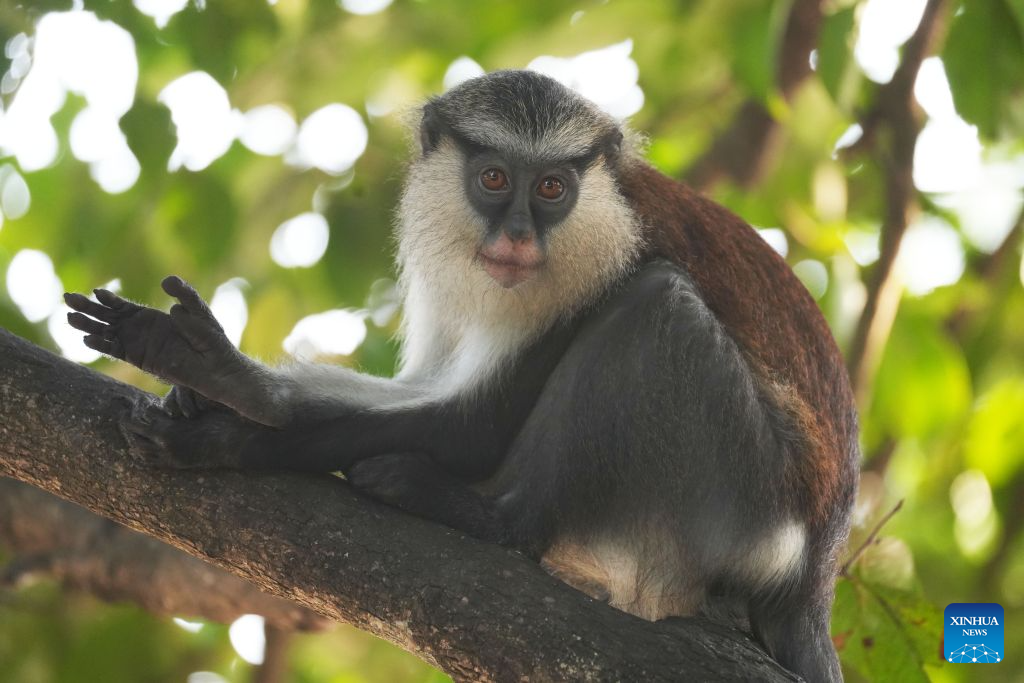
This photo taken on Nov. 17, 2026 shows a Mona monkey at the Lekki Conservation Centre in Lagos, Nigeria. The Mona monkey, known as Cercopithecus mona, is a primate native to West Africa. It mainly inhabits lowland forests but can also adapt to riverine forests and mangroves. The species has a varied diet consisting mainly of fruits and seeds, as well as leaves, flowers and insects. Despite its ability to adapt to different habitats, it faces threats from habitat loss and hunting. (Xinhua/Zhang Jian)
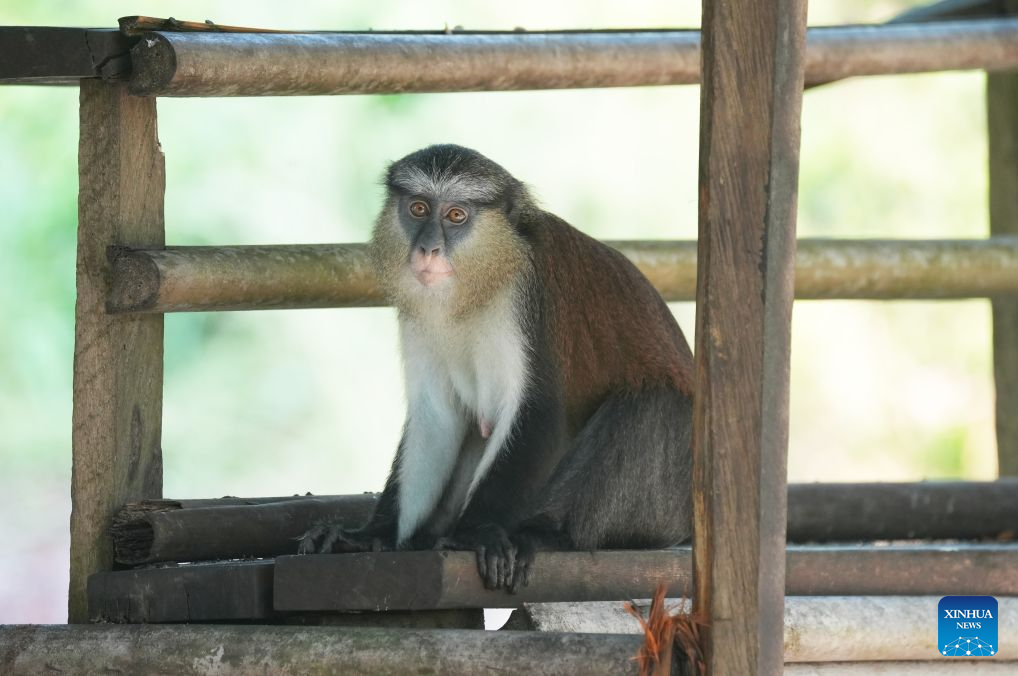
This photo taken on Nov. 17, 2026 shows a Mona monkey at the Lekki Conservation Centre in Lagos, Nigeria. The Mona monkey, known as Cercopithecus mona, is a primate native to West Africa. It mainly inhabits lowland forests but can also adapt to riverine forests and mangroves. The species has a varied diet consisting mainly of fruits and seeds, as well as leaves, flowers and insects. Despite its ability to adapt to different habitats, it faces threats from habitat loss and hunting. (Xinhua/Hong Zehua)
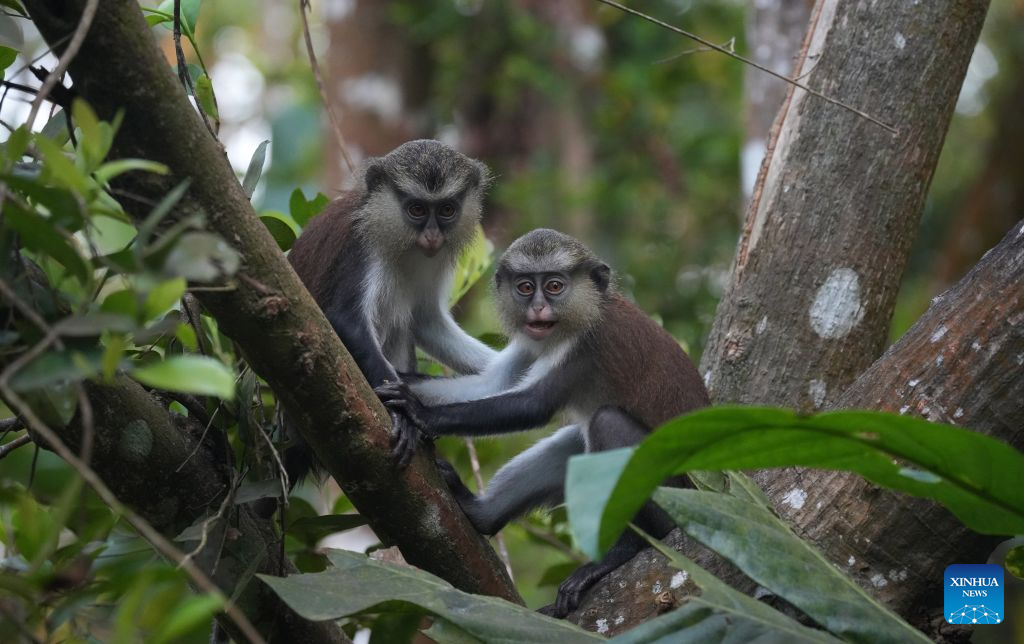
This photo taken on Nov. 17, 2026 shows Mona monkeys at the Lekki Conservation Centre in Lagos, Nigeria. The Mona monkey, known as Cercopithecus mona, is a primate native to West Africa. It mainly inhabits lowland forests but can also adapt to riverine forests and mangroves. The species has a varied diet consisting mainly of fruits and seeds, as well as leaves, flowers and insects. Despite its ability to adapt to different habitats, it faces threats from habitat loss and hunting. (Xinhua/Zhang Jian)
