BUSINESS / PRESS RELEASE
The pinnacle of power! With a 98.58% screen-to-body ratio, LONGi unveils world's first full-surface "Tri-Proof" module
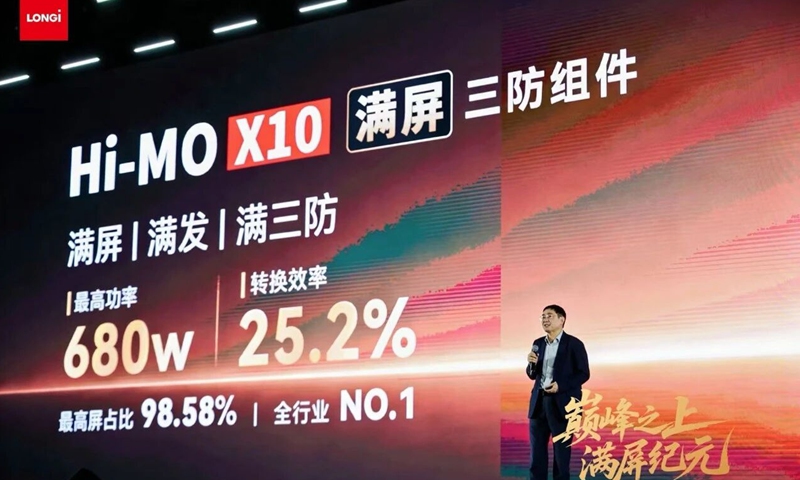
Zong Baoshen, chairman of LONGi Green Energy Technology Co., Ltd., unveils a new product.
A single national standard has redefined the criteria for entry into China's photovoltaic sector.
In June this year, a new national energy efficiency standard for the photovoltaic industry was released. This standard has shifted efficiency from a competitive variable to a baseline requirement, narrowing the scope for companies to differentiate themselves based on efficiency alone.
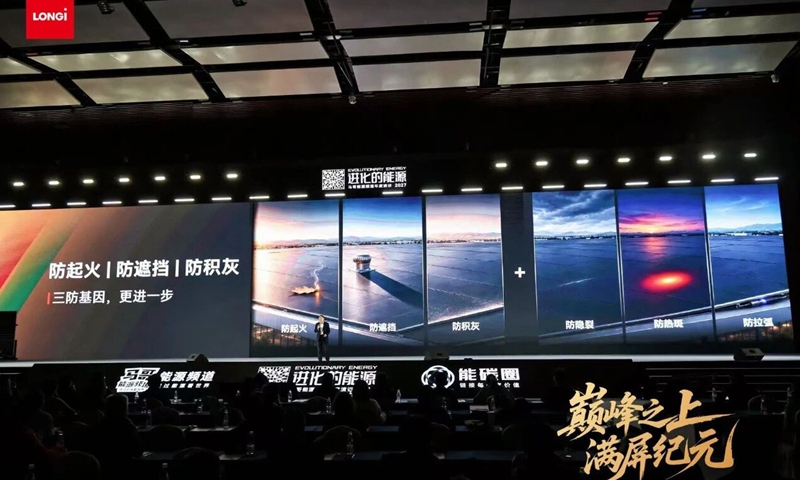
New product launch by LONGi Green Energy Technology Co., Ltd.
Yet in the photovoltaic industry, the pursuit of higher module efficiency remains an unshakable "first principle."Twenty years ago, the conversion efficiency of a conventional solar module was only about 12 percent; today, it has surpassed 25 percent. Using the same amount of glass and silicon wafers, the power output (in watts) of a module has nearly doubled. More importantly, as modules account for approximately 40 percent of the total cost of a photovoltaic system, every 1 percentage point increase in efficiency - assuming other associated inputs remain constant - drives a 4 percent reduction in the cost of BOS (Balance of System) components.
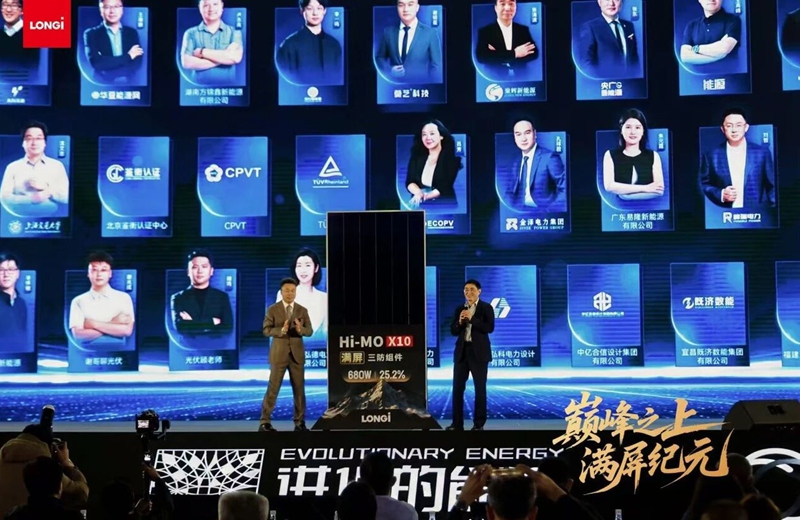
LONGi Green Energy appoints Ma Yifeng as chief ambassador for its new products
"The theoretical efficiency limit for crystalline silicon solar cells is 29.4 percent - a ceiling set by nature itself," stated Zhong Baoshen, chairman and general manager of LONGi Green Energy, during a year-end keynote address on the "Ma Ge Energy Channel" on November 17. Meanwhile, in LONGi's own laboratories, the company's HIBC technology has already pushed efficiency to 28.29 percent - just a single step away from that ultimate limit.