BUSINESS / PRESS RELEASE
Bringing sustainable power services closer to daily life — Observations on the sustainable development practices of State Grid Suzhou Power Supply Company
Early in the morning at the Suzhou North High-Speed Railway Station, electric bicycles are wheeled into a shelter topped with photovoltaic (PV) panels. With a quick scan and a plug-in, the process is seamless. "Charging is incredibly convenient — just a scan with my phone, and it’s ready to go. It’s affordable, safe, and reliable," says a commuter who works nearby. In Weijinyuan, an older residential complex in the Suzhou Industrial Park, Mr. Chen — an electric vehicle (EV) owner — can simply head downstairs and have a rail-mounted robotic system deliver a charging unit right to his parking space. Meanwhile, in Donglin village, Taicang, expansive rice paddies sit alongside rooftops adorned with solar panels, as a "zero-carbon village" quietly takes shape.
While these scenes may appear disparate, they all point toward a common theme: sustainable development. As a key energy enterprise rooted in this major industrial hub, State Grid Suzhou Power Supply Company is evolving from a traditional "electricity provider" into a "partner" for corporate green transitions and a "pioneer" in urban sustainable development. It is translating grand objectives — such as green, low-carbon growth, rural revitalization, and social governance — into tangible, accessible improvements in people’s everyday lives.
Green transition: A ‘carbon ledger’ and a robot that finds your car
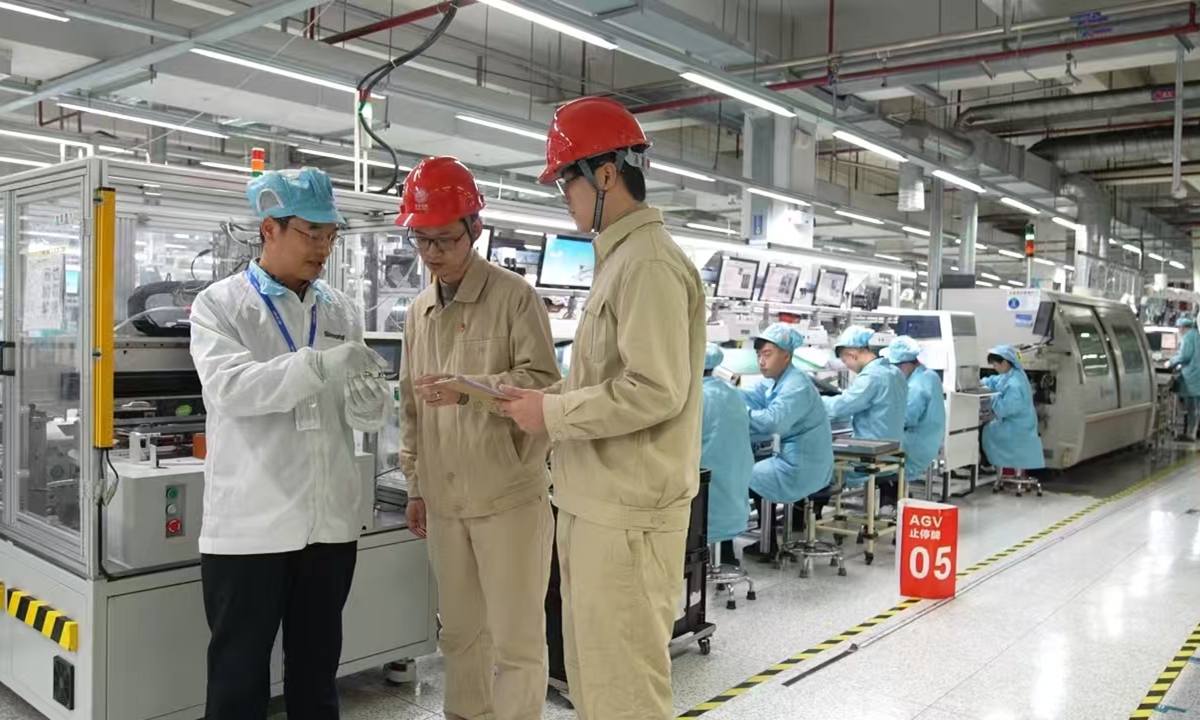
By the end of 2025, Suzhou is projected to have over 37,000 foreign trade enterprises with active import and export operations. As regions like Europe introduce mandatory requirements for disclosing the carbon footprint of products, many export-oriented businesses have found themselves grappling with the challenge of maintaining a "carbon ledger." How can small and medium-sized enterprises (SMEs) be encouraged to reduce carbon emissions in a practical, achievable way? State Grid Suzhou Power Supply Company’s solution is to transform the energy data it possesses into a public service.
Gaining a clear view of carbon footprints — enhancing both the quality and efficiency of carbon management — has made the process far more manageable for businesses. The company has developed a "cloud-edge collaborative" carbon footprint management platform. In partnership with SGS (Société Générale de Surveillance), Soochow University, and various financial institutions, it has established a collaborative model — featuring "front-end calculation, mid-platform analysis, and back-end certification" — that allows for real-time carbon accounting based on production data, all without the need for that data to leave the enterprise’s own premises. "Through this mechanism, we hope to ensure that small and medium-sized enterprises (SMEs) are not left behind during the green transition," says the project lead at the company.
The changes are tangible. By leveraging "electricity big data + carbon footprint management" services, electronics manufacturing firms can save over one million yuan in annual energy costs and reduce carbon emissions by more than 1,000 tons. The platform has boosted the overall efficiency of carbon footprint verification and certification by approximately 85 percent, while cutting certification costs by about 75 percent. Building on this, the nation’s first regional market-based "carbon inclusive" (carbon credit) system was launched in Suzhou. It establishes a full-cycle process — quantification, ownership confirmation, trading, and consumption — for carbon emission reduction. To date, it has served over 600 enterprises, issued 550,000 tons of carbon emission reduction credits, facilitated 190,000 tons in trades, and integrated with international certification standards to support green trade.
Innovations in EV charging are equally striking. To address the challenges of charging EVs in older residential communities, the State Grid Suzhou Power Supply Company pioneered a "shared charging" model, shifting the paradigm from "cars searching for charging piles" to "charging piles coming to the cars." The company independently developed the nation’s first shared charging robot system, which mounts charging units on overhead rails in garages. A robot then precisely moves a charging pile to the designated parking space, enabling a single charging unit to serve multiple vehicles. "I used to have to drive around the garage looking for an available charger; now, I just scan a QR code and the charger comes to me — it’s true charging freedom," shared Mr. Chen, an EV owner.
Today, this "one-pile-for-multiple-cars" shared charging system is in operation at over 50 locations, covering nearly 5,000 parking spaces. Compared to traditional setups, its modular construction approach reduces installation time by 80 percent and lowers investment costs by approximately 20 percent. Furthermore, the system can be integrated with "orderly charging" (smart charging) technology to intelligently adjust charging power, thereby mitigating the strain that simultaneous, concentrated charging can place on the power grid.
Rural revitalization: ‘zero-carbon villages’ emerge in the ‘granary of the nation’
Taicang has long been known as the "granary of the nation," and Donglin village stands as a hallmark of the region’s modern agriculture. It is here that a new, sustainable model for circular agriculture has taken root, breathing fresh vitality into the local landscape. Leveraging its role as a power hub, the State Grid Taicang Power Supply Company has partnered with village collectives, research institutes, and energy enterprises to form a "development community." Together, they are injecting green momentum — driven by full electrification and digitalization — into the traditional "Four-in-One" circular agricultural model.
PV panels have been installed on the roofs of sheep farms, grain-drying processes have transitioned from oil-fueled to electric, and facilities such as integrated solar-plus-storage charging stations and "zero-carbon" service hubs have been established. A village-level "solar-storage-direct-flexible" (SSDF) microgrid has significantly bolstered the reliability of clean energy in the countryside. Furthermore, the power supply company assisted the village in increasing its distribution transformer capacity by 3,050 kVA and supported the deployment of electric fermentation and drying equipment, effectively establishing a rural carbon management framework.
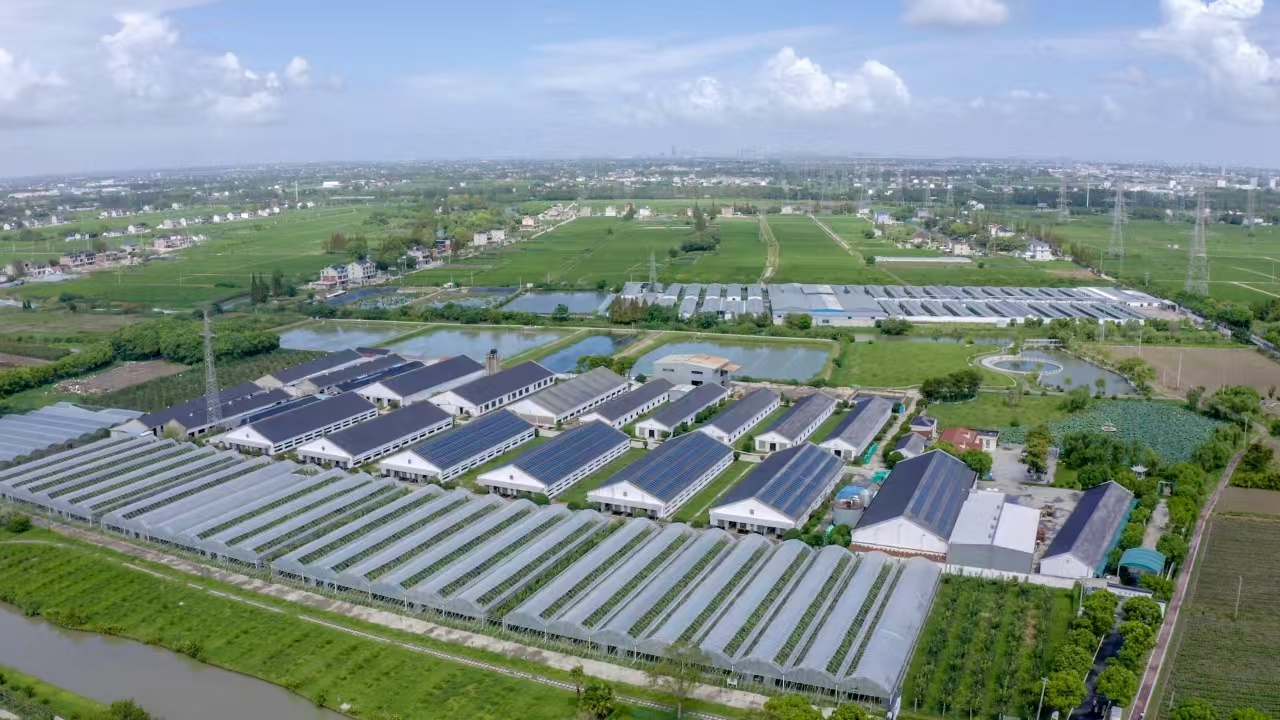
The village has successfully balanced ecological and economic interests. Today, Donglin village has achieved a 30 percent reduction in chemical fertilizer use, a reduction of over 50 percent in pesticide application, and a 100 percent recovery rate for crop straw — resulting in an annual reduction of 2,730 tons of carbon dioxide emissions. Value-added, specialized "GABA-enriched" rice now retails at approximately four times the price of conventional rice. Meanwhile, grain-drying costs have been slashed by about 780,000 yuan annually, while new PV installations generate roughly 100,000 yuan in revenue. Additionally, the integrated energy service provider’s PV electricity sales are projected to bring in 650,000 yuan per year — with "green gains" continuously strengthening the village’s collective economy. As one of the first pilot sites in Jiangsu Province for the Ministry of Agriculture and Rural Affairs’ "China Zero-Carbon Village and Town Promotion Project," Donglin village has earned over 20 honors, including "National-Level Ecological Village," "National Civilized Village," and "State Grid Corporation Demonstration Village for Rural Revitalization." The village has been featured more than 10 times by central media outlets, including CCTV, and its model has been selected by the Ministry of Agriculture and Rural Affairs as a national exemplar for green agricultural development — offering a standardized, replicable, and scalable approach.
The exploration initiated in this single village is now spreading across a much broader landscape. The "zero-carbon experience" of Donglin village is currently being replicated and promoted in other rural areas, such as Dianzhan village and Wanfeng village in Taicang.
Social governance: collaborative governance and development — ensuring convenience and peace of mind for residents
Suzhou faces a significant challenge regarding the large number of electric bicycles in use; specifically, the unsafe practices of "tossing" charging cables from upper floors ("flying wires") and bringing batteries indoors for charging, which have become persistent safety issues within local communities. At the Rongda Industrial Park in Xiangcheng district, employees have made it a habit to park their vehicles in "solar-storage-charging" shared shelters while at work. "The charging stations bill based on electricity consumption at an affordable rate — 0.5 yuan per kilowatt-hour (kWh) — so I just leave my vehicle here to charge while I’m at work," one user remarked.
This "green energy charging" initiative ensures that electric bicycle owners can charge their vehicles and travel with peace of mind. By integrating rooftop solar panels, energy storage systems, and smart charging stations, the setup prioritizes the use of green energy. Furthermore, a six-party collaborative framework — involving power utility providers, fire safety authorities, local communities, enterprises, technology vendors, and vehicle owners — has established a digital safety management platform, ensuring shared responsibility and joint efforts to mitigate hazards.
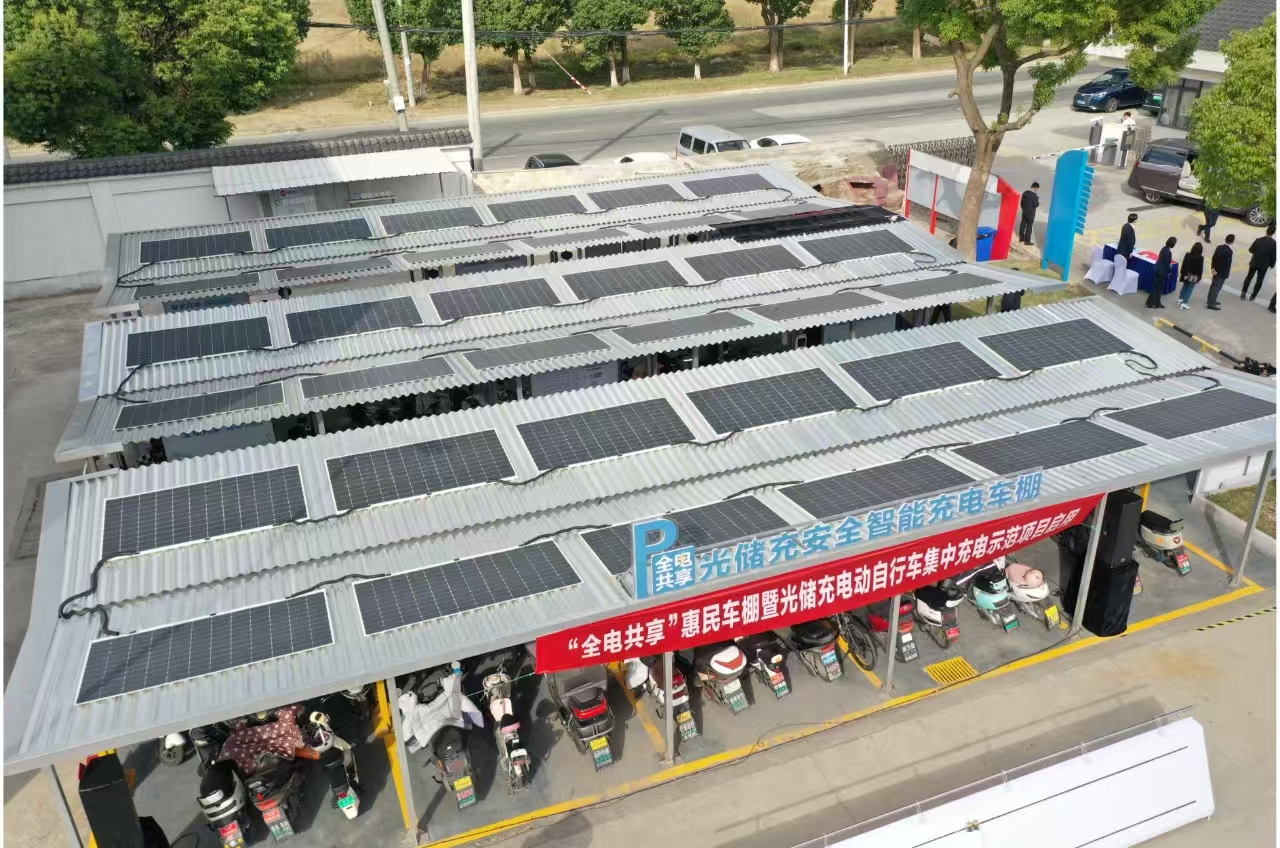
From Rongda Industrial Park to the historic Gusu district, the Zhuhuiqiao Metro Station, and the "worker-friendly" shelters at the Suzhou North High-Speed Railway Station, these public-benefit charging facilities have been deployed across various locations. A single shelter, designed to accommodate 100 electric bicycles, can be equipped with approximately 18 kW of solar capacity. This generates roughly 20,000 kWh of electricity annually, reducing carbon emissions by nearly 12 tons per year. With an annual revenue of 18,000 to 20,000 yuan, the model achieves sustainable, low-profit operations. It has become a benchmark for electric bicycle safety management in Suzhou, winning the top prize in the "Golden Key – China’s Action for the SDGs" initiative, and the approach has since been formalized into a long-term, multi-stakeholder governance mechanism.
Through multi-party cooperation and integration, a new "ground-air" emergency rescue model has also emerged. In Changshu, the local branch of the State Grid has partnered with emergency management authorities and the Blue Sky Rescue team to share equipment — such as drones and power generators — during periods when they are not in active use. "Drones are lightweight, agile, and highly responsive; beyond their role in power grid repairs, they provide technical support for tasks like geolocation, 3D building modeling, and long-duration lighting," the company explained. To support emergency response efforts, the State Grid Changshu Power Supply Company has partnered with local educational authorities to launch public-interest initiatives — such as emergency preparedness training for youth and simulated emergency drills — thereby fostering a higher level of emergency safety awareness across society.
Recently, a case study highlighting how the State Grid Suzhou Power Supply Company has supported the green transition of the Suzhou Industrial Park was showcased at the 31st UN Climate Change Conference in Antalya, Türkiye. This presentation shared the "Suzhou Model" for the sustainable development of industrial parks with a global audience. This is not an isolated instance; from participating in events hosted by the UN Global Compact to showcasing initiatives like carbon footprint tracking and "zero-carbon" rural development on the international stage, the company’s "green circle of partners" continues to expand.
Evolving from a provider of reliable and sufficient electricity to a "low-carbon service provider" and, subsequently, a "partner for green transition," the State Grid Suzhou Power Supply Company has actively embraced its role as a pioneer in sustainable development. Through its efforts, the company has strengthened the green transition, brought a human touch to rural revitalization, and enhanced the effectiveness of social governance — working hand-in-hand with the city to pursue a greener path and embrace new, sustainable growth.
