ARTS / CULTURE & LEISURE
Lasting aroma at Shenzhen APEC banquet offers a glimpse into China’s Cantonese culinary traditions
What makes the Cantonese dish so memorable
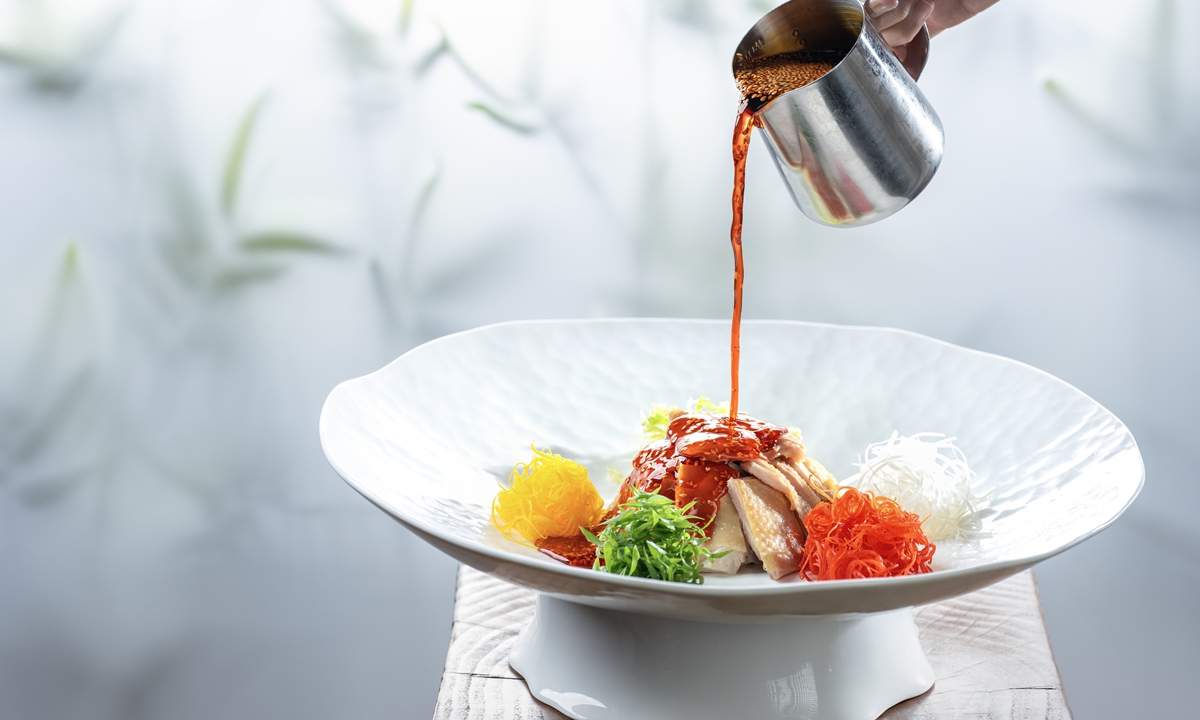
White Cut Chicken Photo: IC
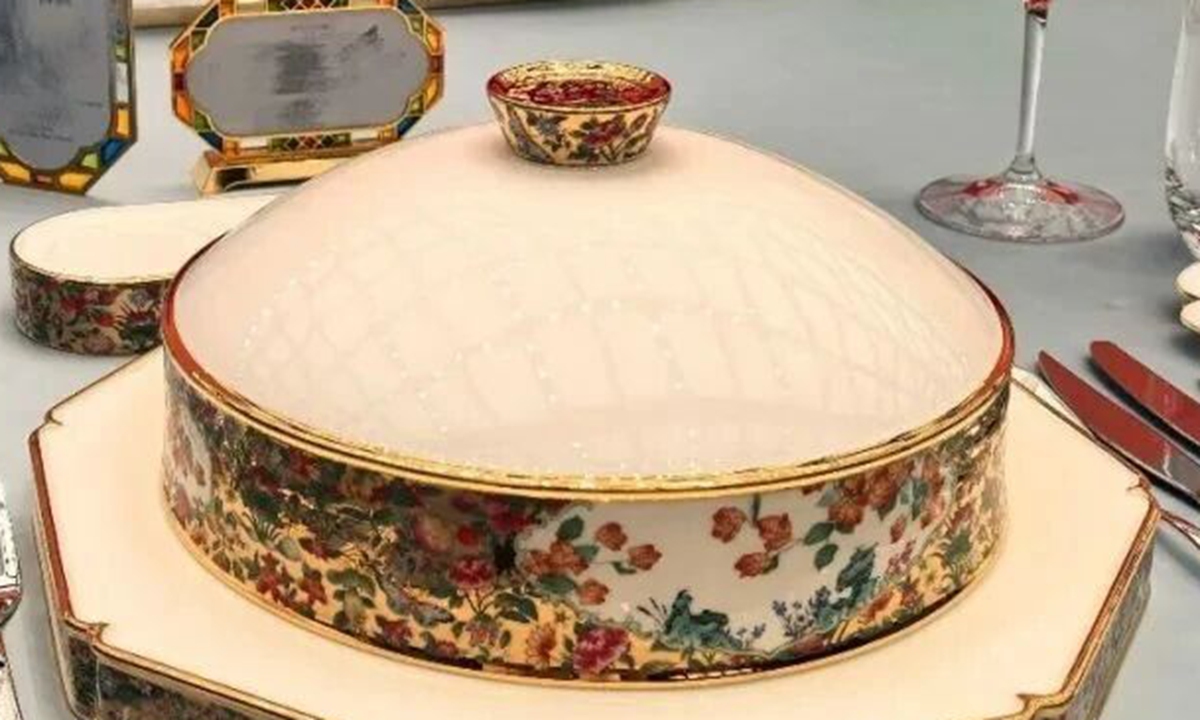
A Cantonese cold platter arranged in the shape of a hat
At a recent event, US President Donald Trump recalled a Chinese dish he had enjoyed during his visit to Shenzhen, South China's Guangdong Province, for the APEC meeting. Asked about his favorite Chinese food, Trump said that a dish served during his China visit had been delicious, although he could not remember its name. But he did remember one detail: It came with a "beautiful hat," prompting online speculation about what the dish might have been.
Wu Xiaoliang, a reporter with Guangdong Radio and Television who helped design the menu and coordinate the chefs for the APEC welcome banquet in Shenzhen, said Trump may have been referring to the first course, the "Pengcheng Welcome Cold Platter."
According to Wu, the platter featured Cantonese-style cold dishes, including crispy roast goose and gourd-shaped foie gras. Its porcelain lid was decorated with Guangcai, a traditional Cantonese porcelain art known for its colorful designs, and may have been the "hat" Trump remembered.
Why would a porcelain lid leave such a strong impression? Li Yuanheng, executive Chinese chef at West International Trade Hotel with more than 20 years of experience in Cantonese cuisine, told the Global Times that covered serving vessels are a traditional feature of Chinese banquets.
"Lids help retain heat, prevent other objects from falling into the food during serving and reduce moisture loss, allowing dishes to maintain their temperature and texture. For braised and stewed dishes, they also help preserve residual heat," Li said.
This attention to detail reflects the care taken in serving Cantonese dishes: The dining experience depends not only on how food is cooked, but also on its temperature, aroma and texture when it reaches the table.
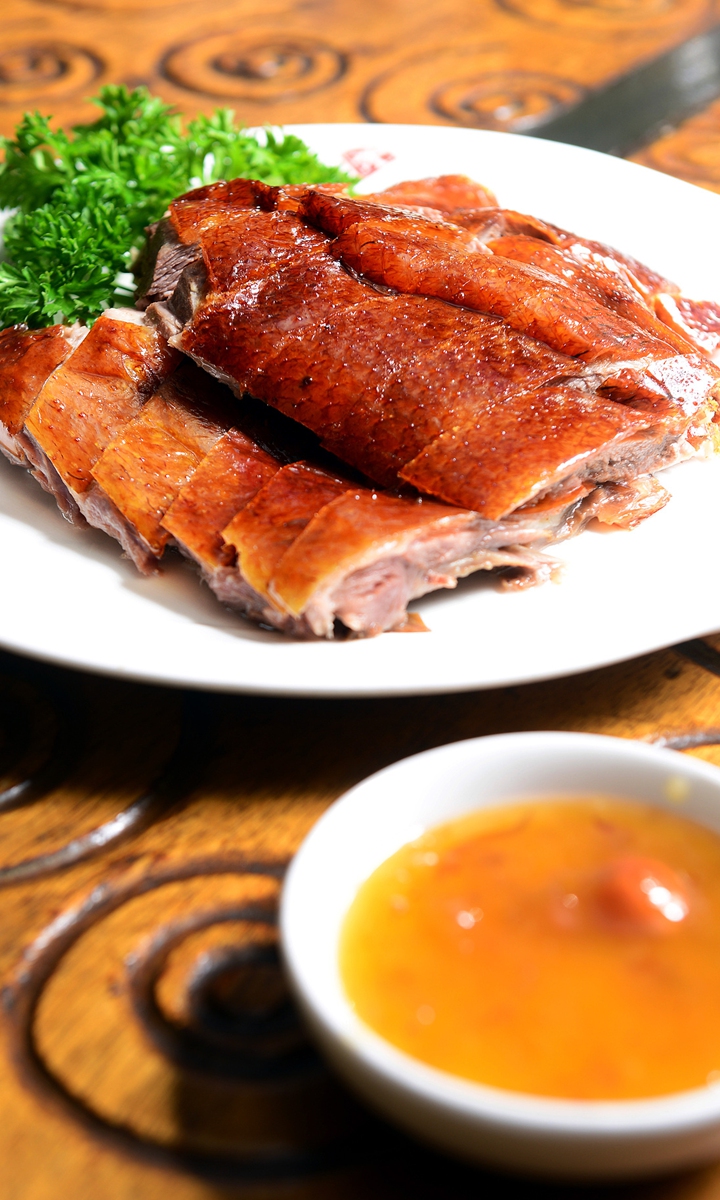
Cantonese-style Roast Goose with Plum Sauce Photo: VCG
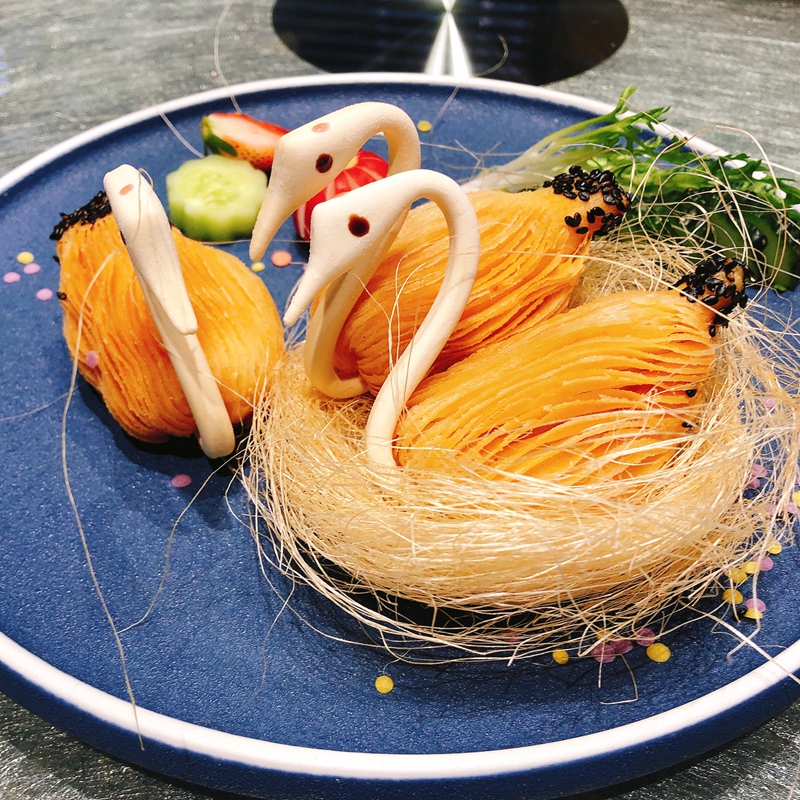
Swan-shaped Crispy Durian Puffs Photo: VCG
Skills behind dishesCantonese cuisine often uses light seasoning to bring out the natural flavors of ingredients, making freshness and precise heat control particularly important.
According to Li, the soy-steamed spotted grouper served at the Shenzhen APEC welcome banquet illustrates this approach. Though seemingly simple, the dish requires careful attention to the freshness of the fish and the steaming time.
"The cooking time must be adjusted to the size and condition of the fish. It needs to be cooked through while retaining its natural sweetness. The soy sauce should not overpower the fish or mask its own flavor," Li said.
Cantonese cuisine also uses a range of techniques to bring out the qualities of different ingredients. The ginger-and-scallion lobster served at the banquet is one example. Li said the aromatics complement the lobster's natural sweetness, while cooking time and heat determine the texture of its meat.
"Cantonese cuisine is known not only for steaming, but also for stir-frying, braising and other techniques. The key is to choose the right method for each ingredient, rather than relying on heavy seasoning to give every dish a similar flavor," he said.
The attention to detail extends to preparation. Some dishes are deboned in advance to make them easier to eat without compromising the texture of the meat.
"This may seem like a small detail, but it makes the food easier for guests to pick up and eat. At a banquet, dishes should not only taste good, but also be convenient and comfortable to eat," Li said.
According to Li, traditional Cantonese cooking does not need to be altered simply because guests come from different countries. Based on his recent experience, international guests have generally responded well to the cuisine.
"Foreign guests enjoy both relatively light Cantonese dishes and richer ones, such as beef cubes with black pepper. It is enough to prepare dishes according to their characteristics and normal cooking standards, rather than making assumptions about what foreign guests might like," he said.
Shaped by exchange
The diversity of Cantonese cuisine is closely tied to the natural environment and ways of life across Guangdong Province. For millennia, the province's location along the South China Sea has provided it with abundant aquatic resources, while its warm, humid climate favored agriculture.
According to archaeologists, excavations of the 2,000-year-old tomb of the Nanyue King, Zhao Mo in Guangzhou, yielded the remains of seafood, fruits and vegetables, including 14 types of aquatic products. This abundance of local resources helped shape the region's varied food traditions, according to the website of the Guangdong Provincial People's Government.
Zhao Yishu, a food commentator in Guangdong Province, told the Global Times that Cantonese cuisine encompasses several distinct regional traditions, each shaped by local ingredients, lifestyles and culinary habits. Coastal influences and trade, as well as migration and life in mountainous areas, have all contributed to its diversity.
"People in different parts of the same province have distinct culinary habits. Cantonese cuisine is not defined by a single flavor profile, but is made up of different regional food traditions," Zhao said. "They share certain characteristics, while each retains its own identity. That diversity is what makes Cantonese cuisine so rich."
These regional traditions have also interacted through migration and trade. Guangzhou has long been an important trading port, bringing different ingredients and culinary customs into contact across the Lingnan region of southern China, particularly Guangdong Province.
Liu Yu of the China International Culture Exchange Centre told the Global Times that the openness of Lingnan food culture reflects the region's long history of cultural exchange.
"Food offers a window into cultural interaction. Migration and trade bring not only new ingredients, but also different ways of life and cultural ideas," Liu said. "Cantonese cuisine has not simply accepted outside influences passively. Instead, it has selected, adapted and reinvented them according to local resources and ways of life, turning outside elements into part of its own culinary traditions."
RELATED ARTICLES