Outside forces complicate disputes in South China Sea
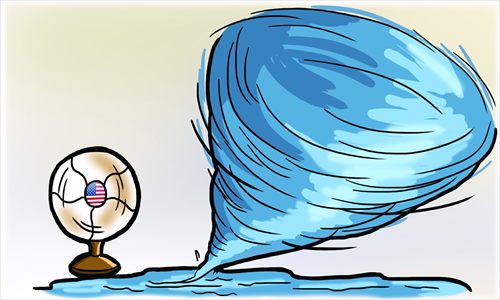
Tensions have risen recently in the South China Sea amid disputes among nations in the area and there are people worrying that the situation will further escalate and even run out of control. The involvement of outside forces and provocations against China by other nations have made it more difficult to seek agreement over the issue.
The disputes in the South China Sea are mainly about the sovereignty of some islands and the administrative power over some sea waters. China so far remains committed to solving the two issues through peaceful means and bilateral negotiations. China's claims over islands in the South China Sea remain consistent.
China has been playing a crucial role in safeguarding safety and stability in the South China and it benefits from freedom of navigation in the South China Sea.
China is willing to work with other relevant parties to further promote peace and stability in the region in accordance with the 2002 ASEAN-China Declaration on the Conduct of Parties in the South China Sea.
However, despite China's peaceful efforts in seeking peaceful solutions, the actions taken by the Philippines and Vietnam recently have been inconsistent with the code of conduct in which all parties agreed to exercise restraint and to refrain from actions which would escalate or complicate the disputes.
They not only stepped up their illegal exploration of oil and gas resources in waters under China's sovereignty, but bought more advanced weaponry and took part in military exercise in the region.
Some people wonder if China's consistent policy of putting aside disputes and seeking joint development can still work.
I think the overall situation at the moment is still controllable and stable. Military force is not an option at the moment, as it is still possible to seek a diplomatic solution.
That said, however, it can't be ruled out that tension could sharply ratchet up and even lead to some kind of conflict if the Philippines and Vietnam continue with their provocative actions. And more importantly, their actions are emboldened by outside forces, especially the US, which will only further complicate and internationalize the issue.
Both US Defense Secretary Leon Panetta and Martin Dempsey, chairman of the Joint Chiefs of Staff, attended the 11th IISS Asia Security Summit, the Shangri-La Dialogue, in Singapore last month.
Panetta announced at the summit that the US will deploy 60 percent of its naval forces in the Asia-Pacific region by 2020 and that will include six of the 10 US aircraft carriers.
After the summit, Panetta paid a visit to Vietnam, the first trip to the country by a US defense chief since the end of the Vietnam War. Dempsey traveled to the Philippines after leaving the summit.
China has repeatedly said it hoped relevant parties can make efforts to contribute to regional peace and stability. The series of moves by the US are obviously telling Hanoi and Manila that they can continue with their provocations and confrontation with China.
If the US does deploy 60 percent of its naval forces in the Asia-Pacific region by 2020, that will put grave strategic pressure on China. And I think China has the right to take actions to respond to any threats to its national interests and sovereignty.
There is now a paradox in the region. Some Chinese neighboring countries depend on China economically, but at the same time, they want to gain US support for their security and pull outside forces into regional disputes.
Such a scenario is not sustainable and these countries must realize that outside forces' involvement into regional disputes will only further complicate and internationalize the issues and make them more difficult to be resolved.
There are generally three means to solve territorial disputes: bilateral diplomatic negotiations, military conflicts or international arbitration.
There are also people who have called for international arbitration over disputes in the South China Sea. However, according to the UN Convention on the Law of the Sea, the treaty can only be applied to resolve disputes over maritime jurisdiction and it does not apply to resolving territorial disputes.
If we look at international experiences, bilateral negotiations remain the most common practice employed by relevant countries to resolve territorial disputes.
In 2000, China and Vietnam successfully reached an agreement over the Beibu Bay demarcation after 26 years of negotiations. So bilateral dialogue is still the first choice for the involved countries in seeking solutions to the South China Sea disputes.
The article was based upon a speech made by Wu Shicun, president of the Hainan-based National Institute for South China Sea Studies, at the World Peace Forum in Beijing. opinion@globaltimes.com.cn