Die to try
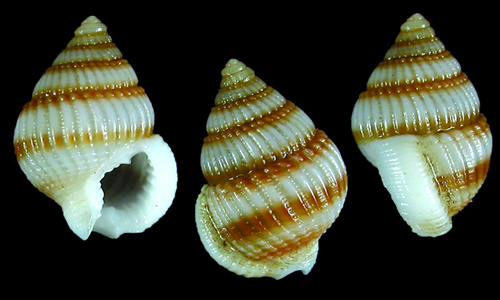
At the beginning of July, 21 people in Wenzhou, Zhejiang Province, found themselves hospitalized after they started vomiting and experiencing slight numbness in their extremities. A 51-year-old woman in the group died.
The bizarre cause of the tragedy to strike the group? Dining out on a meal of sea snails that were caught in the waters around the South China Sea.
The first instinct for long-term residents of China is to point the finger at the country's long list of food safety scandals, which cover everything from farmers injecting pigs with clenbuterol, a fat burning muscle enhancer, to the infamous melamine milk powder scandal of 2008, which saw infant formula tainted with an industrial chemical.
However, when it comes to the snails, it seems to be a natural phenomena.
"I think I've eaten them before in Beijing," a 23-year-old student who gave his name only as Zhang said about the snails.
"With all the food safety scandals, I don't think it's that big of a deal nowadays, although I remember a few years ago the government banned them for a different reason," Zhang said.
The snail trail
The snails were caught wild off the coasts of Fujian, Zhejiang and Guangdong provinces, where they were then distributed to markets and restaurants around the country.
They attributed the casualties to a species called Nassariidae, also known as mud snails, which appeared to contain a neurotoxin similar to that of the puffer fish.
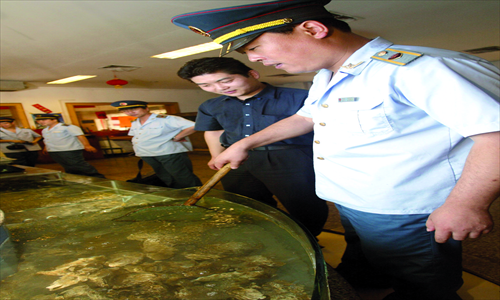
Fisheries around the coastal areas began checking up on the cause of the outbreak, nervously inspecting seafood markets and shipments.
The snails are supposedly not naturally poisonous, but are susceptible to the environment around them, soaking up a small concentration of whatever substance they come into contact with.
In this case they've been brushing shoulders with something containing the venom of the puffer fish.
The puffer fish, perhaps most famous for being made into a rare Japanese sashimi delicacy called fugu, contains a potent neurotoxin, known as tetrodotoxin, which can shut down the human nervous system (fatally) if introduced into the body.
On July 20, the Ministry of Health officially put out a ban on the snails, with a warning that anyone who had ingested one of the slimey trail-makers could feel the effects within anything from a few minutes to a few hours of eating them.
Not only were the coastal areas cleared out of the offending snails, but the capital, ever eager to get in on the act, had inspectors visiting Beijing's markets to make sure there weren't any on the loose.
"I'm not so sure about the case with the snails. Normally when we come across a new food problem like this one, we have to test it extensively," said Fan Zhihong, a food safety expert at the China Agricultural University.
"In China, people tend to eat foods like this out of curiosity. It's quite difficult to get people to rein in this kind of curiosity, and to steer clear of potential hazards like snails or rare types of fish," said Fan.
"The government should make every effort to empower people with knowledge about this and step up their efforts on food management," she noted.
A slippery slope
China has a long-standing love affair with what might be considered unusual foods, most of which have not been associated with food issues.
For example, shark fin is still served up at lavish banquets, much to the chagrin of animal rights campaigners, but it is known to be safe to consume and no one has died as a result.
"We judge whether something can be eaten based on whether people have tried eating it in the past, and if it has been safe, or through research and science to see whether it is possible to eat," said Fan.
"It is when there is an incident of someone being harmed by a food that we have to look more closely at something for dangers."
According to Fan, people have normally eaten something unusual for the novelty value, which is where the curiosity factor comes in.
The snails, which are technically a type of conch, might be one of the least weird on the Chinese gastronomic exploration trail, particularly with Beijing Zoo reportedly serving hippo foot and peacock at its in-house restaurant.
However, some more normal sounding dishes pose their own threats.
The infamous drunken shrimp dish, which involves eating raw shellfish soaked in baijiu, is renowned for posing a risk of infecting diners with dangerous parasites.
Likewise, Shanghai's blood clams, technically banned in the city, are normally served only partially cooked and are thought to pose a hepatitis risk, among various other infections.
Keep in their shell
Despite the dangers, people still eat high-risk food. It seems they just can't help chasing rare tastes, even though the government is pretty strict on what it allows through.
"I know that in South China people like to eat this sort of thing [rare or dangerous foods]," said one seafood marketing consultant in Beijing, who declined to be identified.
"It's a similar situation to the example of the trade in fugu. If people eat it and get sick or die the government will have a real problem, so everything has to be strictly monitored."
Compared with those in Japan, the Chinese regulations are even stricter. There have been some poisoning cases in the past, so the government is pretty careful, the man noted.
However, he explained that while there are often tight or even outright bans on some seafood caught in the wild, it can be a whole different set of licenses in the trade of farmed species, where regulations can be harder to enforce.
Evidence backs this up. As recent as July 27, authorities seized 100 kilograms of toxic seafood, including the snails and it's more dangerous companion, the puffer fish, from a group of illegal fishermen off the coast of Ningbo, according to the Ningbo Evening Post.
Not all dodgy snails and other risky food gets caught though.
While the value of life threatening rarities remains reasonably high, and there's always a willing market, it looks like Beijing's foodies might want to watch what they eat.
Wu Kameng contributed to this story