Decade of change as global power shifts
Cui Liru, dean of the China Institutes of Contemporary International Relations
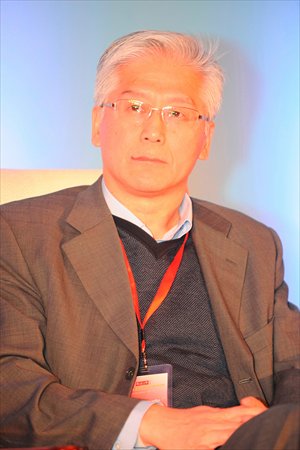
The next decade will be a period of restructuring global power, in the process of which the focus will be the Asia-Pacific region. The power restructuring is mainly embodied in two aspects: power redistribution and nations competing for a more favorable position through development.
The biggest variable in the power restructuring is China's rise, which brings both opportunities and challenges. China and the US play the biggest roles in the global power restructuring competition and cooperation. China, as the world's second-biggest economy, has entered into a stage of overall rise. There are multiple roles in any play, leading actors and minor actors. Power restructuring is more complicated than any drama. China should consider what role it should play as a big power.
A change of the power structure risks losing balance and order. How to avoid the overall situation being out of control is in the interests of every big power. The global powers should understand that there will be no winner if a real war happens and the losses will be greater than the gains.
China is in an awkward position: Its outstanding development achievements make itself a global target. Other countries exaggerate and distort the challenges brought by China's rise. China shouldn't ignore this and should keep a sober head.
No country is ready for the ongoing power restructuring. The financial crisis speeded up the global power change, while anxiety, uncomfortable feelings, and even fear will appear since countries aren't well prepared for conflicts in the process.
Qu Xing, director of the China Institute of International Studies
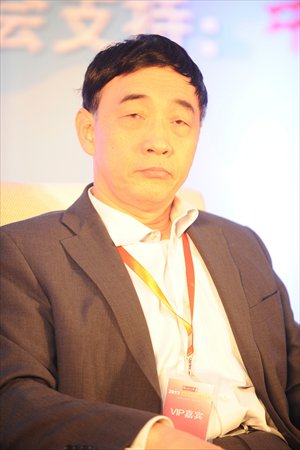
Some tendencies will be strengthened in the next decade. US influence will be further restrained by those emerging countries and developing countries. Some African and Latin American countries will have a greater influence on the international community. This is in fact a matter of power transition.
Theoretically, power transition means the change of influence of a country on others and on the international society. National strength doesn't hold still, therefore, from a micro-perspective, power transition is happening all the time. However, why has it been hotly discussed in recent years? The China factor accounts for a lot. China is the world second-largest economy and its political institutions are quite different from the Western countries. Many discussions on power transition are in fact about hegemony transition. The Western countries, especially the US, are worrying that the world hegemony will be transferred to China. However, it's too early to have such worries.
Hegemony has two thresholds. One is the will threshold: whether a country is willing to impose its will on others in the international community. The other is power threshold, that is whether others have effective power to constrain a country's hegemony.
China's diplomacy was only briefly discussed in the report to the 18th Party Congress, but that fighting against hegemony is particularly emphasized. China never prepares itself to be a hegemonic power in the world and won't do so in the future.
China actually is incomparable to the US in many fields such as the comprehensive strength, industrial structure and quality of the population. Besides, China never has the political intention to assume global hegemony, but has supported a multipolar world.
Shen Dingli, dean of the Center for American Studies at Fudan University

China has come to its current stage due to the flow of global capital, from which every party involved has benefited and thus wants to cooperate with China. China has opened up its markets and attracted foreign investment. The West, in pursuit of its short-term interests, has tolerated China's advance.
In the next decade, the expansion of capital will continue, no matter whether in the West or in China. Therefore, we could foresee cooperation and room for China's development. China has been sharing power with the US and the rest of the world and it will continue to do so.
The West has witnessed many cases of the shift of power and hegemony when it progresses and would like to avoid the shift of its hegemony to China.
I believe that China's development fits the interests of the West and can be accepted. Meanwhile, we should work on how we can better placate the mind-set of both China and the West through fewer frictions and more shared interests.
Globalization has offered China the chance to develop. We are seeking more development, the pace of which the West can endure.
At the same time, the West should be prepared that as long as China's peaceful rise comes from its acceptance of the global rule dominated by the West, the West should acknowledge China's rise. It should accept the decline of its power and the emergence of more markets in developing countries.
Many US pundits and mainstream politicians believe that the US will no longer be the sole super power in the next 20 or 30 years. This is a modest attitude.
Sometimes, even if an agreement is reached between China and the US, it cannot be carried out effectively. Malicious intensions may be involved, but the agreement can be hindered by real obstacles as well.
Pan Wei, director of the Center for Chinese and Global Affairs at Peking University
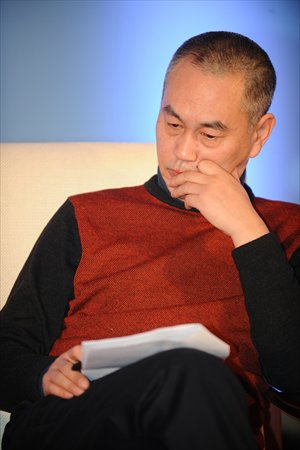
I don't think global power is shifting from the West to China. At most, the Northeast Asian region is rising, but Europe and the US are still the leading powers.
What is power in the Western context? The four elements involved are money, violence, concept and human dignity. The first two belong to hard power and the latter two are soft ones.
When US President Barack Obama went to Myanmar, the Myanmese public could think of democracy, the rule of law and human rights, despite that fact that the US did not invest there at all in recent years.
However, what can they think of when Chinese leaders visit the country?
The world has accepted Islam, Buddhism and Catholicism, but no one accepts a Confucian viewpoint. Chinese migrants are not welcomed in many parts of the world. What the world wants from China is only its money rather than its people and culture.
There's a tough way ahead for China's rejuvenation. China needs to deal with its internal problems first.
Chu Shulong, deputy director of the Institute of International Strategic and Development Studies at Tsinghua University
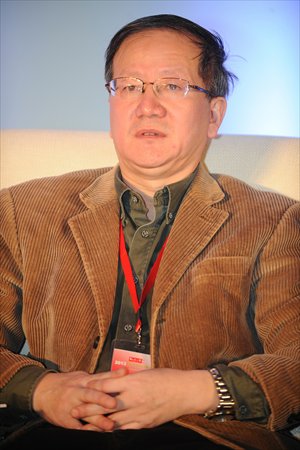
In the next decade, China's rise will remain a quantitative one, not a comprehensive one. For instance, China has a colossal GDP volume, but the quality of its economy, science and technology is relatively poor although progress is being made.
China is the world's second-largest economy. But how will its scientific and technology rank in the world in the next eight to 10 years? It's possible that in the following decade China may surpass India and Japan in comprehensive military strength, but to what extent can China close the gap between itself and US military power?
I don't think we should aim at establishing the country into a global military power, because we stick to the non-alliance policy and we don't want to become the world police. But China does need to set a goal in the next 15 to 20 years: to establish the strongest military strength in Asia, which includes surpassing US military strength in Asia under normal circumstances, which is in accordance with China's identity as the largest country in this region.
Moreover, in respect of political and cultural soft power, China is still not in the mainstream of the world's political values. China and four other socialist countries make up less than 2.5 percent of the world total.
Domestically speaking, the establishment and improvement of social culture, belief and rule of law remains a tough task.
All these explain why I think just like China's rise over the next decade, just like in the past 34 years, will still be a quantitative one. But if we look into further future, like two or three decades, I have confidence in China's emergence, because quantitative change can lead to leaps in quality.
Fang Ning, director of the Institute of Political Science at the Chinese Academy of Social Sciences

The topic of the world's power structure in the coming years is naturally related to two nations, China and the US. If to describe the current conditions of the two countries with a few words, I would say it is that "China on the way, the US at the crossroads."
Last month, I was in the US to observe their presidential elections. I had a feeling that there is now a hot big debate underway across the whole country: Which road they shall go next: capitalism with US characteristics or European socialism? It seems that Americans are evenly divided over the issue.
The US now reaches a crossroads and is making a hard choice, faced with a debate fortified by the elections.
This reminds of the large debate happening in China in the early 1990s in which Chinese people were divided over their road ahead, capitalism or socialism?
The 18th National Congress of the CPC happened to come on the heels of the US elections. Many people in the US also paid close attention to the congress. A general view among the US think tanks and political circle is that the new generation of Chinese leaders is very assertive and they are even more assertive than the last generation of Chinese leaders.
It can be seen through the congress that the Chinese top leadership and the Chinese elites have reached a consensus over China's road in the future, meaning that China's development has more certainty. And I believe in the next decade, China will continue to follow its current road, policy and system.
It is true that there remains a big gap between China and the US. But when we talk about the future of the world's power structure, we have to consider the fact that "China is on the way and the US is at a crossroads."