TPP may spur China’s laggardly reforms
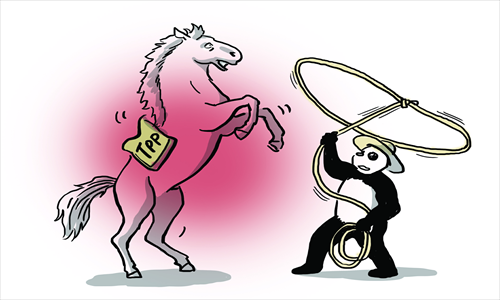
The recent news about Japan eagerly joining the Trans-Pacific Partnership (TPP) talks touched a raw nerve in China. Combined with similar plans from Vietnam and some other Southeast Asian neighbors, China's worries about the TPP are growing.
The TPP did not attract much attention in 2003, when it was founded, but its potential was enormously strengthened since the US announced its interest in the original four-party partnership.
The entry of the US has not only added weight the influence of the new free-trade zone, but spurs the member states to form new trade rules outside the framework of the WTO.
In recent years, China has been observing the development of the TPP in a wait-and-see manner. Some scholars argue that TPP is just a tool for the US, which is attempting to return to the Asia-Pacific region by establishing its economic leadership.
But others believe that the TPP is acting as a challenger to the existing multilateral trade system and starting a set of new rules, since all parties are getting increasingly difficult to reach a consensus under the old framework of the WTO.
This chief source of apprehension is that China being isolated and encircled by the US and its alliances in Southeast Asia. This concern should be carefully considered politically, but it obscures the urgency of conducting deeper reforms.
The real lesson China has to learn is how to be completely market-oriented to match the rapid development of the new free-trade zones such as the TPP.
If we define things strictly, the Chinese economy is still on the way to becoming market-oriented.
In 2001, non-compliance with the standards of interest rate liberalization and the lack of collective bargaining rights left China disadvantaged in talks with the US to join the WTO. Although years of reform have made China an economic powerhouse, there are pressing environmental, IPR protection and social public services problems, which leave China out of line with the new standard of the TPP.
The TPP, though targeted by some Chinese critics, lends itself to a great opportunity to sustain healthy and rapid development. That the TPP has started to focus on some new standards, such as environmental protection and sustainable economy, to distinguish it from the traditional tariff-cutting free-trade organizations makes it a potential powerhouse that could be able to invigorate international trade.
It's not a wise course of action to guess or speculate about any "evil purposes" that the TPP might include, even if it will incur some side effects. It should be noted that as an updated version of a free-trade agreement, the TPP is very promising and its influence can win itself a leading role in the establishment of international trade rules.
It's not the right time for China to harbor suspicions of the new trend, but it is high time for China to deeply accelerate its reforms to unleash the development dividend of the 35-year reforms since 1978.
China's reform should be focused on a gradual process of marketization. As of now, many reforms on key sectors such as social welfare have made little progress.
Currently, the principal contradiction in Chinese society is the imbalance between the soaring demand for public services and the insufficient supply of these services. These existing problems do not only cause severe environmental pollution and incessant social conflicts, but block China's access to the international market, which is calling for ecological friendliness and social harmony.
Therefore, although China is always trying to develop itself from a learner to a real participant of the international trade, this will be extremely difficult if the country cannot meet the requirements of the times and entrench reform. The TPP brings challenges, but the challenges do not lie in "being surrounded," but in the impetus for China should take solid actions.
This article was compiled by Liu Zhun based on an interview with Yu Lixin, a research fellow at the Institute of Finance and Economic Strategies, Chinese Academy of Social Sciences. liuzhun@globaltimes.com.cn