India complicit in planning mass destruction of its own environment
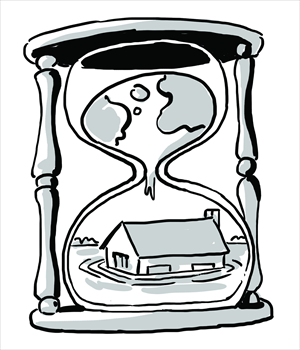
One month has passed since the early hours of June 17 when giant boulders and debris from a nearby glacier slammed into the town of Kedarnath while people were sleeping. Reflections are still needed to minimize losses in similar disasters in the future.
Kedarnath is home to holy shrines in the foot hills of Himalayas, and the debris swept away thousands of people, cars, animals, dams, roads, bridges and buildings into the Ganges river. A tragedy turned into a national calamity in which more than 5,000 people have reportedly perished and thousands are missing presumed dead.
It was the pilgrimage season as tens of thousands of Hindus from various parts of India, and many tourists were headed toward the Himalayas to escape the summer heat.
This grave saga was not merely a natural disaster, but the result of the indiscriminate torture of nature in the name of rampant development. It was a human-triggered disaster.
The meteorological department warnings went unnoticed, rendering thousands homeless. Local people had no idea about how to deal with such a crisis.
The calamity reached horrific proportions as there was nobody to tell people where to go or how to escape. The lack of contingency plans meant that the army had to be called in for rescue operations.
The Himalayas and torrential monsoon rains have a symbolic relationship. Mindless construction projects in these most fragile regions have exacerbated the mountain's natural appearance and changed weather patterns. The result of forcible human intervention comes in the form of cloud bursts.
In the past, northern India had dense forest cover across the Himalayas. Today there are numerous hydropower projects in the Himalayan belt.
But with the obsession for development, deforestation has been seen since the British colonial rule when post-independence, small provinces were created in the mountainous terrain. Indigenous governments later caused irreparable harm to the environment.
Our actions lead to environmental changes. Natural springs have dried up, and rivers beds have become new homes for land developers.
Governance mechanisms have changed the criteria for nature conservation and promotion.
Pilgrimage tourism in the Himalayan region has been replaced by eco-tourism. The beauty of the Himalayas has proved to be their biggest enemy.
In the name of development, explosives were used to blast mountains to create roads and long tunnels, and construct buildings, check dams and mini-reservoirs. In such conditions, heavy rain was enough to cause such a catastrophe.
There is no doubt that economic growth at the expense of environment should not be allowed. Tourism is affected when the environment is affected.
To protect the environment, better tourism management mechanisms must be implemented.
Uncontrolled construction along river beds and landslide-prone slopes will further accentuate disasters and create inordinate losses.
Building construction in some parts of Indian cities is vulnerable to natural calamities. Real estate developers ignore safety measures in order to maximize profits.
Emergency evacuation is virtually impossible in case of a disaster leading to severe casualties.
In the past, several old buildings have collapsed in cities like Delhi and Mumbai, resulting in hundreds of deaths.
There is a need to integrate the urban planning of cities and towns into a larger sense of eco-sensitive development. Moreover, we need to educate people about environmental sustainability.
India is culturally a diverse society, and the stigma which plagues today's India is that growth will solve all environmental problems.
The real challenge for India is not looking for experts to provide ways to avert such tragedies, but to find people who will overhaul the education system and leaders who will not succumb to pressure while making the highest decisions in the land.
It would be unfair to simply play the blame game with disaster management authorities.
We need a paradigm shift by listening to nature first rather than ourselves.
Endless economic growth is ultimately unsustainable. Let's face up to this reality.
The author is a master's candidate of Global Business Journalism at Tsinghua University. himanshu28102000@gmail.com