HOME >> OP-ED
SCO moves beyond regional security to wider aspirations for respect
Source:Global Times Published: 2014-4-17 20:03:01
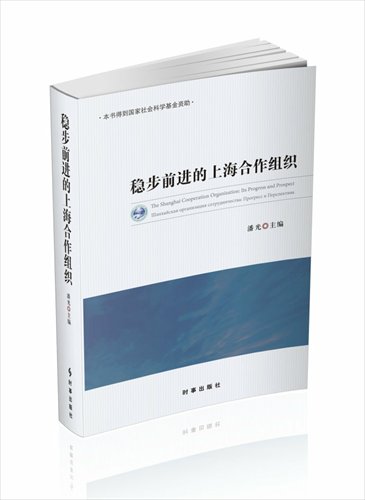
Edited by Pan Guang, The Shanghai Cooperation Organization: Its Progress and Prospect, Current Affairs Press, March 2014
More than a decade has passed since the establishment of the Shanghai Cooperation Organization (SCO) in 2001, and the group has made many achievements in political, security, economic and culture cooperation among its members.
The SCO also provides opportunities for China and Central Asian countries' joint strikes against the "three evil forces" of separatism, extremism and terrorism and creates favorable conditions for China's western development.
However, the development of the SCO was also filled with twists and turns. Especially in recent years, some factors, such as the international financial crisis, the ripples from Afghan war, the Middle East upheaval and internal disorder in Kyrgyzstan, have had serious impacts on the SCO.
Whether the SCO would be able to play to its advantages, eliminate the interference and properly handle the problems mentioned above are the most important questions ahead of the members of the organization. Edited by Pan Guang, director of the Shanghai Cooperation Organization Studies Center at the Shanghai Academy of Social Sciences, The Shanghai Cooperation Organization: Its Progress and Prospect was published aiming to answer this question.
The book summarizes the achievements the SCO has made as well as the defects existing in present-day cooperation, and elaborates them in following aspects:
In terms of security, the book points out that while challenges of the SCO were traditional security threats at its inception, they have transformed to non-traditional treats due to the profound changes in international situation. Containment from the West, domestic instability of the members and intensification of external conflicts are all challenging the organization.
In economic terms, the book holds that compared with the security cooperation, economic cooperation is relatively lagging behind. The author attributes it to four reasons: lack of intrinsic motivation, limited cooperation fields, fundamental problems in soft cooperation environment, and vested interests in competing for the dominance of the cooperation.
In terms of cultural cooperation, the book lists several main challenges of the SCO's cultural cooperation as follows: the spreading of religious and ethnic extremism, the penetration of Western ideology and the differences among different political systems.
Given the challenges above, the book gives several suggestions. The SCO should try its best to exclude the fundamental and psychological barriers that stand in the way of the deepening of economic cooperation, and explore in depth the intrinsic motivation so as to improve the economic environment of the whole region.
Also, the economic integration process within the Soviet Union should be studied seriously. The process of Russia and some other countries' joining the WTO should also be studied, in order to reduce the negative effects of these economic process out of the SCO framework, but take advantage of the positive effects and make them mutually reinforce each other.
Furthermore, the tourism resources along the Silk Road should be properly developed, so as to promote mutual respect and trust through understandings of each other's history, cultural heritage and customs.
Admittedly, for a long period, the top priority for the SCO will still be maintaining the peace, security and stability of the Central Asian region.
However, the book reminds us that it is also very necessary for SCO members to put the great goals aside for a while and to fix some bugs first. As the book says, "although the mainstream of the SCO is still cooperation, the cooperation cannot be further deepened without paying attention, studying and resolving current existing problems."
Posted in: Fresh off the Shelf, Viewpoint