Xenophobia hinders right within EU
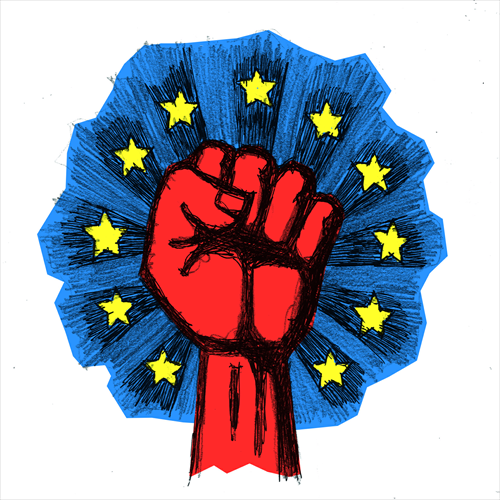
Illustration: Peter C. Espina/GT
The recent electoral gains by right-wing parties in the European Parliamentary elections have been the source of a great deal of comment in the media. While concerning, these election results are far from the catastrophe that many commentators claim. Rather, they are a natural result of the post-2008 world's economic downturn, especially when combined with an EU that has been unresponsive to the needs of its citizens and overly solicitous of large banking organizations.
These conditions were tailor-made for the growth of radical movements on both the right and the left.
The various right-wing parties that claimed gains in the recent elections must still form a unified bloc if they are to have any impact on the larger policies of the EU.
In 2007, there were fears of a similar right-wing rise, but the attempt to forge a unified "Identity, Tradition, Sovereignty Party" ran aground on internal disputes and the organization failed to last out the year.
Since then, the requirements to form a political group within the European Parliament have been increased to having at least 25 Members of the European Parliament (MEPs) from no less than seven different nations.
Given the xenophobic attitudes of many of the right-wing parties, such an alliance might prove to be impossible to achieve.
In addition, although they have lost seats, the MEPs of the mainstream parties continue to outnumber radical MEPs, while also enjoying a superior ability to ally with other groups at need.
This makes it plain that the insurgent parties, whether they hail from the far right or far left, will be unable to dominate the European Parliament.
For this reason, the election results are far from the catastrophe that some commentators have hysterically claimed they represent. However, they do present a warning that the EU would ignore at its peril. This can be seen in the rise of the far-left Greek SYRIZA party, which much like many right-wing parties, also feels that the EU has been unresponsive to the economic needs of its citizens.
Anger at the EU's policy of economic austerity has long been simmering among many groups, while in other parts of Europe, most notably France and Germany, right-wing parties have taken advantage of popular anger at the idea that their nations should provide more economic assistance for nations such as Greece.
The EU must recognize that its current political and economic policies have contributed to the popular anger that helped drive radical fringe parties to electoral success, while also reducing enthusiasm for the EU in general.
In fact, the low voter turnout should be a greater sign of concern to the EU than the rise of radical parties. After all, radical parties can always depend on a reliable partisan turnout. The best defense against such movements is to encourage the participation of moderate voters.
However, EU elections have long struggled against anemic voter turnout. The celebration in some quarters that these elections did not continue the downward trend in voter turnout seems extremely optimistic, considering that only 43.1 percent of eligible voters participated in 2014, compared to 43 percent in 2009. This voter malaise makes it easier for fringe groups to have an impact all out of proportion to their actual numbers while also making it difficult for the EU to gain the popular support that will be vital to its ultimate success.
The EU has five years until the next set of elections that it can use to regenerate its image. During this time, proactive political and economic policies that recognize the needs of Europe's citizens can undercut the appeal of fringe parties. The EU must also understand that draconian austerity policies that seem to punish private EU citizens while benefitting large corporations will help contribute to the continuing radicalization of the substantial parts of the electorate. Questions of economic policy must always be seen in the larger context the general welfare of European society.
Ultimately, the electoral gains of radical fringe parties in the recent elections should not be seen as a cause for despair, but rather as a challenge for the EU to strengthen its relationship with the citizens that it represents while also protecting their social, political and economic interests.
The author is a freelance writer based in Corona, California. charlesgray109@gmail.com