
China has prevented 37m infections with strict measures, won’t see second major wave: US professor
By Li Qiao Source: Global Times Published: 2020/7/8 23:54:54
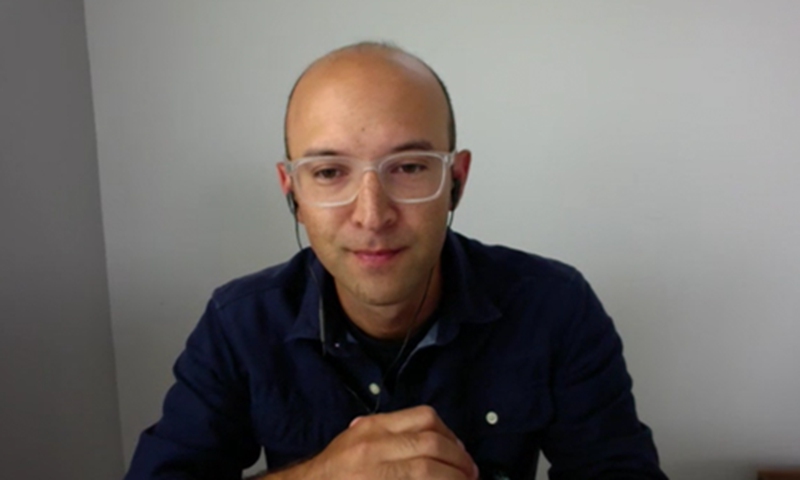
Professor Solomon Hsiang, Chancellor's Professor of Public Policy at the University of California Berkeley
China is unlikely to have a second epidemic peak as the country knows how to implement effective control measures, Chancellor's Professor of Public Policy at the University of California Berkeley Solomon Hsiang told the Global Times in an exclusive interview.
He admitted the efficiency and intensity of China’s large-scale anti-contagion policies and found China prevented an estimated 37 million cases of infection.
Hsiang said some Western media criticized China’s lockdown and quarantine policy because they don’t know the unprecedented virus was at the early stage, but they realized China’s actions were highly effective at slowing and ultimately eliminating the growth rate of infections in China.
Science journal Nature published his paper which systematically analyzed the benefits of large-scale anti-contagion policies on the COVID-19 pandemic, indicating home quarantine and other policies implemented in China and other countries have prevented 530 million people from becoming infected.
He believes the United States would not have so many infections if it had coordinated more at the national level and had been more scientific in its decision-making.
He added he is happy to find that effective mitigation policies have saved a lot of lives, and hopes governments around the world that experienced success like China will help neighboring countries and provide them with support and expertise to combat the virus.
No more Wuhan-level outbreak
Professor Hsiang said small fires are easier to control before they get big. There may be outbreaks of coronavirus in China like Beijing's, but a second wave is unlikely because of China’s effective anti-contagion policies, he noted.
“When we analyzed policies deployed in China during the outbreak, we saw very initial rapid restriction of movement within cities was very effective at containing the virus. There were other types of restrictions to place, for example, bans on travel between locations and across cities, those did not have as big effect on the spread of virus,” Professor Hsiang noted.
In his study, Professor Hsiang and his colleagues found that anti-contagion policies, such as travel restrictions, quarantine and lockdown, and social distancing through cancellations of events all have significantly and substantially slowed the spread of the virus.
They estimated China has prevented 37 million confirmed cases.
“I think Beijing prevented a rapid outbreak that could have looked similar to Wuhan, because of the rapid and effective actions that were taken,” he noted.
During the early stage of the epidemic, some Western media outlets criticized China’s lockdown policy, which later proved highly effective at slowing the spread of virus, the study found.
“We, in the US, were watching what happened in China and we didn’t totally understand at first. Once it started to spread in another country, people realized that and acted very quickly, as China had acted, which was in fact very important,” he explained.
Most of the world now recognizes the strategy China deployed was a good one, Professor Hsiang noted.
The US needs coordination
According to the data across many countries, Hsiang found it is quite remarkable how quickly China was able to contain the virus. However, some policies are highly effective in some country, but not all countries have deployed policies with equal strength, which leads to the continuous spread of virus.
The United States has reported more than 3 million infection cases accounting for one quarter of global cases, according to data from Johns Hopkins University.
“If the United States were more coordinated at the national level, it could have been much more effective at slowing the spread of the virus. Unfortunately, the US has not achieved that kind of coordination,” Professor Hsiang noted.
According to the data of Johns Hopkins University, the number of confirmed cases reported in the United States has gone from one to 1 million in less than 100 days. China has reported less than 85,000 cases in total all through the epidemic battle.
“In China, effective policies were used in a very uniform way, across a very large area, with basically full intensity the whole time. That was enough to bring the spread of the virus down,” he said.
When the central government makes certain decisions in China, they are complied with everywhere in a very rapid way. However, the states in the US are autonomous. The structure of government, cultural differences and attitudes toward community all play a role in the implementation of such large-scale anti-contagion policies, Hsiang said.
Professor Hsiang and his family members wear masks outside in public places. He said some Americans are confused when President Donald Trump contradicts the country’s scientists.
He said the future of the world depends on people using science in decision-making.
“Ignoring and forgetting science is dangerous. We have used science to save millions of lives during the pandemic, which is good proof,” he noted.
He said that it is the responsibility of each country to find ways to minimize the suffering of people, and called on the world to unite in the fight against the pandemic.
We are all at risk if there is still one country that has cases and the pandemic will not be over until the virus eliminated from the entire world, he noted.
RELATED ARTICLES:
Posted in: SOCIETY