World graffiti
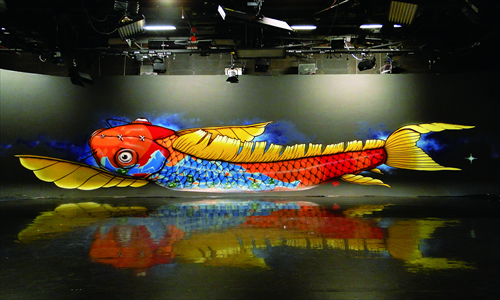
Top graffiti artists from around the world will create art and history, as hundreds of people watch them create a painting more than 40 meters long and two meters tall, during an intense four-hour installation for the opening ceremony of Do Not Erase: the International Urban Art Exhibition, which will hit Beijing from June 16 to August 18.
So what will the picture show? Exhibition curator Jade Yip says, "it's going to be a surprise and you'll have to come and see it."
In an event of extraordinary scale and diversity, the exhibition will include art works from six of the top international graffiti artists, such as Noe Two from France, Tkid from the US, Binho from Brazil and Toast from Switzerland.
In contrast to the stereotypical image of graffiti artists, some are 40 or 50 years old and have been painting graffiti for over 30 years.
It won't just be foreign artists getting involved, with Chinese artists getting in on the live-painting action. Despite being younger than their foreign counterparts, many have already demonstrated outstanding skills with a spray can.
Yip told the Global Times that growing up in the US has given her a very different idea of what graffiti can represent, and that in China it's often misunderstood.
"When people think about graffiti they always think that it's bad, like it's some kind of dirty-writing all over the place. That's not really graffiti, that's just some kids writing their name," she said. "Through this exhibition, I want to show people that there is so much more to it than that."
It's not the first time she's organized events in Beijing; in 2011, Hope & Glory, a multi-media art installation and exhibition generated quite a buzz.
The exhibition is filled with deeper-meanings. Even its name, Do Not Erase, is quite a significant phrase for graffiti artists worldwide.
Yip pointed out that there are lots of cities where the government will erase work of any kind with little tolerance or sympathy, regardless of whether the work is good or bad.
"So eventually all the artworks that these artists had spent a lot time working on are gone within just a few days," she said.
Yip explained that although there are some cities, like those in England, which have started to protect the artworks that make these cities unique, even protected graffiti can't last forever due to the ravages of the sun and rain. The few graffiti walls available also tend to be painted over with new graffiti, due to the limited space.
In countries like China, where scrawled messages on walls have historically been controversial, graffiti can often face official interference. Yip said that she understands this situation since many people have a bias against the art form.
"Graffiti started in ghettos because in the beginning, graffiti was used to send messages or mark territory among gangs," Yip said. "But I think graffiti artists have to start their careers on the streets instead of in a workshop."
"If you just learn the style, but you start only on canvas in the beginning, then you lose your roots, since it's not just an art form but also an expression of culture."
Where: G-Dot Art Space, Central Gallery Street, Eastern Art District, Songzhuang, Tongzhou district
When: From June 16 to August 18
Admission: Free