Olympic flag arrives in Rio
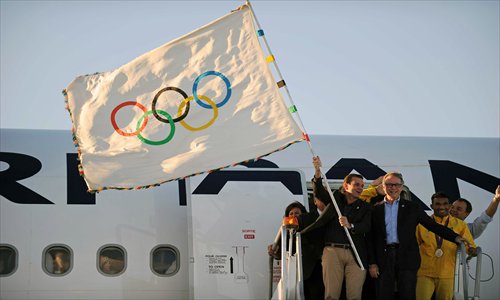
The Olympic flag arrived Monday in Rio de Janeiro, which will host the 2016 Olympic Games - a challenge which authorities in Brazil say the city is prepared to conquer.
Rio Mayor Eduardo Paes stepped off a plane carrying the flag, accompanied by Carlos Arthur Nuzman, president of the 2016 Games Organizing Committee and Rio Governor Sergio Cabral.
"The arrival of the Olympic flag marks a period of transformation in the city," Paes told reporters.
"This is a unique opportunity for Brazil - a time of great celebration."
Also on board the plane were Brazilian athletes - some with medals around their necks - who competed in the London Olympic Games, which ended on Sunday in a blaze of music, fireworks and light.
"Arriving in Rio with the flag was a privilege for us, the athletes," said Robert Scheidt, who won bronze in sailing's Star competition with Bruno Prada.
Hosting the Games will be a huge challenge for a city notorious for its traffic chaos, poor infrastructure and shanty town violence, but authorities say Rio - which also hosts the 2014 World Cup -will rise to the occasion.
On Tuesday, the Olympic flag will be flown to Brasilia for a ceremony attended by Brazilian President Dilma Rousseff and on Wednesday, Paes will carry it through Rio's northern Alemao complex of shanties, as well as through the western district of Realengo, officials said.
On Sunday, Paes received the Olympic flag from London Mayor Boris Johnson during the ceremony that marked the close of the London Games and the countdown to the 2016 Summer Games, which will be the first held in South America.
On Monday, Brazilian Deputy Sports Minister Luis Fernandes said in London that the 2016 Games would galvanize projects already in place across South America's largest country as well as in Rio, a city of 6.5 million people.
The plans in Rio include the extension of a metro line to the western Barra da Tijuca district. Four express lanes are also under construction.
"The Games are an opportunity to invest a huge quantity of funds in infrastructure, an amount that would normally take 15 or 20 years to invest," Fernandes said.
Brazilian Olympic Committee officials and Rio city authorities insist everything will be ready. Some of the venues will be used for the World Cup, but the Olympic Village and other event sites still must be built.
AFP - Global Times