Off the record
Editor's Note:
The story HIV patient to sue hospital over cancer op refusal appeared on November 22 in Metro Beijing. It was about 25-year-old HIV patient Xiao Feng (pseudonym) from Tianjin, who was refused treatment for lung cancer and had to resort to subterfuge to be admitted by a Tianjin hospital. The incident came ahead of World AIDS Day, which falls on December 1, and highlighted the discrimination people living with HIV/AIDS face in the country. Following the report, Vice Premier Li Keqiang contacted Health Minister Chen Zhu to express his concern and urge an improvement of services at hospitals designated to treat people with HIV/AIDS.
The story:
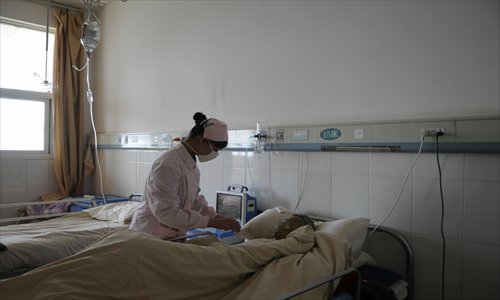
On November 8, Xiao Feng went to the Tianjin Medical University Cancer Institute and Hospital for cancer treatment. After 18 days as an inpatient, he was expelled by the hospital when staff discovered he was HIV-positive. He then went to Beijing Ditan Hospital, which specializes in treating AIDS patients, but was again rejected because they weren't equipped to treat his lung cancer. Returning to Tianjin, Xiao Feng falsified his medical records to show he was HIV-negative with the help of Li Hu, manager of the North China Region of the China Alliance of People Living with HIV/AIDS. Xiao Feng was subsequently able to receive an operation at another Tianjin hospital.
Xiao Feng's story was leaked by Li Hu on his Sina Weibo account on November 13. It generated thousands of comments and repostings. Xiao Feng, who is still recovering from his operation, has vowed he will sue the Tianjin hospital that refused to treat him.
Public opinion was divided over Xiao Feng, with many people both supporting and condemning his decision to forge his medical records.
Although HIV/AIDS patients can only receive treatment at designated hospitals, domestic hospitals are legally required to offer treatment for non-HIV diseases, such as cancer.
The 2006 Regulation on the Prevention and Treatment of HIV/AIDS requires all medical institutions to provide HIV/AIDS patients with treatment for non-HIV diseases.
Despite this legislation, lawyer Liang Kunxian from the Beijing Lianggao Law Firm pointed out in Metro Beijing's story that hospitals that refuse to treat HIV/AIDS patients currently face no punishment.
The back story:
Although this was not the first HIV/AIDS-related story I had reported, it did reflect a common theme: patient discrimination. On August 27, I reported the story Cops probe HIV taxi needle claims for Metro Beijing, which was about how a man feared he had been infected with the virus after being pricked by a syringe needle in a taxi.
Although he was later declared safe, his girlfriend had left him and the unfair treatment of HIV/AIDS patients was widely debated in public.
For last week's story, I worked with my colleague Xie Wenting. We contacted Li Hu, who was willing to explain why he had leaked the story. We were unfortunately unable to interview Xiao Feng since he was still hospitalized, but we learned from Li why the pair had decided to forge Xiao Feng's medical records.
Li said they made the decision because they were "99 percent sure" Xiao Feng would again be rejected if he declared he was HIV-positive.
"Since the cancer will spread in his body, we had no choice but to forge the medical records," Li explained, noting that they informed the hospital Xiao Feng was HIV-positive directly after his operation. "As long as anti-HIV pills were taken within 48 hours, there was no risk [doctors] could be infected," he said.
Xiao Feng had contacted the Tianjin Health Bureau after being rejected by the Tianjin Medical University Cancer Institute and Hospital in October, yet no action was taken, according to Li.
However, Li and Xiao Feng's justification for their actions failed to appease some medical experts angered because they felt the pair had put lives at risk.
Zhou Zijun, a professor from the School of Public Health at Peking University, said it was "inappropriate" to deceive hospital staff. "We need to give HIV/AIDS patients care, but they also have to understand that their virus is infectious and can affect others," Zhou told Metro Beijing.
I contacted the Tianjin Medical University Cancer Institute and Hospital to seek their comment on the case. A media officer from the hospital, who requested anonymity, said they had treated Xiao Feng for 18 days as an inpatient.
"The hospital is not suitable for treating HIV/AIDS patients," she said, adding an internal investigation was underway to find out why the hospital had refused to operate on Xiao Feng.
Meng Lin, who is HIV-positive and works for the China Alliance of People Living with HIV/AIDS, told me there are few designated hospitals in Beijing and Tianjin that cater to people infected with the virus. Many still refuse to treat such patients. "Their range of medical treatment is not as broad as ordinary hospitals, which means that some diseases can't be treated," Meng said.
Further complicating matters is the fact some hospitals are not even clear whether they can treat HIV/AIDS patients. The media officer from Tianjin Medical University Cancer Institute and Hospital confessed she could not say with certainty if they were designated to treat HIV/AIDS patients.
Deng Haihua, media officer for the Ministry of Health, confirmed that hospitals were not authorized to reject such patients. "Although [HIV/AIDS patients] are required to go to designated hospitals for treatment, all domestic hospitals should offer medical treatment of non-HIV diseases," Deng said.
The story shed light on the fact the law is weak when it comes to discrimination against HIV/AIDS patients, particularly considering the 2006 Regulation on the Prevention and Treatment of HIV/AIDS does not specify punishment for hospitals that refuse to treat people with the virus.
A similar example to Xiao Feng's case occurred in May, when an HIV-positive man surnamed Yang was refused treatment for an eye disease at four hospitals in Yunnan Province. He was finally accepted at a fifth hospital after 20 days, the Kunming Daily reported on May 10. The hospitals that rejected Yang denied any wrongdoing and were not punished.
The focus of last week's story was not on whether Li and Xiao Feng were right or wrong to forge the medical records, but rather that China's health system in its current state left them with little alternative in their quest for treatment.