The Great Bike Leap Backwards
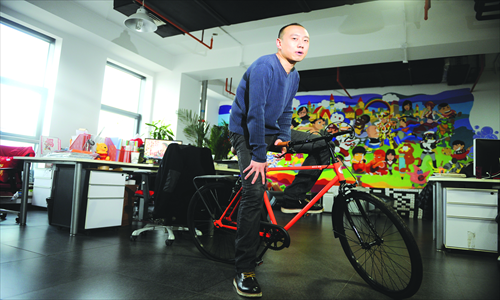
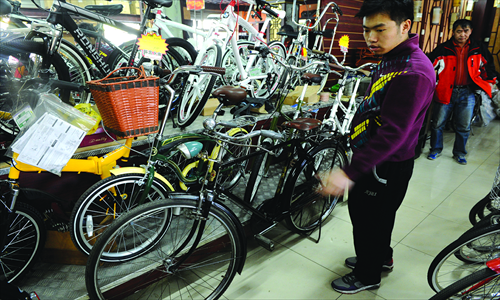
"They don't make them like they used to," or so the old adage goes. Many foreigners apply this to their bikes, as they're seen throughout the city on classic, out of production Chinese bicycles - drawing a distinct contrast to the fact that many Chinese youth opt for newer, Western brands instead.
The most commonly seen older bicycles on the streets are Flying Pigeons (Feige). Its origins lie in a private Japanese bicycling enterprise (circa 1936) in Tianjin that was expanded into a state-owned Chinese industry in 1949. With some sources suggesting that over 500 million units have been sold, Flying Pigeons are arguably the most popular vehicle of all time.
Another popular historical brand is that of the Shanghai-based Forever (Yongjiu) bicycle. Founded in 1940, Forever continues to be one of largest bicycle producers in the world, though its primary market is still the Chinese mainland. As recently as 2011, Forever went through something of a rebranding by releasing their Vintage Series of bicycles: new, neon-colored road bikes whose shape is based on the classic design of their ancient ancestors. This coming June, Forever will release another update to the series.
Flashy, affordable and based on vintage designs - could this be the perfect companion for foreigners looking to act out some of their old-China fantasies?
Speaking to Metro Beijing in a phone interview, Zhang Yi, Forever's director of technical research and development in Shanghai, says that the reason for this harking back to the old times is because old Chinese bicycles, unlike other bicycles, such as mountain bikes, are "more convenient, easier to ride and don't require much riding skill or technique."
"We are aiming at white-collared workers from 18 to 40," Zhang says. "We want to use these updated series to remind our consumers of the good old days and of course to promote cycling."
One Beijing bicycling veteran who doesn't think much about Forever's new line - despite its attempt to tap into classical vibes - is German native and trick cyclist Ines Brunn, owner of Natooke, a popular bike shop in Wudaoying Hutong, Dongcheng district.
"Yeah, I saw them. It's a different philosophy than what it used to be. They are trying to continue their mass-market approach," Brunn states matter-of-factly. "The metal is super cheap and they rust very easily."
Brunn says that all three of the main state-owned bicycle companies of the Great Leap Forward (1958-61) era - Flying Pigeon, Forever and Phoenix - the Flying Pigeon remains the most significant.
"Old Flying Pigeons. They are the icons of China cycling. They are symbolic of how China grew," she declares with an equally antiquated sense of passion. However, despite the fact that newer models of Flying Pigeon based on their own classic designs are available for purchase in bicycle stores scattered around Beixinqiao, Brunn admits that, despite the look, these, too, are made on the cheap.
"You can tell [how cheap they are]. That's why I like the old ones. The materials they used, the metals - everything was better [back then]. From 10 to five to two years ago, the quality gets worse as you go along."
Flying Pigeon or not, the biggest appeal of snaring an old Chinese bike (a somewhat random process in Beijing's haphazard secondhand bike market) is the fact that some foreigners just want a time-travel piece to enrich their experiences here.
"I would feel ridiculous riding it in America, but here in Beijing, I feel like a local when I climb on my rusty post-'80s bike - basket, bell and all," says American PR consultant Ryan Fenwick, 32.
Fenwick first came to Beijing in 2001 and has seen Beijing change immeasurably.
"My old Yongjiu bike is one of the few things that keeps me connected to the Beijing I once knew," he says.
This considered and somewhat nostalgic perspective is not shared in the slightest by some of Beijing's younger set.
"Old bicycles suck," says 21-year-old Beijing student Wei Yang. Wei claims that she cannot fathom the appeal of a bike with high enough handlebars to make pedaling twice as hard due to increased air resistance. "Since old bicycles in Beijing are not even that cheap, why doesn't everyone choose a more durable, better-designed new bike?"
Zhang from Forever ponders the younger generation of old bike haters for a moment. Finally, he answers, "I'm convinced that after they grow up to a certain age, they will return to traditional types of bicycles."
Zhang says he has never heard such accusations of the poor quality of the new Forever bikes and is quick to say that so far, they have sold 933 vintage series bikes in their online shop.
They may not make them like they used to, but then again they don't buy them like they used to, either.
Qian Chengya contributed to this story