Maldives kettle woes show tourists’ traps
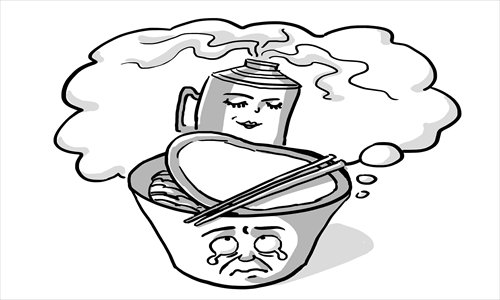
Calls for a tourist boycott of the Maldives have been growing in volume online after allegations were widely circulated that a hotel there had removed kettles to prevent Chinese tourists from cooking instant noodles in their rooms.
The allegations were posted online by sacked Chinese employees of a Maldives resort, who claimed to be filled with righteous indignation by the inferior treatment their Chinese compatriots received at the resort.
Although paying the same prices as the Europeans, Chinese tourists couldn't have kettles to boil water, since the hotel was worried that their penchant for cooking Chinese food, rather than eating locally, would cost business.
The allegations are stoking anger on the Chinese web. "Chinese tourists are required to obey local customs. They are not allowed to speak noisily; they are required to stand in queue. These are all fine. But now are we going to be even confined to having instant noodles?" One netizen mocked.
"No discrimination, please," wrote another.
The allegations remind me of my own travel experience in Italy two years ago.
During my 10 days' stay in its various cities there, I hankered after a cup of hot water, but it wasn't routinely available in restaurants and there was no kettle in my room.
But before that, I already knew that Italy was not that used to Chinese tourists.
So was the Maldives. The island nation's resorts have traditionally been orientated around European tourists, and the rise of the number of Chinese tourists only came in recent years, who quickly have become the biggest spenders of all.
However, hotels are complaining that they come mostly to shop, and don't spend much on food.
Nowadays, there are numerous Chinese students studying in countries such as Australia and New Zealand; there are Chinese businessmen chasing gold in African continents; and there are Chinese tourists whose footprints have been left in the world's major tourist destinations.
There's no doubt that the modern Chinese habit of bringing one's own food is both grossly insulting to locals and damaging for the tourists themselves, who miss out on the opportunity to become familiar with foreign cuisines.
It would have shamed historical Chinese travelers who prided themselves on sampling local delicacies, whether in their own country or overseas. It's reminiscent of the early days of tourism in Europe, where US or UK tourists would insist on bringing their own tinned goods.
No doubt this parochialism will pass. Even if Chinese tourists do not bring business to local restaurants as they have expected, Chinese tourists should still be treated equal as those from other countries.
But after all, it's not for the hotel to make a judgment about what its paying guests of any nationality choose to eat. And the Chinese habit of drinking hot water is probably sensible in countries where, like China, the water supply is impure.
On the other hand, the case should force Chinese tourists to think twice about why they travel.
Travel is supposed to broaden the mind and spirit, and let people experience exotic locations and a different culture. It's a pity that for Chinese tourists, traveling seems more like ticking off boxes on a list.
They might go to many different places, but they rarely talk to locals or get a taste of the local food.
According to the China Tourism Academy, over 82 million Chinese traveled abroad in 2012.
It's time for hot tourist spots to think how they can take advantage of the growing number of Chinese tourists, and it's time for Chinese tourists to think how they can best enjoy these places.
The author is a reporter with the Global Times. wangwenwen@globaltimes.com.cn