In Beijing, autumn brings more allergies than spring
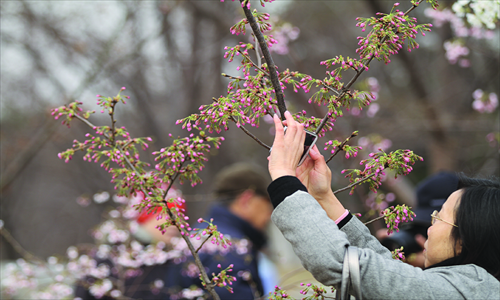
Lola Wan found herself coughing and sneezing one autumn day three years ago. She had come to Beijing in 2002 to work at a parenting magazine, but had never had any symptoms like that until then.
She at first thought it was something she ate, but when she went to the doctor, she was informed that hers were the symptoms of a pollen allergy.
"I've never had pollen allergies before and the doctor had no idea why I started getting not only pollen allergies but also food allergies during flower seasons," she said. "The doctor told me that it's hard to predict issues with the immune system."
Wan is mostly allergic to pollen in the autumn time, not so much during the spring.
He Quanying, a doctor of respiratory medicine at the People's Hospital in Peking University, confirms that he sees more patients for allergies in the autumn than in the springtime months.
Wan said not all pollen causes her allergies to flare up and she's not sure which flower she is especially allergic to. Therefore she takes the only effective measure possible: to stay away from flowers. She often wears a mask and tries to stay inside as much as possible.
He said there might be a connection between the heavy pollution in Beijing and pollen allergies, but said there isn't enough research on that matter.
"If the pollen floating around in the air attaches to the pollution particles, there might be some interactions," he said. "Usually pollen particles are lighter in matter. If there's wind, they can be cleared away, but when attached to pollution particles, they theoretically can stay longer."
He thinks the spring isn't that terrible of a time for pollen allergies in Beijing, when flowers have just started to bloom. The pollen is usually a much larger problem for allergy sufferers during the late autumn flowering period.
"The peach, plum and apricot flowers aren't that much of a threat," he said. "We are usually talking about artemisia pollen, or from grass."
The upcoming cherry blossom festival in Beijing won't trigger heavy allergies in his opinion. He hasn't heard of asthma attacks caused by cherry blossoms, but he said even if there are allergies, it should be easy to deal with.
Tong Chaohui, director of the respiration medicine department at Chaoyang Hospital, said it's hard to prevent pollen allergies, but since these are seasonal, taking preventative medicine ahead of time is recommended.
In He's medical opinion, people with allergies should wear masks whenever venturing out of doors. Any mask will do for helping to prevent pollen allergies, as it's much easier to deal with those than to prevent damage from PM2.5 pollution (particulate matter smaller than 2.5 microns in diameter), which is found to be linked to health hazards, such as lung cancer.
Another recommendation he gave is to check up on which types of pollen you might be allergic to at a hospital. Then, usually a doctor in the respiration department can better provide specific suggestions on what medicines to take to counteract the pollen's effects.
"But it really depends on whether the hospital has tests for all the pollen," he said. "Some patients may test about 20 types and they are not allergic at all. But it doesn't mean they are not allergic to pollen, it's just they are not allergic to these 20 types."