Panglossian takes on future development will lead to dead ends in reform
More than 30 years have passed since reform and opening-up began in China in 1978. Many achievements, including the gradual establishment of the market economy, the growing national strength and greatly improved living standards, have been realized under the impetus of reform.
But national pride aside, there are questions about whether such momentum can continue, or whether the country is already in an economic bubble.
China's reform has entered a crucial period, and the question of how to correctly promote the transition is attracting increasing attention.
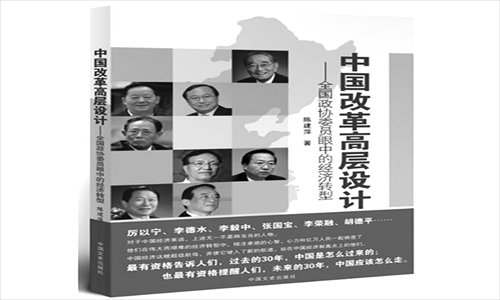
Against this background, Chen Jianping, editor-in-chief of Financial Weekly, interviewed more than 30 top experts to provide their viewpoints on China's further reform, and organized them into his new book High-level Designs of China's Reform, published by Chinese Literature and History Press in March.
Former leader Deng Xiaoping has described China's reform as "crossing the river by feeling for stones." With the deepening of the reform, currently, we have already gone through the easy, shallow waters and stepped into the deeper zones of the river with their accompanying problems. The era characterized by cheap labor and an adequate supply of land has already gone.
Influenced by this pessimistic tone, some entrepreneurs begin to migrate outside or transfer their funds to virtual economy. Seeing these phenomena, some people have drawn the conclusion that China's reform dividends have already almost disappeared.
But the top experts in this book, all drawn from within the Chinese establishment, are quite optimist to the future of China's reform, and view the current situation as a necessary stage. No matter what the time or what the country, former advantages disappear when economic development has reached a certain level.
One of the experts interviewed, Li Yining, a famous economist and the honorary dean of Guanghua School of Management at Peking University, states that it is time for the country to create new advantages.
Li and others in the book argue that China has already started on the road of creating new development advantages. The ending of the era of cheap force also marks the beginning of the new era of skilled workers. And we will also embrace an era of senior technicians and professionals in future.
Most of the interviewees believe that old advantages will be replaced by new ones and the momentum will continue, and that even the limitations of natural resources can be offset by virtue of technology.
The experts interviewed believe that as long as we promote the old reforming system and transform it to new institutional advantages, demographic dividends and resource dividends will both continue.
In spite of the generally upbeat assessment, experts also suggest that we have to take measures to push forward the further reforms instead of just enjoying the current initial results, otherwise current problems will accumulate.
The interviewees in the book specialize in various fields including urban and rural development, State-owned and private enterprises, and aging issues. However, they all use their theories in different areas to demonstrate that development and reform will always be mutually reinforcing.
Only development which is based on reality and takes a long-term view will really pay off, and this can be achieved by reforms.
As Mei Xingbao, an external supervisor for Bank of China Ltd, says in the book, "We should use the means of reform to resolve the problems in development."
Publishers or authors of new works for review related to Asian affairs are invited to contact us at shumeng@globaltimes.com.cn.