HOME >> METRO BEIJING
Forgotten generation
By Jiang Yuxia Source:Global Times Published: 2013-7-15 16:28:01
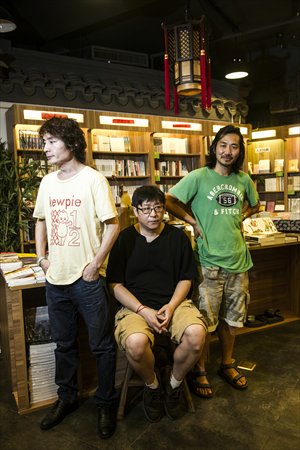
(From left to right) A Yi, A Ding and Chai Chunya - all 1970s-born writers - spoke at a talk titled Why We Write Novels at Bi'an Bookshop in Haidian district on Saturday. Photo: Li Hao/GT
Although Sheng Keyi, author of Northern Girls: Life Goes On (2012), does not spend much time on the Internet, she spotted a recent report online about a literature panel hosted by the China's Writers Association in June, discussing her generation of writers, born in the 1970s.The panel, titled New Changes in Post-70s Writers, was attended mostly by literature critics. They discussed the awkward situation of that generation of writers, who are in the shadow of high-profile writers born in the 1960s and the commercial success of writers born in the 1980s.
Though Sheng is strongly against the idea of categorizing writers based on their age, she remarked on her microblog that the panelists got one thing right: her generation will be the last one pursuing fine literature.
"Writers born in the 1970s have matured in their writing. Each of us has different life experiences, and focuses on different topics. You cannot categorize them just because they are born in the same era," Sheng said in an interview with Metropolitan.
Having published six full-length novels including her latest, Death Fugue, which is being translated into English by an Australian publisher, and a number of short stories, Sheng is considered one of the most prominent writers of her generation.
Writers born in the 1970s have not dominated the literature world or received the official recognition like their predecessors from the 1960s. Nor have they received the lucrative commercial success of writers born in the 1980s, like Han Han and Guo Jingming.
While their potential and creativity is slowly coming to fruition, it is taking time for them to be recognized by a wider readership. And while the Cultural Revolution (1966-76) and the rise of youth culture provide ample material for the generations before and after, writers born in the 1970s don't have a similar, generation-defining event.
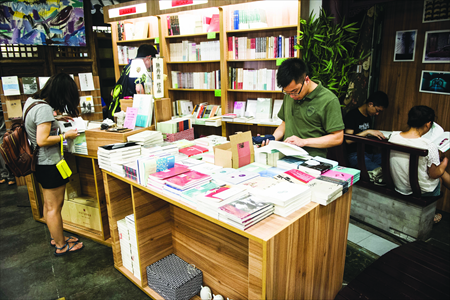
Bi'an bookstore in Haidian district Photo: Li Hao/GT
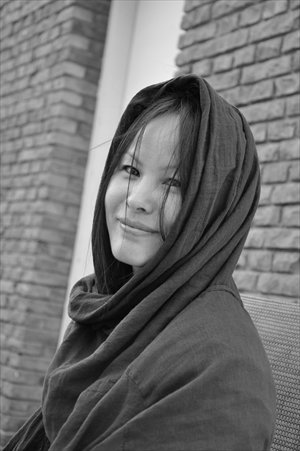
Northern Girls author Sheng Keyi Photo: Courtesy of Sheng Keyi
Born amid revolutionThis generation was born amid the end and immediate aftermath of the tumultuous years of Cultural Revolution. They grew up amid the diversity brought in by the reforms that started in the late 1970s and flowered in the 1980s.
Writers born in the 1960s who set their stories in the era of Cultural Revolution have made it onto the world stage, including Yu Hua, author of To Live, author Su Tong, whose novella Raise the Red Lantern was adapted into a film by Zhang Yimou, and Bi Feiyu, author of the award-winning novel Three Sisters.
Writers born in the 1980s, often prodigies who started publishing in their teens, turned their focus to youth culture and urban life, with a target readership of students. Fueled by the Internet, they have become celebrities, sometimes as much for their private lives as their populist writing.
What generation-defining experience do writers born in the 1970s share that would be of interest to publishers?
Sandwiched
Despite resentment of or even scorn for the label given to writers born in the 1970s, author A Yi, 37, does admit to being shadowed by the generations preceding and following his.
"It would be embarrassing for us to write about youth like the post-'80s do, but then we have to face pressure from our predecessors," A Yi said. "But I'd have to prove myself with my writing, so there is no way out but to keep reading, writing and improving."
A Yi, who is from Jiangxi Province, worked as a policeman for eight years, then as a secretary and journalist for a few years before he dedicated himself to writing at 32.
Without much professional training in writing, he pursued his literary dreams by getting his hands on any books he could. Giants of foreign literature, including Franz Kafka, became his favorite.
"I spent five intensive years from the ages of 26 to 30 on copious reading, and then the following five years writing. And those are the best 10 years in my career so far," he noted.
After blogging and posting short stories on the Internet, he had his first collection of short stories, Grey Stories, published in 2008. He published The Bird Saw Me in 2010, then Now, What Shall I Do Next? in 2012.
The English translation of his short story The Curse, about village tensions brought about by the loss of a chicken, appeared in the Guardian in 2012.
A Yi told Metropolitan that his writing was immature when he first got published, and he sees the same situation with many of his peers. It's also difficult to summarize the topics his peers cover.
Some authors born in the early 1970s, like Wei Hui, author of Shanghai Babe, write about urban women's personal and sexual lives. He writes stories set in small cities inspired by his job as a policeman.
The reason, A Yi noted, is the complexity of the era they grew up with.
"Writers born in the 1970s did not go through historical event like the Cultural Revolution. The reform and opening-up policy only introduced diversity to society," he said, adding the writers of his generation tend to write more about their own experiences rather than a big era.
Why no epic novels
Many writers born in the 1960s set their stories in a grand social landscape. For example, Yu Hua's Brothers is set in the years of the Cultural Revolution. However, few of the writers born in the 1970s have created similarly epic novels that reflect the sweeping historical changes of a generation.
For Sheng, whether to write an epic novel reflecting a larger social or political transformation is a choice for individual writers who are trying to stay true to themselves.
Sheng immigrated from her hometown in Hunan Province in the 1990s to Shenzhen, Guangdong Province, and took office jobs such as working in the media department of a hospital. She started writing when in 2002, she found her life was too boring and meaningless. Her breakthrough novel, Northern Girls, is about the lives of young migrant women.
"When I started writing, I did not have a very clear or grand plan of what I was going to write. I just wrote from my heart, the things I care about," said Sheng, adding that her creative output often shifts from short stories to novellas and full-length ones.
Sheng and her cohorts are accused by critics of not possessing the desire to create true literary masterpieces. Instead, they are criticized for writing for themselves.
Xu Zechen, born in 1978, disagrees. Xu, the author of Running Through Zhongguancun and editor of People's Literature magazine, said it is more because of the social and political environment they grew up in.
"The writers born in the 1960s grew up in the grand age experiencing Cultural Revolution, and that provides them the possibility and experience of telling grand stories," said Xu. "But writers born in the 1970s, they are aware of these events, but don't have first-hand experience like the post-'60s generation do."
Posted in: Metro Beijing