Cosseted generation avoids life’s risks
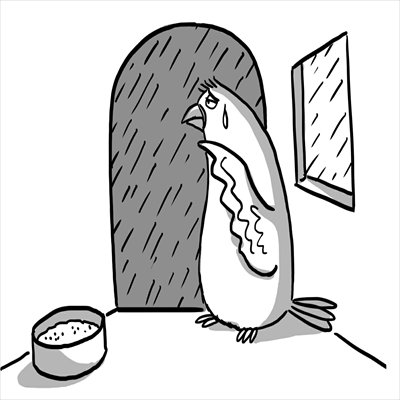
Illustration: Liu Rui/GT
After long study of Chinese youth in a Beijing university, I have a question: How will the jiulinghou, or the Chinese generation born in the 1990s, serve the country in becoming the 21st century's leading power? I'm a bit pessimistic.
Academically, I'd say my students are generally superior to their US and British peers.
They are at ease in a bewildering world of high tech-communications and social media. They easily grasp new concepts, and have a global view of life through the Internet. They enjoy a comfortable, even pampered life their grandparents and even parents could never have imagined, free from want with the world at their feet.
Yet, amid the challenges of rapid social change, the generational motto seems to be "safety first."
To some extent, it's understandable. The job market is tight and hugely competitive; degree inflation has turned a BA into a high school leaver's certificate and a master's, sometimes even a PhD, is no guarantee of employment.
When I arrived, the old system of job assignment, part of the centrally planned economy, still lingered; people were pushed into jobs they didn't want with little chance of influencing the process.
Now, young people make the choice, and they opt for job security rather than challenges and possible career satisfaction.
For example, there is bitter competition annually for coveted government posts that mean "stability," even if promotion is slow and opportunities for personal creativity are relatively small.
This generation, born under a tight family planning policy, has been cocooned by doting parents in a web of comfort, and encouraged to focus on one thing; a good education, leading to a prosperous job and secure future.
The focus on education as the "be all and end all" ignores to include training on coping with life's challenges, and the hedonistic, ultra-materialistic trend of the times doesn't help either.
There's been a lot written about the jiulinghou, much of it is critical and some certainly is unfair. Society must share the blame, along with parents and also teachers for narrowing rather than widening horizons.
Where's the fun and adventure in life? Gone. A job, a spouse, a house and a car is enough; new cynicism replaces the old idealism.
It saddens me to compare their life with mine at the same age, full of excitement, adventure and optimism.
I had to leave school when I was 16 with no qualifications but determined to pursue "lifelong education." I left home, moved overseas, and eventually became a successful international journalist. When journalism jobs began to disappear, I went back to school and eventually reinvented myself as an academic.
Chinese youngsters today have many more advantages than I had, but do they have the mental toughness and flexibility to follow my route to job satisfaction?
I thought of this when the national college entrance examinations were held in June. There has been a view that failing the gaokao means an end to one's prospects in life. I'd rather see that as a beginning.
Western education has many defects, and young people in the West show some of the same alleged social "failings" as their Chinese peers, balanced, fortunately, by individualism and a sense of adventure.
Some of the most successful people in the West have been school dropouts, like the late Steve Jobs, founder of Apple. You fail; you reinvent yourself and start again.
Movie director James Cameron gave a lecture once in which he recalled the slogan of NASA at the height of the pioneering US space program - "Failure is not an option."
But, argued Cameron, in life failure must always be an option. If you're afraid to take risks, and opt for a comfortable and safe existence, the stars are out of reach.
I hope China can somehow encourage more of that spirit to dare.
The author is a former Vietnam War correspondent and now a long-time foreign teacher based in Beijing. opinion@globaltimes.com.cn