HOME >> METRO BEIJING
Naming Rites
By Li Lin Source:Global Times Published: 2013-9-8 19:13:01
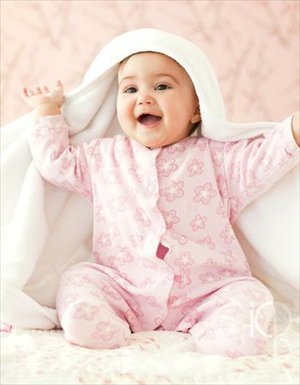
Modern parents still turn to ancient texts such as the I Ching when choosing names for their children. Photo: IC
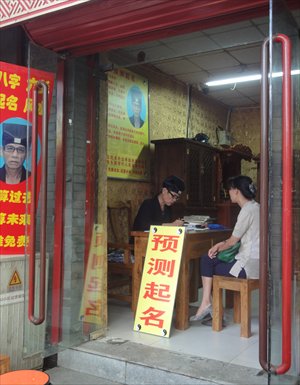
A feng shui master plies his trade along Yonghegong Dajie. Photo: Li Lin/GT
Naming a baby has never been a casual matter for parents in China. Since most Chinese families now have only one child, parents are sparing no efforts to safeguard their little one from the moment he or she is born. And it all starts with giving the baby an auspicious name. The methods, rooted in ancient divination texts, are so complicated that some feng shui masters specialize in the service. In fact, many mixed-race couples who have babies in China find themselves turning to these masters as well when it comes to choosing names.Unlike in foreign countries, where it may be a common practice for a child to be named after a family member, Chinese culture has many unspoken rules for naming a baby. "You can never name the baby with the same character of its parents' or grandparents' name - that would be disrespectful," said Shi Jiuzheng, a feng shui master who offers naming services near Yonghegong Lama Temple. "The characters in the name should be well-shaped and coordinated, and their meanings should be auspicious and suitable for the baby."
According to Shi, baby-naming relies heavily on the I Ching, an ancient text that represents the laws of nature as expressed in human individuals. The exact time of birth (bazi) will affect a baby's wuxing, the balance of metal, wood, water, fire and earth elements in his or her fate.
Because it is believed that only a balanced structure of these "five elements" can assure the baby good fortune and success in life, a well-chosen name can help make up for any insufficiency.
"Take this baby girl, for example," Shi told Metropolitan. "The baby's parents came to me only a few days after she was born. According to her bazi and wuxing, the girl lacks fire and wood elements. So I chose two characters with components symbolizing the two elements for her."
Li Junxia, 29, is thinking of changing her daughter's name. A few days ago, her colleague gave birth, and the whole family squabbled about what to name the baby boy. At last they turned to an I Ching master for help, who came up with a name that managed to satisfy everyone. "My daughter is just 5, and we did not check her bazi and wuxing when she was born," said Li. "My colleague says these things matter a great deal. So I checked and found that my daughter's wuxing is not balanced. I have discussed it with my husband, and he agreed to change our daughter's name to improve her luck. It's better to be safe than sorry."
When in China, do as the Chinese people do. As the number of mixed marriages rises in Beijing, so do the number of children those marriages produce. It's not uncommon for these couples to consult I Ching masters in choosing Chinese names for their children.
"I do not choose English names for my customers, but I do have had customers from many foreign countries, including the US, New Zealand, France, the Netherlands, Italy, Russia, and Iran," said Mao Mu, another feng shui master with a shop along Yonghegong Dajie. "Most of them are mixed couples, and most of the foreign guys are brought here by their Chinese partners. The women usually serve as interpreters to reassure their dubious husbands that the I Ching will definitely work, which is interesting."
Posted in: Metro Beijing