Amekaji takes off
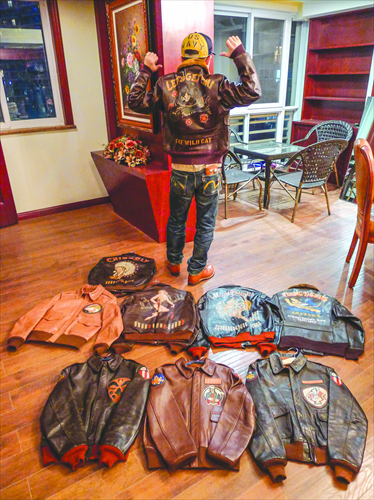
Yu Qian displays some flight jackets from his vast collection. Amekaji, a subculture characterized by fondness for vintage American fashion, is developing a strong following in China. Photo: Courtesy of Yu Qian
Yu Qian eagerly opened his wardrobe last weekend and carefully reached for a sealed vacuum bag. Dusting it off, he unzipped the bag and breathed in its rich horsehide aroma. With winter just around the corner, he can once again show the world his love for vintage military fashion.
"I'm glad it's getting cold because it means I can wear my leather jackets again. I feel like a child finally able to wear his raincoat," said Yu, 30, who works in the electronics industry.
Nearly a dozen of his jackets, ranging from light tan to dark brown, are adorned with US Air Force squadron patches and elaborate back artworks. Caricatures and patches of scantily-clad women, a Native American chief and even Bugs Bunny are accompanied by the insignia of the Flying Tigers, a US volunteer group that fought alongside the Chinese against Japan in World War II.
Even though Japan was the Flying Tigers' enemy nearly 70 years ago, today it is the home of the amekaji (American casual) subculture currently infiltrating China. United by their penchant for reinventing retro American fashion, particularly military wear, many Chinese amekaji fashionistas like the nostalgic value and macho appeal of the clothes.
"Flight jackets are a product of war. Wearing them makes a man feel more masculine. The jackets' decorations and history made me fall in love with them," said Yu.
Timeless appeal, designs
Mi Lingxi took an interest in vintage military fashion five years ago. Along with Yu, Mi delights in showing off his extensive collection of flight jackets similar to those worn by American pilots.
Among his array of flight jackets is the Type G-1, a commercial sensation after it was worn by Tom Cruise in Top Gun (1986); Type MA-1, which emerged in the 1950s and offered pilots greater warmth when flying at higher altitudes; and the latter's predecessor the Type B-15, fitted with hand-warmer pockets and quilted lining.
One of Mi's favorites is the classic Type A-2. First worn by airmen in 1927 and featuring knit cuffs and waistband, it was the jacket-of-choice for many WWII American fighter pilots who expressed their individuality through artworks on the backs.
Pin-up ladies were a popular choice for young men, although so too were cartoons. Felix the Cat and Bugs Bunny were mascots for naval aviators and air force pilots respectively, while bombshells indicated how many enemy planes pilots shot down.
"Nobody knew whether they would survive to see tomorrow. They lived to have as much fun as possible," said Yu.
Paying homage to history
Collecting vintage flight jackets is about more than following a fashion trend for Mi, who was initially drawn by their keepsake appeal.
"As a boy becomes a man, he likes things that will accompany him longer. He starts to look for classics from time-renowned brands," he explained. "A Type A-2 jacket can last a lifetime. A man can take it out when he's old to reflect upon his life."
Although modified, jackets owned by Yu and Mi still retain original hallmarks and unique characteristics. The Type A-2 has a higher waist to accommodate pilots seated in cramped cockpits. The Type N-1, originally tailored for naval aviators, has shorter sleeves and a wool-lined collar.
"Jackets that are modified from their original design, particularly in slimness or sleeve length, are better for me," said Mi, who is rounder than the average WWII American pilot. "Men like military uniforms for their superior quality and trimmings. Of course, they are also more masculine."
Even though military fatigues are more commonly worn by migrant workers than Beijing hipsters, Mi said attitudes and fashion tastes are gradually changing.
"Two or three years ago when I wore flight jackets, some people would stare. This has now changed, however, especially in Sanlitun. People are more tolerant of all kinds of fashion, and I'm more than glad to talk to people interested in my jackets," said Mi.
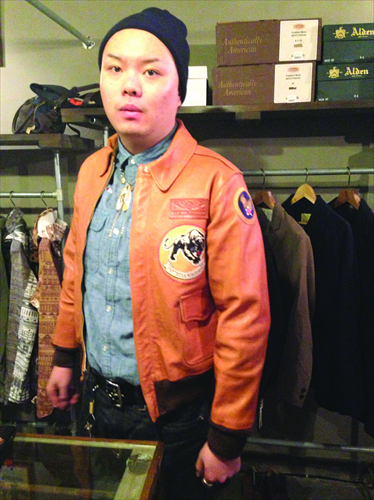
Mi Lingxi poses in one of his Type A-2 jackets. Photo: Yin Lu/GT
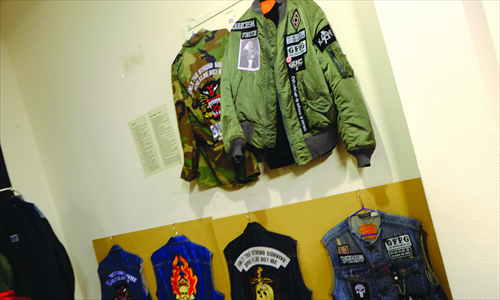
GUNC flight jackets for sale at last month's Joyride Free Market. Photo: Yin Lu/GT
Respect rooted in victory
Yu also takes advantage of his jackets being an easy conversation starter. He once wore a jacket emblazoned with the image of 12 camels below the term "HUMP TRIPS" that aroused the curiosity of a passenger sitting behind Yu.
Yu delighted in explaining that "The Hump" was the name given by WWII pilots to a hazardous aerial route over the Himalayan Mountains used to transport supplies from India to China. Each camel, its back symbolizing the Himalayan peaks, accounted for the number of trips a pilot had made. Yu and the man ended up having a lengthy conversation, and eventually became business partners.
Unlike Mi who became interested in flight jackets after reading about them in Japanese magazines, Yu's amekaji passion grew from his love for history.
"Japan was the defeated enemy [of WWII], but nonetheless it was the Japanese who developed this subculture. It's my understanding that they respect and admire the strongest," said Yu.
Cashing in on amekaji
Zhai Song launched his fashion label, Genius United Nation Company (GUNC), in 2009 to capitalize on the amekaji wave sweeping China. Flight jackets are among their most eye-catching items.
As times changed so too did the materials and designs of flight jackets, noted Lin Meng, publicity spokesman for GUNC. Horsehide was replaced by nylon after the 1940s because it was lighter and warmer. By the 1970s, the punk subculture had adopted their own anti-establishment slogans and emblems to cement their rebellious reputation.
GUNC has imitated this trend, displaying their label either as a patch or insignia on vintage military fatigues to appeal to the 21st century's "young, rebellious subculture," said Zhai.
On September 14, hundreds of amekaji fans attended this year's Joyride Free Market held at 22 International Art Plaza in Chaoyang district. Founded in 2006, one of the market's organizers is 33oz.com, an online amekaji forum with 60,000 members.
Devotees browsed vinyl records, vintage silver accessories, retro motorcycles and, of course, clothing of different styles and eras, including Ivy League-inspired hooded sweaters, work wear and various Type A-2 flight jackets.
"Everyone who likes this [amekaji] style feels a little helpless in reality. The US champions being a 'free spirit.' We are expressing our pursuit of this freedom through our clothing," said Lin.
Adapting styles to suit Asia
You don't have to look too far into the past to see when amekaji took root in the country, even though the phenomenon hadn't yet been identified.
"Love for American vintage culture in China can be traced back to the university students of the 1990s. If you look at history, you'll find every generation tries to restore the old ways," said Zhai.
Liu Tianmeng, a Beijing fashion designer who is preparing to launch menswear brand Comrades Mr. Curious, denied the comeback of vintage military clothing had anything to do with militarism.
"If you aren't interested in the [amekaji] culture, you won't like these clothes at all. Knowing about history is the first step. We aren't warmongers, rather quite the opposite. Our interest in vintage military uniforms reflects the reason we hate wars," Liu laughed.
But is the sight of young fashionable Chinese in jackets worn by rugged yesteryear Americans cool or cringe-worthy?
"Not everybody can pull off wearing the original flight jackets," admitted Liu, whose label will include jackets similar to those worn by Flying Tigers pilots. "They are classic but they are for foreigners, so we have had to add some elements that make them more suitable for Asian body shapes."
The main challenge for Liu has been striking a balance between traditional yet cumbersome materials, like leather and waterproof nylon, and modern urbanites' need for comfort.
"Although it's an outstanding subculture, looking good is still the top priority to uphold vitality," he said.
Badges of honor
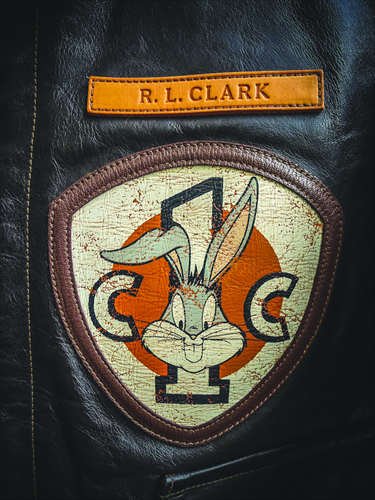
Bugs Bunny, mascot of the 1st Combat Cargo Group in the US Air Force. The group frequently flew over "The Hump" in the Himalayas to deliver supplies to China from India.
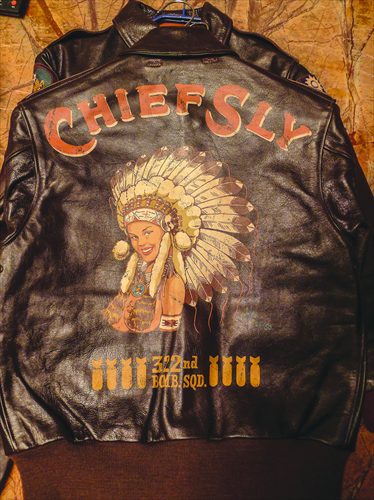
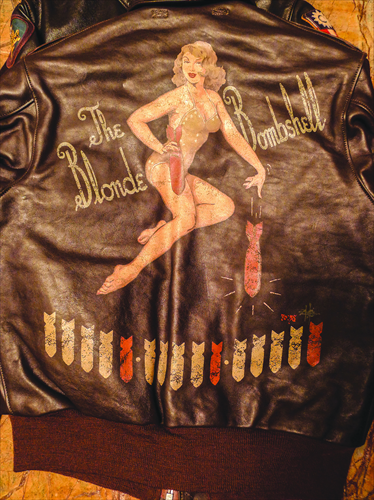
Bombshells below images of a Native American chief and scantily-clad woman indicate the number of bombing missions pilots carried out.
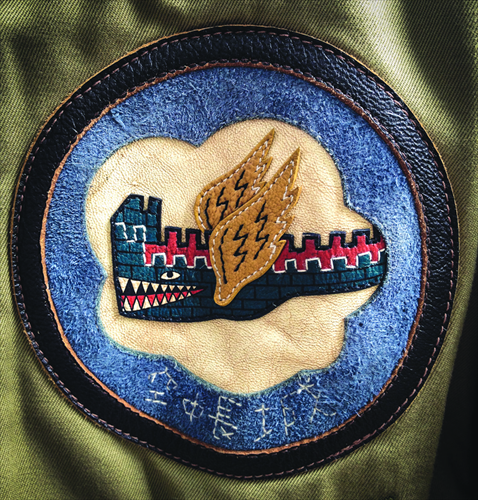
An emblem with Chinese characters that read "the Great Wall in the air" as worn by American pilots from the 16th Fighter Squadron in the 14th US Air Force.
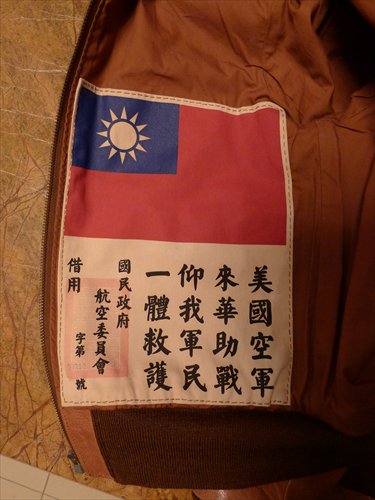
A blood chit to indicate to Chinese civilians that American pilots were allies warranting medical care if shot down.
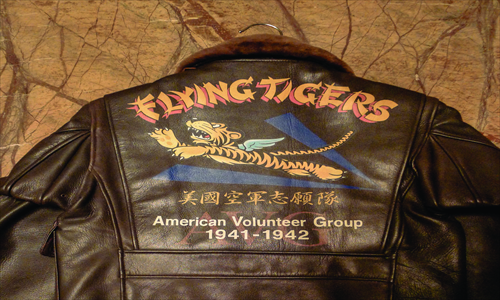
The famous Flying Tigers insignia, designed by Walt Disney, representing the American Volunteer Group of the Republic of China Air Force between 1941-42.