ISS integrating facility services
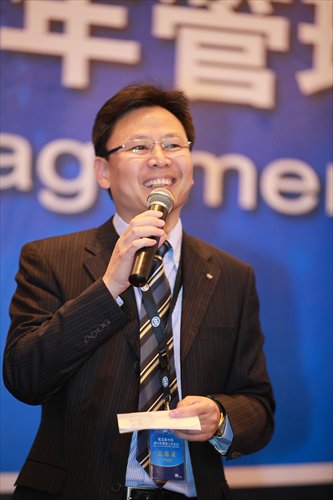
Jack Zhou, country manager of ISS China. Photo: Courtesy of ISS China
ISS was founded in Denmark in 1901, and is one of the leading international facility services companies, in areas such as cleaning, catering, security and facility management.
These areas are not the key focus or core strength of most other businesses, enabling ISS to do billions of yuan worth of business. The company's earnings for 2012 amounted to 88.5 billion yuan ($14.6 billion).
In recent years, ISS China has drawn a lot of attention from ISS, because the Asian market shows huge potential for growth. In March 2012, ISS China received the HRH Prince Henrik Award, acknowledging the company's business achievements since it entered the Chinese market in 2005.
During a recent interview with Metropolitan (MB), Jack Zhou, the country manager of ISS China, revealed the secret of success for ISS and prospects for its market operations in China.
MB: What does the Chinese market mean to ISS?
Zhou: Our Asian market is witnessing double-digit growth, which is why ISS is shifting its focus to China. In 2014, the ISS board of directors meeting will be held in Shanghai.
In addition, companies want to reduce risks and costs by outsourcing their facility management sectors. What is non-core business to others is the core business to us.
In the future, we will be seeing more enterprises in China willing to outsource their facility management sectors to professional service providers like ISS.
MB: What are the biggest challenges and opportunities for ISS China?
Zhou: Currently, the facility management market is still immature in China. There are some aspects I find challenging, such as inadequate administrative staff available and highly restrictive rules for foreign companies. But on the other hand, the new market has good prospects and potential.
MB: What allowed ISS to win Chinese market share?
Zhou: One advantage of ISS is that we have excellence centers worldwide, enabling the company branches around the world to share the latest research.
Of course, there is localization to consider when adapting. For instance, some equipment that is used in European markets is not always suitable to the Chinese market.
MB: Are there any special considerations for training local staff?
Zhou: More communication and training is compulsory. We have training systems for our staff, through which we conveyed the value and importance of their jobs, during which they are encouraged to do things actively with all of their heart.
The staff are told that they are hired not for cleaning windows but letting sunshine filter inside.
Although it is an abstract notion, it enables us to convey the notion that what they are doing is not trivial but a meaningful and important matter for the benefit of others.
MB: What are the standards to be considered for employment?
Zhou: The service industry is about engaging with people and therefore requires EQ more than IQ in most cases. In choosing our employees, EQ and service awareness are always more essential than qualifications and IQ.
Global Times