Breaking bad posture
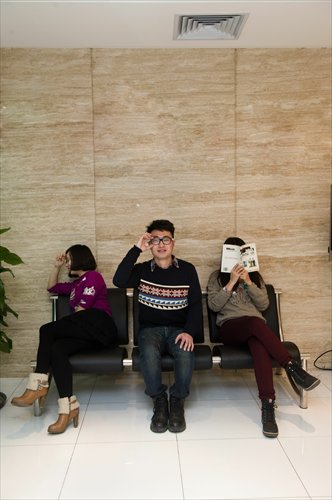
Mastering correct posture not only reduces health risks, but it can also improve self-esteem, confidence and happiness. Photo: Li Hao/GT
You probably think you know the correct way to sit, sleep and use the toilet. After all, a lifetime of practice is enough to convince us that we know what we're doing and must have mastered the correct technique. But if you suffer digestive problems, poor sleep or even depression, you might be paying a painful price for slouching.
Eunice You, a 24-year-old office assistant, admits being blasé about the negative effects of poor posture. "Frankly, I think sometimes our bodies tell us what is 'comfortable.' Good posture often usually doesn't matter," You said.
She used to sit leaning slightly forward in her office chair with her legs either crossed or with one foot on top of the other. Everything seemed fine until You had to work extra hours during January, which caused her shoulder muscles to stiffen and feel tense.
She likes to lie on her right side when playing with her cellphone in bed, but this habit has also caused You problems. "I feel wrinkles at the corner of my right eye are now more obvious than before," she said.
Poor posture can worsen blood circulation, joint pains and even chronic diseases in the long term. By comparison, medical studies have found good posture can improve confidence, happiness and overall well-being. A study published by the Psychological Science journal in January 2011 found posture can be "more significant to a person's psychological manifestation of power than their title or rank."
An ancient Chinese proverb about the best posture holds that one should "stand like a pine tree, sit like a bell, walk like a breeze and lie like a bow." Aside from showing poise, good posture is also considered to have health benefits based on traditional Chinese medicine theory.
Sitting the office
Bi Jiawei, a postgraduate law student, believes sitting with a "crooked posture" is more comfortable in the short term even though it can have harmful consequences. "I try to sit up mainly to maintain high spirits at my desk," said Bi.
Zhang Fu, a personal trainer who specializes in knee joint exercises and rehabilitation, said the main problem associated with sitting posture is leaning too far forward or to a particular side.
"Many people lean forward to be closer to their computers, but this puts strain on the lumbar and cervical vertebra and increases the risk of developing spondylosis (degenerative osteoarthritis). Besides affecting one's eyesight, leaning forward to type is dangerous and can promote a hunchback posture," Zhang said.
Tending to lean to the right or the left might cause an uneven pelvis and out-of-proportion body figure, Zhang added.
As for You's habit of crossing legs, Zhang said there is no harm in such behavior provided that legs are alternated.
"Maintaining correct posture is very simple - you just need to remember the 'three right angles,'" said Zhang, referring to keeping one's upper body and thighs, knees, and elbows at 90 degrees when sitting.
Another oft-quoted opinion is that sitting so that the thighs are at a 135-degree angle with the upper body is better for one's back.
"While this can be the most comfortable position, people can't reasonably work while seated this way," Zhang said of the posture. Leaning can reduce the pressure on the spine by using pelvic obliquity, but sitting in a reclined position can cause pain in joints that can flare up later in life.
Gaining thigh fat is actually linked to one's sitting posture, said Zhang, who claimed fat accumulates when there is more pressure. Therefore, the secret to having narrower hips is to sit on the edge of your chair so that the legs undertake more pressure.
Tips for sitting
Keep your upper body and thighs, knees, and elbows at right angles
Alternate with crossed legs
Stretch every hour for at least 30 seconds
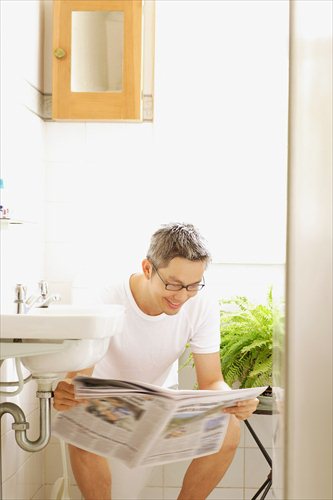
Using a squat toilet ensures a speedier bowel movement, but sitting toilets are recommended for elderly people and those with weak knees. Photo: IC
Toilet time: sitting vs. squatting
Like many expats, it took Briton Kate Pitt a while to get used to using squat toilets when she arrived in China.
Now, she has embraced the Chinese-style toilet habit by choosing to squat when she uses public toilets, even if a sitting toilet is available.
"When there are lots of people, squatting is definitely cleaner. I think it is good for your legs," said Pitt, a student at Beijing Foreign Studies University.
Bi agrees with Pitt, saying there are more benefits to squatting than sitting. "You feel your bottom cheeks are more open and at ease when squatting. Sitting toilets are used by many people and can easily cause cross-infection," he said.
But is infection really a risk for those who sit on a toilet seat? The answer is no, according to United Family Healthcare family medicine physician Richard Saint Cyr.
"Most microorganisms causing STIs (sexually transmitted infections) cannot survive for long outside the human body. Furthermore, in order to acquire infection from the toilet, one would have to have direct contact between the seat and one's urethra or genitals, otherwise organisms could be transferred into a cut or wound on the skin," explained Saint Cyr, who blogs on health matters at MyHealthBeijing.com.
Aside from its perception of being safer, using a squat toilet can be easier for some people.
A July 2003 article in medical journal Digestive Diseases and Sciences claimed that both the time needed for sensation of satisfactory bowel emptying and the degree of straining in squatting positions were reduced sharply compared with using sitting toilets.
Volunteers in the study required up to 2 minutes and 6 seconds to empty their bowels from a seated position, compared to just 51 seconds needed by those squatting.
More effort is required to push feces from a seated position than from a squatting one due to straightening of the rectoanal junction, or division between the rectum and anus, in the latter.
As for the act of defecation, when protracted and repeated it can cause cardiac rhythm disturbances and reduction of coronary and cerebral blood flow. By contrast, squatters avoid far less cardiovascular strain during defecation.
For You, posture inside the toilet stall isn't as important as whether or not she has her cellphone with her. "Being in a good mood makes 'things' move along faster," she laughed.
But playing with one's cellphone isn't a good idea because it usually requires leaning forward to hold the device, which Zhang warned creates a "bad angle for defecation."
"The best way to use the [sitting] toilet is to keep the upper body upright," Zhang said.
Squatting helps speed up a bowel movement, but isn't more hygienic than sitting
Elderly people or those with weak knees should avoid squat toilets
When standing to flush, use your leg muscles to stand instead of straining your waist
If you must use your cellphone, use a seated toilet and keep your upper body upright
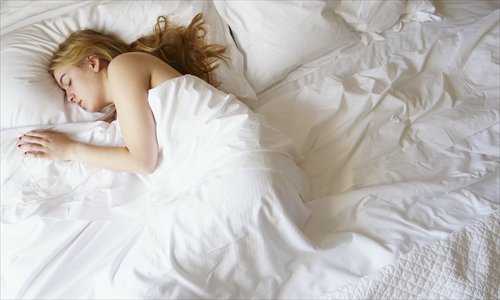
Experts advise sleeping on your right side to get a good night's sleep. Photo: IC
Sleeping postures: back vs. stomach
Pitt usually sleeps on her stomach with her face to one side - a proven method to prevent teeth grinding while sleeping. "I don't know if there is anything else good or risky about sleeping that way," she said.
Bi's regular sleeping position is to lie on his side facing the wall.
He used to lie on his back and play with his cellphone, but abandoned this habit after he accidentally dropped his phone and hurt his face.
"It hurt a lot and my face felt numb. I later got into the habit of lying on my side and playing with my cellphone, but it easily strained my eyes," he said.
Zhang said sleeping on one's stomach is the worst sleeping posture because it restricts breathing and blood circulation.
"The best posture is to lie on one's right. It's good for the digestive system as well as the respiratory system," Zhang said.
Sleeping on one's right puts the heart in a better position to pump blood, while sleeping on one's left restricts blood circulation and can cause heart enlargement and dysfunction.
Many people sleep in a fetal position, which Zhang said "isn't a big problem as long as they crouch on their right side."
For couples who like to cuddle, sleeping in the spooning position receives Zhang's seal of approval.
"A woman can crouch like a fetus on her right and the man can lie on his right and hug her from her behind," said Zhang.
Tips for sleeping
Sleep on your right side
Raise your left leg and extend your right leg backwards as if you were running
Rest your head on a single pillow
Sleep on a firm mattress to avoid back pain
Zhu Xi contributed to this story