HOME >> OP-ED
Depression's shadow falls on China too
By Rong Xiaoqing Source:Global Times Published: 2014-4-10 18:43:01
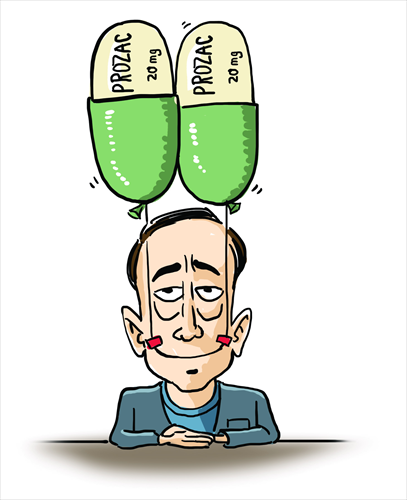
Illustration: Liu Rui/GT
On the morning of December 21, I was nesting in a comfortable chair at home. It looked as if it might snow soon. But a little snow would only augment the cheerful atmosphere hanging in the air in and outside of the apartment with Christmas only a few days away. I took a sip of the steamy coffee and started to flip through the New York Daily News. Then, I read something that made me jump out of the chair. My eyes were wide open, my jaw dropped, the coffee spilled.
It was a short piece, 300 words at most, in the middle of the paper. It was about Ned Vizzini, a 32-year-old successful writer who committed suicide by leaping off the apartment building where his parents live.
I interviewed Vizzini in September for an in-depth story I had been doing about the mental health issues that had been quietly eroding the most competitive school student body in the city at the elite Stuyvesant High School.
Vizzini was a Stuyvesant alumni. He was hospitalized for serious depression a few years after graduation. The protagonist in his breakthrough book It's Kind of a Funny Story is a high school boy who was hospitalized for suicide attempts. And the book was based on Stuyvesant.
He sounded happy and it seemed that he had moved beyond the darkest times in his life. He shared his thoughts on depression prevention, and I promised to send him some copies of the story when it came out. It did come out. But that was a few days after his death.
A recent case in China of a Tsinghua University graduate who committed suicide, prompting her father to sue his son-in-law for not taking good care of her, really struck a chord with me. The lawsuit is sensational. But the wide attention it brought to depression is helpful given how under-discussed the topic is.
But the tragedy once again reveals the complexity of the disease.
Studies by the World Health Organization show that depression affects 350 million people in the world, and by 2020 it will become the second leading cause of disability in the world, only behind heart disease. The prevalence rates and people's awareness of the disease are different across the world. The US, which ranks top, has long been known as "Prozac Nation." China, which used to be low on the chart, is catching up.
But anywhere in the world, there are still so many questions about the disease that make many, as Vizzini himself described in the book, wake up "into a nightmare." There are so many questions. How does it develop? How long does it follow you after you recover? Can you completely recover? Even the professionals cannot agree on the answers, and nor do they have effective solutions.
But compared to Vizzini, who romanticized the idea of suicide as a teenager, and the Tsinghua graduate, whose mother and sister committed suicide before her, many tortured souls below the medical diagnosis radar attract less attention and, therefore, are in a murkier and riskier world.
"The opposite of depression is not happiness, but vitality […]" said Andrew Solomon in his acclaimed book The Noonday Demon: An Atlas of Depression. But when you are unhappy, how far are you from depression, and where is the tipping point? You may not need a psychiatrist. But when should you start to visit a psychologist?
The answers are particularly important in China. Money has nothing to do with happiness, except it can buy you visits to the shrink. But in China, even with wealth accumulating in people's hands and various surveys showing more and more people feel unhappy, not many people would bother to visit a psychologist for merely a "downward mood."
The same thing can be seen among Chinese Americans in the US. In recent years, I have written a few pieces related to mental health issues and have interviewed dozens of people struggling with the invisible shadow. Most of them were already in a very serious condition by the time they first visited a professional.
Some psychologists think the disparity is related to religion. Buddhist philosophy encourages followers to get inward enlightenment through self-contained meditation, while Christianity encourages believers to tell their sins to the priests.
Whatever the truth of this, it highlights the role communication can play in helping us to reduce pressure and adjust our moods.
It may be hard to change your faith. It might be easier to try to share your feelings with others, if not professionals, at least family and friends.
The author is a New York-based journalist. rong_xiaoqing@hotmail.com
Posted in: Viewpoint