HOME >> METRO BEIJING
Bloomin’ delicious
By Chen Ximeng Source:Global Times Published: 2014-6-26 20:08:02
Find out how edible flowers can inject color, aroma and taste to dishes
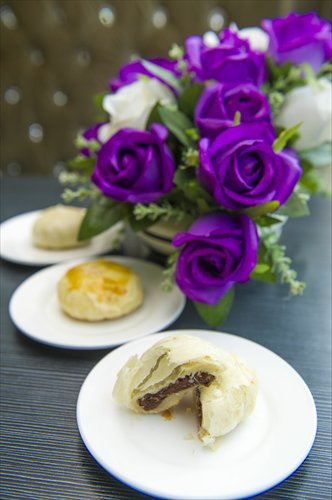
A flower cake with a rugosa-rose filling is a popular snack in Yunnan floral cuisine. Photo: Li Hao/GT
Like many young women, Hai Yun loves receiving roses - not just in bouquets, but also served on a plate. The 25-year-old savors food from Yunnan Province, where many locals traditionally eat cakes made of the rugosa rose."Rugosa roses are not only used to make tea, but also as fillings for small cakes that are both very delicious and fragrant," said Hai.
In September 2013, Hai's boyfriend opened a bakery called Miss Hai's Cakes in Beijing tourist hot spot Nanluoguxiang. The business sells flower cakes and attracts long lines of customers ranging from the curious to the converted each day.
Edible flowers have been a part of Yunnan cuisine for centuries, and are renowned for adding flavor and color to dishes throughout spring and summer.
By candying, salting, boiling and sautéing, flowers can be used to add a unique and even nutritious touch to desserts or soups.
Popular flower cakes
Floral cuisine isn't just a passing fad in Beijing, where a growing number of people have acquired a sweet tooth for it. As a longtime lover of flower cakes, Hai was treated to a trip full of surprises and happiness last summer when she visited Lijiang, Yunnan.
"The cake crust was very crisp, and there was an unmistakable sweetness from the rose filling that had a light, lingering fragrance. After the first bite, you could see the rose petals inside," Hai said of a memorable flower cake she ate on the trip.
Her love for flower cakes inspired her boyfriend to learn how to master its baking methods and open their bakery in Nanluoguxiang, which is appropriately decorated with flowers in its storefront.
After experimenting with different recipes and varieties of flower cakes, the couple slightly changed methods popular in Yunnan by using margarine instead of lard to make the crust and substituting other ingredients to make their cakes crispier.
"We added some honey and black sugar to the filling to make it not so sweet and keep the fragrance light," said Hai.
Li Mengze, a food critic who has written several books about Yunnan cuisine, said there has never been a better time to climb aboard the floral cuisine bandwagon.
"The most popular treat in floral cuisine is the flower cake, which is immensely popular due to its rich fragrance and special sweet taste. Many sellers from Sichuan Province and Chongqing go to Yunnan to learn how to make it," said Li.
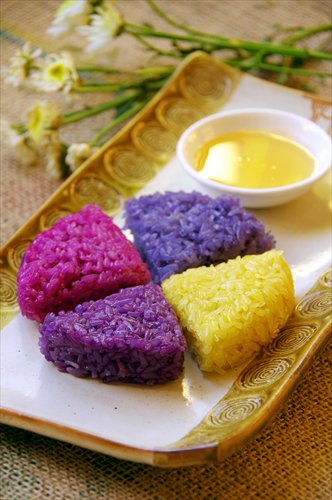
Buyi multicolored rice, which gets its colors from flowers, served at In & Out. Photo: Courtesy of In & Out
Cooking methodsAt Tree Tomato, a Yunnan cuisine restaurant in Beijing that opened in 2013, an entire page of its menu listing flower-based dishes is updated every spring and summer. The menu includes dishes with magnolia, jasmine and many other flowers, most of which are sourced from Yunnan.
"There are altogether more than 400 types of flowers that are edible throughout the year in Yunnan," said Zhang Yingfei, head chef of the restaurant. "Not only are the materials diverse, there are also various cooking methods. Flowers can be served cold, lightly fried or deep-fried tempura style."
At Tree Tomato, popular flower-based dishes include seaweed soup, broom-bud fritters and chicken rolls filled with birchleaf pear and Juglans regia flowers, the latter a walnut tree native to Yunnan.
"There is no frying or heating required of flowers for the rolls, which keep most of their original flavor and fragrance. After being dipped in a special Yunnan sauce, it is very crisp," said Zhang, a native of Zhaotong, Yunnan.
Zhang said the cooking process is very simple for floral cuisine, revealing that the secret is to keep it as short as possible to preserve freshness and original flavors.
For those interested in cooking floral cuisine, Shanghai-based horticultural writer Rose Xu suggests starting with magnolia fried eggs, peach blossom porridge and wisteria pie.
"In spring, I made pickled cherry blossoms that can be used to make cherry blossom rice cakes and desserts," said Xu, who said the most impressive floral dish she ever saw was eggs garnished with jasmine, rhododendron and rose petals.
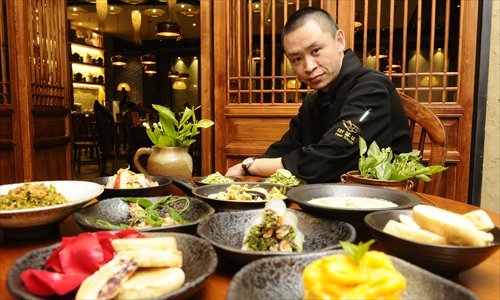
Chen Yingfei, head chef of Tree Tomato restaurant, displays floral cuisine including chicken rolls filled with birchleaf pear and Juglans regia flowers. Photo: Li Hao/GT
Adapting for different tastesChen Wei, a chef at Chaoyang district Yunnan cuisine restaurant Jia'nandi, recently returned from Yunnan to buy local foods unavailable in Beijing.
"At my hometown in Lincang [in southern Yunnan], we often pick various flowers from mountains to make delicious food in spring. But it takes a long time to transport such flowers to Beijing, which inevitably lack freshness and are more expensive," said Chen.
Li shared Chen's sentiment, saying that Beijing is a difficult city to find quality floral cuisine due to scarcity of fresh ingredients.
"Flowers are seasonal and transportation costs are very high, so it is hard for restaurants to serve floral cuisine long term or establish good reputations for such dishes," said Li.
Another problem is adapting flavors to suit palates in a metropolis like Beijing, where people's tastes differ from Yunnan and other remote areas. Chen said floral cuisine has a limited customer base because most people from northern China struggle to get used to flavors of "primitive materials," such as bamboo worm and bee pupa.
"Some think that the bajiao banana (also known as the Chinese dwarf banana) flower tastes a little bit bitter, so we add some tamarillo native to southwestern China to offset the bitterness," said Chen.
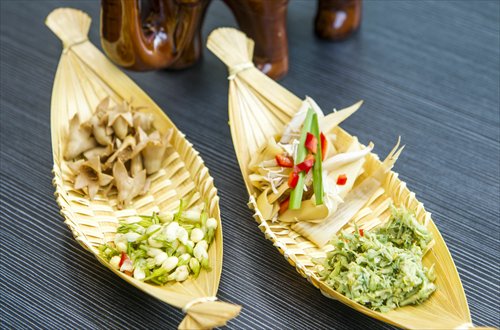
Four kinds of floral ingredients sourced from Yunnan at Jia'nandi. Photo: Li Hao/GT
Rich history in ChinaDespite facing some problems similar to Jia'nandi, He Xuehuan, head chef of the Gongti branch of In & Out, a Yunnan cuisine restaurant chain, is nevertheless confident that floral cuisine will win over more diners who appreciate its organic, nutritional appeal.
"Floral cuisine is more popular among female diners, who are more easily attracted by the beautiful flowers, such as roses and lilies," said He, 25.
Flowers have historically been eaten in China for 2,000 years. Flowers reached its culinary peak during the Tang Dynasty (618-907), when flower cakes were considered haute cuisine in the imperial court. Empress Dowager Cixi (1835-1908) was said to have enjoyed lotus petal fritters.
Many edible flowers are also used in traditional Chinese medicine. For example, jasmine is believed to reduce internal heat and calm the nerves. Algae from Erhai, a giant lake in Dali, Yunnan, is also a valuable digestion aid, added He.
"More importantly, the culture behind the passing on of tradition is that people want to become more beautiful and stronger by eating flowers. Given that flowers are the genitals of plants, it reflects their desire for the bloom of sex in a symbolic meaning," said Li.
Four dos and don'ts of floral cuisine
Dos
1. Ensure your flower is safe to eat. Some flowers have edible buds but poisonous petals. Flowers such as marigolds are safe to eat, but only in small amounts.
2. Soak flowers in brine for at least half an hour to kill insects or bacteria.
3. Be wary of any allergies and avoid eating flowers that might cause discomfort.
4. Minimize the cooking process and add flowers last to a dish to preserve their flavor as much as possible.
Don'ts
1. Don't eat flowers from florists or somebody's garden, which might contain chemicals.
2. Don't assume flowers used as garnishes are safe to eat.
3. Don't eat too many flowers at once. This can cause diarrhea and stomach discomfort.
4. Don't expect medicinal effects of flowers to be instant. Small portions must be consumed over a long period of time for best results.
Posted in: Metro Beijing