A cure for madness?
Can traditional Chinese medicine be an effective treatment for mental illness?
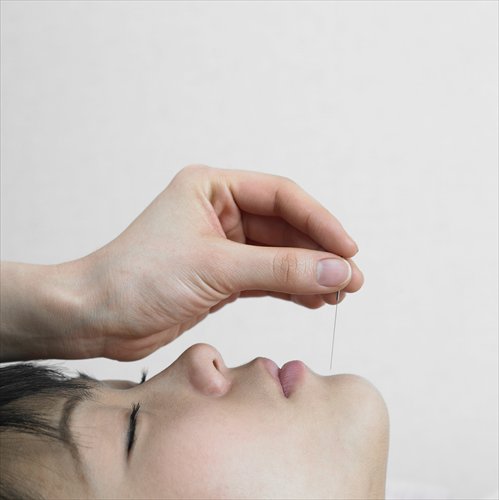
Western psychiatrists remain skeptical as to the efficacy of traditional Chinese medicine in treating mental illness. Photo: IC
"When you have a mental disorder, there are also a lot of physical ailments that add to your pain," said Huang Fei (pseudonym), who has been suffering from schizophrenia for over 20 years.
Schizophrenia is characterized by an inability to distinguish between what is and isn't real, and its psychological symptoms include auditory hallucinations, mental delusions and derailment of logic.
But as a consequence of taking antipsychotic medication to chemically suppress the effects of the disorder, Huang suffers from a number of debilitating physical side effects, including insomnia, constipation, dizziness, blurred vision, and a phenomenon known as "micturition syncope," wherein a person is prone to fainting during or immediately after urination.
"I sometimes fail to defecate for as long as four to five days, which is rather painful," said Huang. "I feel as if everything is wrong with my body, and that I am rotting away bit by bit."
Huang has been on medication ever since she was diagnosed with schizophrenia at the age of 16. Despite the ravages inflicted on her body by the antipsychotic drugs she takes, Huang said that she has little other choice but to continue in order to mitigate against the delusions she would otherwise experience.
For the past year however, Huang has been supplementing her prescription of antipsychotic drugs with traditional Chinese folk remedies. She was told by a family member that it could be an effective alternative to drug-based treatments, and at the very least, traditional Chinese therapies could help to mitigate the side effects of drugs she takes to control her mental disorder.
"I'm able to sleep better now compared to one year ago. But the effects [of traditional Chinese medicine] are gradual, so I have to be patient," said Huang. "I hope to reduce my intake of antipsychotic medication little by little."
According to a study conducted in 2009 by the Chinese Center for Disease Control and Prevention, there are over 100 million people in China who have been diagnosed with mental disorders.
Among this number, 16 million people suffer from what are classified as "serious mental illnesses," which is defined according to the likelihood that one might harm themselves or others.
According to a report published by the National Health and Family Planning Commission, common serious mental illnesses include schizophrenia, schizoaffective disorder, delusional disorder, and bipolar affective disorder.
In Western medical practice, serious mental illnesses are usually treated with antipsychotic drugs, in addition to counseling and behavioral therapy.
To try to find relief from the side effects of taking antipsychotic medication, some of those who suffer from mental disorders have turned to traditional Chinese medicine, despite widespread skepticism from Western medicine practitioners and the scientific community at large.
Heat in the brain
According to Yang Kuifen, the associate chief physician of traditional Chinese medicine at Beijing Deshengmen Chinese Medicine Hospital, the first recorded use of traditional Chinese medicine to treat mental disorder dates back to the Huangdi Neijing, a classical medical compendium that was completed in the Spring and Autumn Period (770 BC-476 BC).
The compendium documents the ailments of dian, which fits the modern diagnosis for epilepsy, and kuang, which shares similarities with modern clinical classifications for schizophrenia, hysteria, and a number of phobias.
The remedies suggested by the text for remedying such illnesses include acupuncture, blood-letting, and "moxibustion:" the burning of aged and grinded mugwort onto the skin of a patient's body.
In its modern day practice, said Yang, traditional Chinese medicine can be used to treat almost any kind of mental disorder.
An example Yang gave was of a rural-dwelling woman by the name of Wu Man (pseudonym), who was "haunted by ghosts" after the death of her 2-year-old daughter.
Wu suffered from hysterical fits of crying, which Yang described as resembling the sound of her infant daughter's wails.
After a number of superstitious folk rituals engaged by fellow villagers hoping to banish the ghosts proved ineffective, Wu was brought to the Deshengmen hospital.
"In traditional Chinese medicine, we call this kind of affliction tanre raoxin, which means that there is too much heat in the brain," said Yang.
The treatment prescribed to Wu was a mixture of cinnabar (a common mineral extract of mercury) and goldthread (a flowering plant that is also known as coptis or canker root). Yang said that the prescription had the effect of ridding the body of "internal heat," as well as calming the nerves.


Traditional Chinese medicine has been used to treat mental illnesses for over 2,000 years. Photos: IC
Sleep and schizophrenia
Traditional Chinese medicine was also effective in treating insomnia, said Yang.
Although not considered in Western mental health practices to be a mental disorder in itself, insomnia is classified as one of the common symptoms of a number of mental illnesses.
"There was the case of a 72-year-old man who couldn't sleep," said Yang. "He felt uncomfortable for no reason, and he could not stop hiccupping."
Yang diagnosed the man's symptoms as a typical case of ganyu qizhi, brought about by extraneous qi ("energy flow") and blood in the liver.
Her recommended course of treatment was a remedy made with suanzaoren, the ripened seed of a deciduous tree.
In addition, said Yang, acupuncture that targeted meridian points along the spine could be used as a general remedy to treat mental disorders.
"In traditional Chinese medicine, we know that the spine is connected to the brain, thereby providing the brain with nourishment," said Yang.
Traditional Chinese medicine even has an explanation for schizophrenia, said Yang.
"Traditional Chinese medicine explains the cause of schizophrenia as resulting from tan (an malignant substance) blocking the heart and the brain," said Yang.
With specific reference to the auditory hallucinations experienced by many of those diagnosed with schizophrenia, Yang said treatment would be targeted at the schizophrenia patient's kidneys, due to the supposed link between a person's ears and their kidneys as preached by traditional Chinese medicine.
Healthy skepticism
Despite Yang's claims as to the efficacy of traditional Chinese medicine in treating mental illness, most scientists and practitioners of Western medicine remain dubious.
Luo Xiaonian, a psychiatrist at Beijing Anding Hospital, said that using traditional Chinese medicine to treat disorders such as depression and schizophrenia had no scientific basis, and little to no effect in mitigating the psychological effects of mental disorders.
At best, Luo said, traditional Chinese medicine could be used to supplement Western psychiatric treatment, by alleviating some of the more harmful side effects of medication.
"Generally speaking, there are no professional mental health workers who will prescribe traditional Chinese medicine as a course of medication," said Luo.
Those who resorted to traditional Chinese medicine to alleviate their mental disorders, said Luo, were usually self-prescribing, and following traditional folk remedies.
"According to the 2010 edition of the standard pharmacology reference text used in China, there is not a single entry for a traditional Chinese medicine recipe to treat mental disease," said Li Yili, who is a pharmacist by profession.
"As far as I know, most prescriptions of 'traditional Chinese medicine' that are meant to treat mental disorders incorporate pharmaceuticals into their herbal concoctions, in order for there to be some effect."
Li echoed Luo's statement that there was no scientific basis in any of the claims made that traditional Chinese medicine could be effective in treating mental illness.
However Huang, having suffered so much and for so long from the negative side effects of Western antipsychotic medications, is not dissuaded by the arguments against the efficacy of traditional Chinese medicine.
"Actually, I don't care whether traditional Chinese medicine will work in curing my disease," she said. "I will just be thankful if it can reduce some of the drug-induced side effects."