HOME >> METRO BEIJING
Getting testy
By Chen Ximeng and Yin Lu Source:Global Times Published: 2015-9-1 19:38:01
Do expats believe eating animal genitals really boosts libido?

Some expats have tried dishes made with animal genitals in China, but many doubt the theory that they improve physical health. Photo: IC
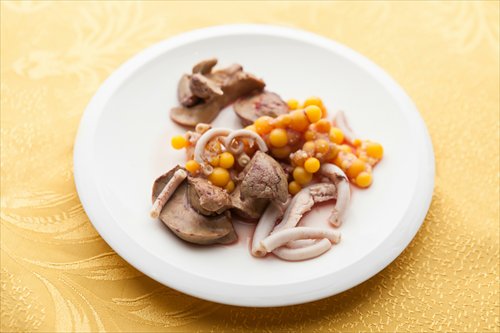
Photo: IC
Juicy, scalloped goat testicles steeped in spicy hot pot soup? Sautéed bull penis simmered with scallion and garlic? Anybody?
Although many expats take great pride in fully immersing themselves in Chinese culture by enjoying Yanjing beer and chuanr, renting an apartment in the hutong or even trying Chinese herbal therapies, eating dishes made of animal genitals might still be a challenging idea for most.
Francis Johnson, a teacher from the UK, is among the curious and brave ones. When he saw goat penis on a menu for the first time in his life at a barbecue restaurant in Dongcheng district earlier this year, Johnson and his friend dared each other to eat it.
"It was very chewy and stringy, but soft. There was not much meat. It was just like eating fat," said Johnson, adding that the goat genitals looked just like guts and were cut into even sections and grilled.
Johnson said they tried it just for fun and does not understand why many Chinese people believe eating animal genitals benefits one's physical health. Johnson did not feel any healthier after eating the goat penis, nor did he feel any discomfort.
"I do not believe eating animal genitals boosts your sexual drive or makes you feel macho," he said.
It is widely believed in China that eating reproductive organs of male animals, especially those of bulls, donkeys, goats, deer, dogs and horses, helps one to become stronger and increases sex drive.
Bizarre as it sounds, the cultural belief leads to the popularity of such eating habits and dishes. For example, on China's biggest online shopping site, taobao.com, customers can find hundreds of thousands of fresh or dried animal genitals, some soaked in wine. In Beijing, bull and goat penises are also served in many restaurants as one of the popular ingredients for cooking many dishes, especially in hot pot.
However, using animal genitals in food is not exclusive to Chinese culture. Many others share this culture and the belief that the dishes can help with male reproductive abilities. In the US, the Rocky Mountain oyster is a well-known novelty dish in western America that has nothing to do with the saltwater clam, but refers to bull testicles rolled in flour and deep-fried. The popularity of the dish even sparked numerous festivals across the country.
Guo Jun, an andrologist at Xiyuan Hospital under the China Academy of Traditional Chinese Medicine, told Metropolitan that according to Chinese traditional medicine (TCM) theory, you are what you eat, which is why eating animal genitals has been a popular tradition that has been passed down for hundreds of years.
There are cases recorded in TCM classics showing that animal genitals can boost yang (positive energy), increase one's libido and improve sexual functions, he said.
Guo said that unlike some rumors say, eating too much animal genitals doesn't cause serious damage to the body, such as intoxication, liver damage or impotence.
But Guo warns diners to dial down the dose. "Those who want to take it as a medicine to help with sexual dysfunction should follow a doctor's advice on how much and how often they should take it. Too much of the genital meat can cause you to suffer from excessive internal heat and even nosebleeds," he said.
Nutritionist Yang Yuhui told Metropolitan that in terms of nutriology, animal genitals are just muscles. The difference between it and other animal organs lies in that it is low in cholesterol, but high in protein.
"As long as the production place [of the meat] is not rich in heavy metals and the food is fully cooked, you do not need to worry about its health risks," Yang said.
Posted in: Metro Beijing