HOME >> WORLD
Exotic animals from Italy’s underworld get 2nd chance
Source:AFP Published: 2016/6/14 22:43:01
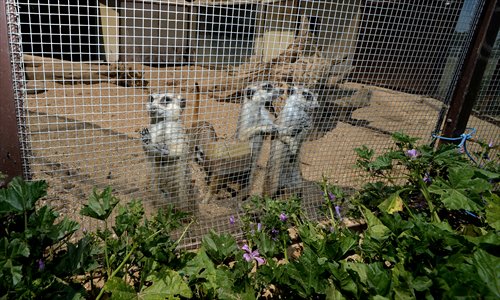
Meerkats play at the clinic. Photo: AFP
In ancient Rome, they would have been pitted against gladiators or served up at banquets.
Now a caiman, a python and a troop of monkeys that have been confiscated from mobsters, drug dealers or collectors find safe haven at a rescue center in the Eternal City.
Inside the majestic Appia Antica park near the historic city center, a veterinary clinic called "Our Animal Kingdom" is now home to exotic turtles, deer, boars, parrots, vultures, eagles and even a group of excitable lemurs.
Every year, Italy's police and forest guard rescue around 400 exotic animals, according to Raffaele Manicone, head of the local branch of CITES, the Convention on International Trade in Endangered Species of Wild Fauna and Flora.
The sharp-toothed caiman was rescued from the back garden of a drug dealer in Rome, who kept him in a small greenhouse.
Lively, long-haired gibbons Tai and Martedi, who swing from ropes as they cross their pen, hail from Thailand.
"Given my passion for wild animals, I began collaborating with the security forces about 10 years ago to save them," clinic head Umberto Cara said, explaining how hard it is for spaces to be made for such animals at local zoos.
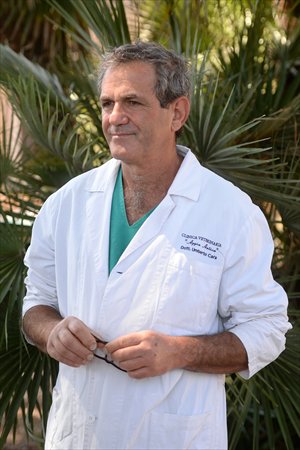
Doctor Umberto Cara at his veterinary clinic, "Our Animal Kingdom" Photo: AFP
Chatty gibbons
Cara, a man with a ready smile who drives a Jeep around the grounds to check on his prized creatures, works for free, paying for both the animals' medical care and their food and shelter by means of his day job as a vet for domestic pets.
"We transformed the clinic to help the wild animals, to cure them, to operate where necessary. The cages have been adjusted and reinforced to be able to hold dangerous animals," he said, as the caiman gave a lazy yawn nearby.
While the turtles may mind their own business, Cara has formed strong bonds with many of his charges, especially the gibbons.
And here they will stay as returning the animals to their original countries is complicated, and releasing them into the wild in Italy is a no-go.
"It would be ecological madness because it would compromise the existing ecosystem."
Some of the animals are rescued by customs officers in Italy's airports and ports, hubs in which smugglers are also regularly caught with valuable animal parts or skins stowed in false suitcase bottoms or stashed inside everyday objects.
"Wildlife and nature crime," is the fourth most lucrative crime business worldwide after weapons, drugs and human smuggling.
Worth more than cocaine
It is a common early source of income for "the big African and South American crime groups," including Nigeria's Boko Haram and the East African militant group Al Shabaab, Manicone said. The earnings are then reinvested in other illegal businesses.
While Europe has largely fallen out of love with ivory, it is still prized by Southeast Asian communities, as is rhinoceros horn, which when ground is considered a sort of "cure-all" medicine, particularly in Vietnam.
And the price of rhino horn has soared, now estimated to be up to $60,000 a kilogram, according to experts in South Africa where 80 percent of the world's rhino population lives.
"This year we seized five rhino horns at Milan airport. It is the most precious natural asset," Manicone said.
The horns were hidden inside cheap wooden statues.
"One horn alone can weigh up to seven kilograms. They are worth more than cocaine, more than gold," he added.
Despite the efforts of border police and CITES' anti-poacher army, the global trafficking of animals, plants or parts is worth some $30 billion a year, a fate from which Tai, Martedi and friends are lucky to have escaped.
Newspaper headline: Mob menagerie
Posted in: Europe