Philippines to gain more from China if settlement reached despite tribunal ruling: Duterte
Philippine President Rodrigo Duterte has expressed belief that the Philippines could get more benefits from China if the two countries could reach a settlement despite the recent ruling of the arbitral tribunal on the South China Sea issue.
Chinese envoy urges end to political farce regarding South China Sea
The South China Sea arbitration unilaterally initiated by the Philippines was a political anti-China farce in the disguise of law, manipulated by the United States, and acted by the former Philippine government, a Chinese envoy said here Wednesday.
China's South China Sea statements, white paper offer "authoritative,clear-cut elaborations" on position: ambassador
The Chinese government's two recent statements and a white paper regarding the South China Sea provide "authoritative, comprehensive and clear-cut elaborations on China's position," Chinese Ambassador to Britain Liu Xiaoming said Tuesday.
South China Sea arbitration decided by biased arbitrators
The arbitration over the South China Sea dispute unilaterally initiated by the former Philippine government is in fact a celebration among rogue arbitrators, who have hidden their selfish motives under the guise of the rule of law.
Expert views negotiation and consultation best way to solve disputes in South China Sea
Dialogues, negotiations and consultations are the best way to solve disputes in the South China Sea, a Singapore-based expert said on Monday during a seminar on South China Sea and regional cooperation.
Biased award in South China Sea arbitration has no binding force: expert
The biased award rendered by an arbitral tribunal in the South China Sea arbitration has no binding force as the ad hoc tribunal violated international law principles and standards, an expert said in Singapore on Monday.
South China Sea issue should be negotiated between claimant countries: Cambodia expert
The ASEAN countries are willing to see China and the Philippines going back to negotiation table, and the most effective way to deal with the South China Sea issue is to work with claimant countries, a Cambodian expert said on Monday.
South China Sea issue can only be solved through political negotiations: Singapore-based expert
International law cannot help solve complicated political issues such as disputes over the South China Sea, said Professor Zheng Yongnian, director of the East Asian Institute at the National University of Singapore (NUS).
Going back to negotiations only forward way for South China Sea disputes: Zhao Qizheng
Former minister of China's State Council Information Office Zhao Qizheng stated unequivocally that going back to negotiations is the only way forward for the settlement of disputes in the South China Sea and that an arbitration unilaterally initiated by the Aquino III administration will not impede the progress of China-ASEAN cooperation.
Resumption of negotiations between China, Philippines will set example for region: Singapore expert
China and the Philippines can set a good example to other Southeast Asian countries in coping with disputes over the South China Sea, if both sides resume bilateral negotiations and aim for pragmatic, positive results, said Dr. Oh Ei Sun, a senior fellow with S. Rajaratnam School of International Studies of Singapore, Nanyang Technological University.
South China Sea issue is "product of contemporary geopolitics": Singapore expert
The South China Sea issue is a product of contemporary geopolitics amid the relative decline of the United States and the rise of China, Zheng Yongnian, director of the East Asian Institute at the National University of Singapore, said on Monday.
Seminar on South China Sea, regional cooperation held in Singapore
Zhao Qizheng, former minister of China's State Council Information Office, said here Monday that going back to negotiations is the only way out for the disputes in the South China Sea and that the arbitration unilaterally initiated by the Aquino III administration will not impede the progress of China-ASEAN cooperation.
Permanent Court of Arbitration clarifies role in South China Sea case
The Permanent Court of Arbitration (PCA) said on Friday that it is not a UN organ and only provided registry services to the South China Sea arbitral tribunal.
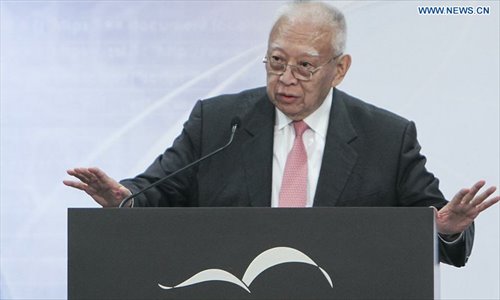
China has ample evidence to reject "ruling" on South China Sea dispute: Tung Chee-hwa
Tung Chee-hwa, Vice Chairman of Chinese People's Political Consultative Conference, said here on Friday that there is ample evidence for China to reject the "award" rendered on 12 July in the South China Sea arbitration established at the unilateral request of the Philippine government.
Australian MP calls on gov't not to add to tension in South China Sea
Australian government should do all it can to de-escalate the tension in South China Sea and help find peaceful resolution to the disputes instead of dictating, said Linda Burney, Member for Barton at the Federal Parliament House of Representative.

Li calls for cross-Eurasia cooperation at summit, warns on S.China Sea issue
Eurasian regions are facing opportunities as well as severe challenges such as terrorism and refugees, which require respects and cooperation from all sides, Chinese Premier Li Keqiang said Friday at an Asia-Europe summit in Mongolia, while also warning that world powers should not stir up regional conflicts, referring to the South China Sea.
Nuclear platforms to offer ‘military edge’ in South China Sea
China will soon start building its first maritime nuclear power platform and is expected to build 20 floating nuclear power stations in the future, which will largely beef up the power and water supplies on the South China Sea islands, according to China National Nuclear Cooperation (CNNC).
South China Sea arbitral tribunal null and void: Chinese ambassador
The award on the South China Sea Arbitration is certainly null and void, said Chinese Ambassador to South Africa Tian Xuejun in an interview published in The Star newspaper on Friday.