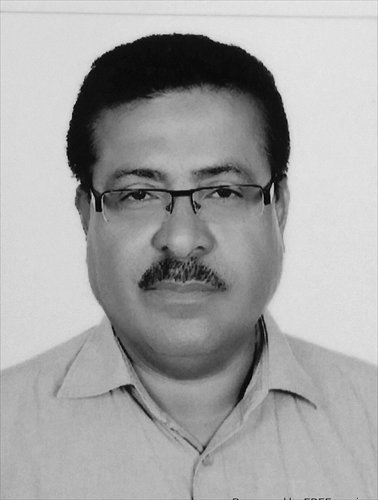
Munir Ahmed
Editor's Note:As Chinese President Xi Jinping is in Pakistan, described as China's "iron brother," for a state visit, China's plan to open new trade and transport routes between the two based on the concept of the China-Pakistan Economic Corridor (CPEC) that links Kashgar in China's Xinjiang Uyghur Autonomous Region and Pakistan's Gwadar Port, has drawn attention in both countries. How will this route be utilized? What role will the development of the Gwadar Port play in pushing forward the economic corridor? Global Times (GT) reporter Chu Daye interviewed Munir Ahmed (Ahmed), director of town planning for the Gwadar Development Authority on these issues at a recent strategic seminar about the CPEC held in Hainan Province.
GT: The managing director of the Gwadar Port once mentioned that the target this year is to make the port fully operational. Can this goal be reached?
Ahmed: The port is completed, but has yet to be linked with the road network. It will take two years to get the roads completed and to get the port linked with the major areas of Pakistan that will ultimately link with the port with China and other markets. So it will take two more years to become fully operational.
GT: How do you evaluate the port and the Chinese role in local projects?
Ahmed: China has played a very vital role in most of the projects being carried out in the Gwadar area.
The most important one is the Gwadar Port East Bay Expressway that links the Gwadar Port to surrounding areas. The other is a project that will bring water from dams near Pasni, 140 kilometers away from Gwadar, and which will provide the city with 10 million gallons of water every day. All these major projects are being financed by China as part of the CPEC.
GT: What are the challenges the two nations face in jointly developing Gwadar Port? Since terrorism is still a potential threat to the development in the area and the whole country, what can Pakistan do to further ensure the safety of the construction as well as Chinese workers in the port?
Ahmed: I don't think there are any visible challenges. Things are proceeding very smoothly.
Terrorism does pose a threat, and a challenge. But the conditions are improving and the number of terrorist attacks is decreasing day by day. In the Gwadar area, and in areas where the corridor goes, there won't be any major threat from terrorism.
In general, the security measures have been beefed up. And there have been more law-enforcing agencies working in Gwadar and the roads leading to Gwadar. Gwadar is now a safe place. The security measures are having an effect.
Currently, the biggest factor that hinders the development of Gwadar is that it needs more capital to get developed. Once the capital gets pouring in, everything will get started.
GT: There are many outside concerns around this port. For example, in India, fears were aroused on CPEC, including the projects in Gwadar. India sees it as a flagship project to strengthen connectivity with neighboring countries and as a strategic framework for pragmatic cooperation between China and Pakistan. What do you think?
Ahmed: Much has been said about the Indian involvement in the matters of Baluchistan and the improvements in the Gwadar Port. But again I would say, on and on, we don't see much disruption.
Everything we are planning is going smoothly and going forward. Politicians may know it better, but I don't believe that Indian intervention will stop the work of CPEC and that of the port. If it's there, it is negligible. I don't think their dislike of the project will make much difference.
GT: Are there any new developments in local government elections?
Ahmed: We hope the journey has begun. A new, democratically elected city government by the locals was just set up last month, whereas previously the city was administered by the provincial authority.
Local people are thus represented in their city government and they really want the city and the port to be developed. They are against terrorism and they will do everything to make their city peaceful.
