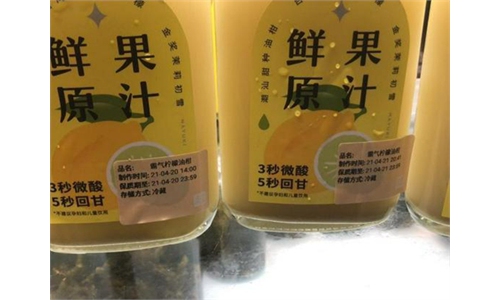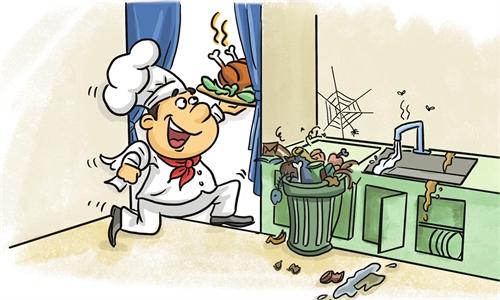
Doctors in Kunming, Southwest China's Yunnan Province join an exercise of emergent school food safety incidents with students in August 2012. Photo: VCG
China's top anti-graft body urged celebrity restaurants to ensure their food safety standards are maintained. The announcement came after a slew of internet-celebrity restaurants and food producers were exposed for failing to meet state-regulated food safety standards.
The Communist Party of China (CPC) Central Commission for Discipline Inspection (CCDI) issued a commentary on its website on Monday stating that food safety is a red line that cannot be crossed.
Catering brands that have recently been exposed with food safety problems are highly visible, large in scale and with many stores, said the commentary.
Some restaurant brands quickly grown in popularity with the help of online marketing hype, and some restaurant brands are created with the aim of quickly "making money", that is, the so-called "making quick money." It is not surprising that problems occur as the number of stores proliferated in a short period of time, and the service management and quality control capabilities are lagging behind, according to the commentary.
Multiple celebrity restaurants and popular food brands have been exposed with food safety issues recently.
Two outlets of "Panggelia" in Beijing, an internet celebrity chain restaurant featuring a crab casserole dish, was exposed to have sold dead crabs as live ones, and provided other stale food for sale.
Meanwhile, Alibaba invested supermarket- RT-Mart has been penalized by Jinan Administration of Market Regulation, in Shandong Province, and put in the list of enterprises identified as conducting serious illicit activities, the regulator said on Saturday, which came after the supermarket in Jinan was found to have sold expired pork and pork products.
Ensuring food safety is a challenge for the entire Chinese catering industry which has experienced an extended run of high growth, and many brands have only focused on growth of revenue and profit at the expense of food safety as the bottom line for running their business, Zhu Danpeng, a veteran food industry analyst, told the Global Times on Monday.
Regulators highlighted the importance of restaurants clearly dividing main responsibilities for each procedure of the chain to ensure food safety, according to CCDI, emphasizing that food companies have to formulate standardized regulations which should be strictly implemented.
The long-term development of catering companies ultimately relies on food safety and excellent quality and service. Even the most popular brands would only destruct themselves if they abandon the bottom line of food safety, said the commentary.
Zhu noted a combination of mature management, and prompt training of employees is viewed as guaranteeing food is prepared in a safe and hygienic way.
Moreover, the commentary also noted the importance of standardizing regulations beforehand by regulators cooperating with authorities while imposing strict penalties on violation of regulations.
Global Times
RELATED ARTICLES