Tata Motors says 20% rise in battery cell costs increasing short-term pressure
Battery cell costs rise 20% as lithium prices soar
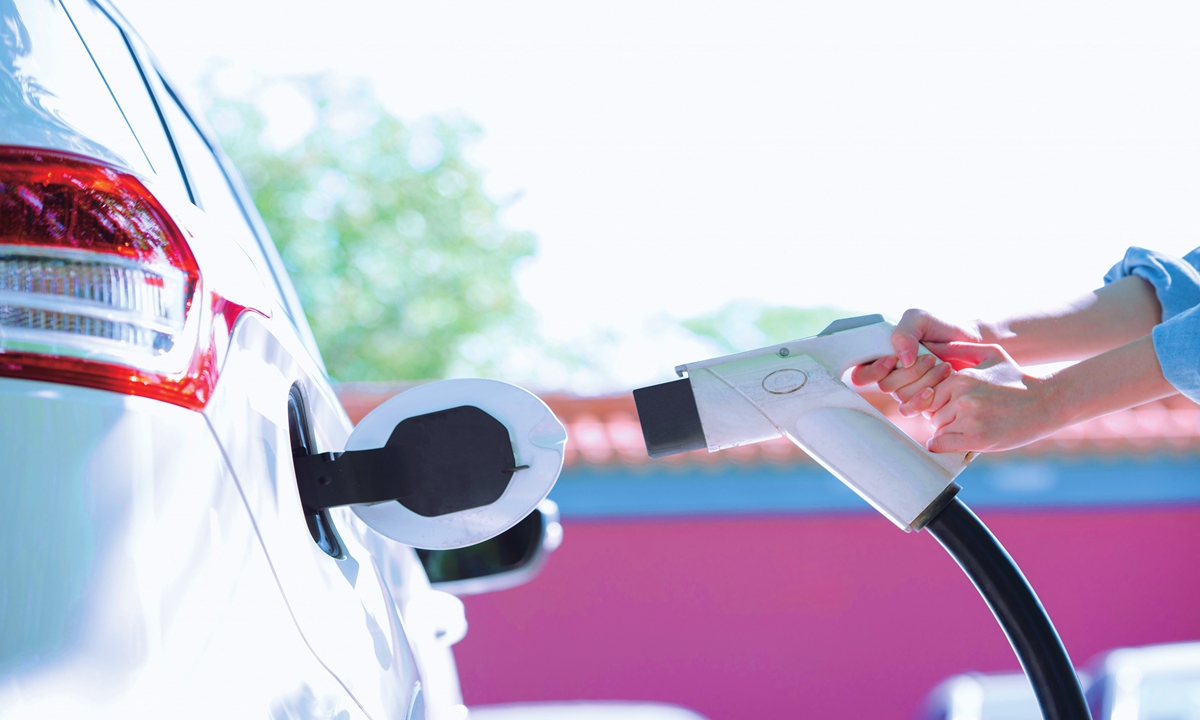
Photo: VCG
Tata Motors, India's top-selling electric carmaker, said the cost of battery cells had increased by about 20 percent because of a global surge in raw material prices, mainly lithium, putting pressure on the company in the short term.
Shailesh Chandra, managing director of the passenger vehicles and electric mobility subsidiaries, told Reuters that cell prices have been rising over months and he expects them to remain high for about a year.
"The immediate impact seems to be about a 20 percent kind of an increase, which will mean short-term pressure. This should moderate within a year and then start coming down," he said.
Chandra did not comment on whether this would affect the company's sales or profitability but said that demand for "green personal mobility" was rising sharply and he expected to offset some of the costs by increasing the use of locally sourced components.
Automakers globally are facing inflationary pressures due to surging costs of nickel, cobalt and lithium that are used in making batteries -- the most expensive part of an electric vehicle (EV) -- as demand outstrips supply.
This has been made worse by lingering global uncertainty, and analysts say it threatens to slow the trend of falling battery prices, which could hamper the broader adoption of EVs, especially in price-sensitive markets like India.
In India's nascent EV market, electric cars make up only 1 percent of total car sales. High battery prices and an insufficient charging network are the main reasons why there are few takers, and why more carmakers are yet to launch electric models.
Spot prices for lithium carbonate, which is typically used to make lithium-ion batteries, surged to over $70,000 per ton in March from about $10,000 a year earlier, according to data from industry forecaster Benchmark Market Intelligence.
Inflationary impact
"Going forward, this inflationary impact is expected to continue," said Manish Dua, senior analyst at Benchmark.
Tata recently raised the price of its Nexon electric sport utility vehicle in India by over $300 -- a 2 percent rise for the base model, following similar moves globally by Tesla and China's BYD.
Even so, Tata, which has more than a 90 percent share of India's electric car market, expects sales of its electric cars to grow over four-fold this fiscal year from 4,200 units last year.
The EV maker sources lithium-ion batteries for its cars from Tata AutoComp Systems, which has a joint venture with China's Guoxuan Hi-Tech to produce them locally.
Chandra said as battery recycling gains pace there will be access to raw materials beyond mines and that will offset some of the cost pressures.
"Short term spikes will happen. It is good to focus on the secular long term trend, which will keep going down," he said.
Reuters
RELATED ARTICLES