EU must recycle more to hit green goals
Rare-earth minerals key part of strategy to reach net zero mark by 2050
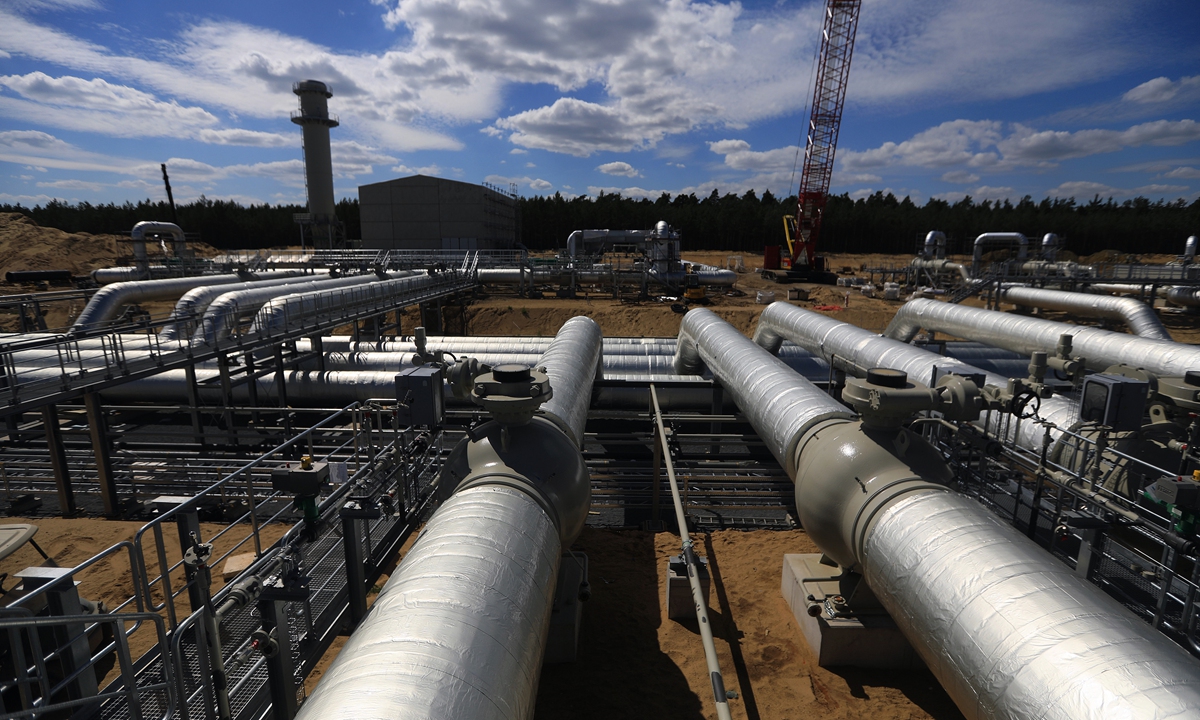
A view of the European Gas Pipeline Link Radeland 2 compressor station building site in Radeland, Germany Photo: CFP
Europe must act fast to secure supplies of crucial metals required for a green energy transition and its best bet is to recycle, a report said Monday.The 27-nation EU aims to be "carbon neutral" by 2050 - reducing greenhouse gases to a level where the amount produced is balanced out by the amount removed from the atmosphere.
To this end, it is seeking not only to use less energy but also to increase the amount of energy generated domestically from renewable resources.
That includes producing electric vehicles and batteries, bringing in more wind, solar and hydrogen technologies, and creating infrastructure to distribute this clean power.
But expanding clean technologies will require substantial inputs of raw metals and - in initial stages at least - much of this will probably have to be imported, according to the study by Belgium's KU Leuven university.
To bring carbon dioxide emissions down to "net zero" by 2050, the EU will need "35 times more lithium" than it uses today and "seven to 26 times the amount of increasingly scarce rare-earth metals," the Metals for Clean Energy report said.
The energy transition will also require far greater annual supplies of aluminum, copper, silicon, nickel and cobalt.
Europe could be self-sufficient for 40 to 75 percent of its clean energy metal needs by 2050 if it invests heavily now in recycling infrastructure and cuts red tape, said the report, commissioned by the European association of metal producers and recyclers, Eurometaux.
For now, the EU remains import-dependent for much of these metals and, the study warns, "there is growing concern about the security of supply."
"Europe needs to decide urgently how it will bridge its looming supply gap for primary metals. Without a decisive strategy, it risks new dependencies on unsustainable suppliers," said lead author Liesbet Gregoir.
If, on the other hand, it wants to become less reliant on external sources, Europe will need to open new mineral ore mines and refineries.
There is "theoretical potential" for new mines to provide between 5 and 55 percent of the continent's raw metal needs, the report said.
But projects need to get going now if they are to be operational in time.
Meanwhile, investments in refining are being stymied by Europe's energy crisis and soaring fuel prices.
The study concludes that "recycling is Europe's best chance to improve its long-term self-sufficiency," noting metals recycling produces significantly less carbon dioxide than primary metals production.
AFP
RELATED ARTICLES