SOURCE / PRESS RELEASE
SUEZ Group launches new projects with Chinese partners to support ecological transition
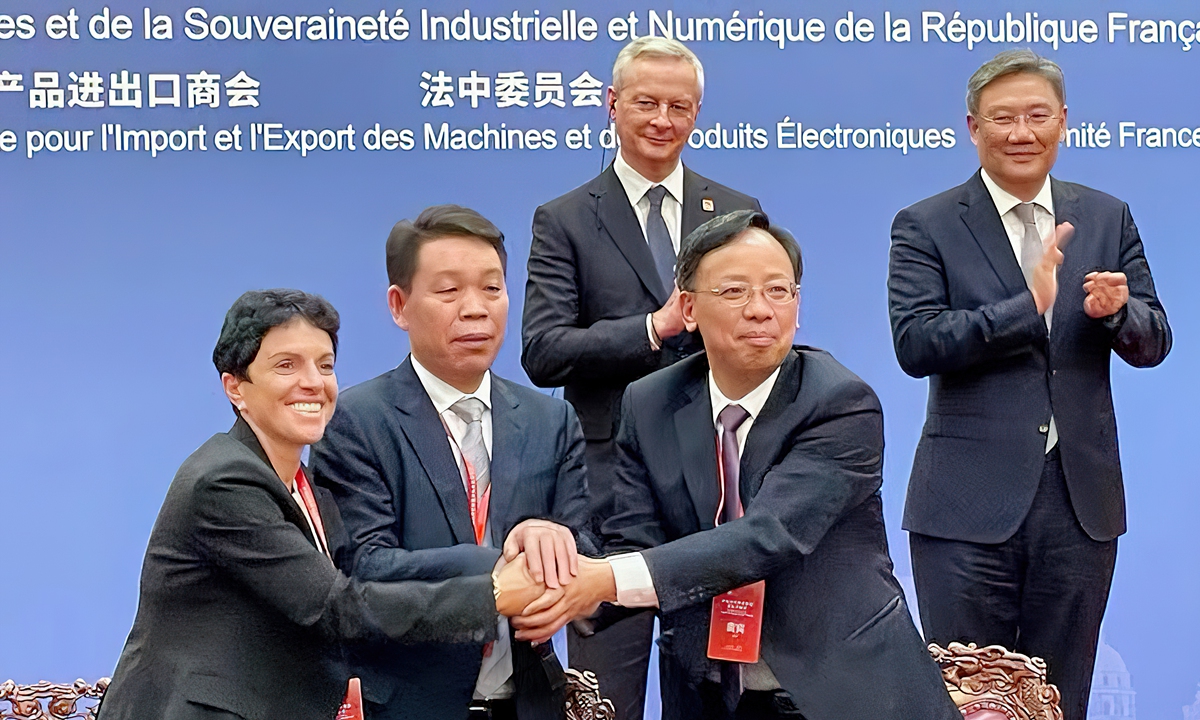
Photo: Courtesy of SUEZ Group
The SUEZ Group has launched new projects with its local partners in China to support the country's ecological transition. This move comes as the country has underlined the importance of sustainable development in water and wastewater treatment.SUEZ was part of the French business delegation that accompanied French President Emmanuel Macron on his state visit to China from April 5 to 7.
During this visit, witnessed by ministers of both countries, SUEZ and its Chinese partners, Wanhua Chemical Group (Wanhua) and China Railway Shanghai Engineering Bureau Group (CRSH), signed a cooperation agreement for a seawater desalination project that will further expand their cooperation in the environmental sector.
"I am thrilled to collaborate with Wanhua and CRSH on our Shandong project and turn it into a new standard of excellence in Sino-French environmental cooperation," said Sabrina Soussan, chairman and CEO of SUEZ Group.
"Our joint efforts are sure to boost bilateral cooperation in ecological transformation and advance China's high-quality development."
SUEZ and Wanhua, which is a global top 25 chemical company, worked together on four major water and wastewater treatment projects from 2017 to 2022.
For the new desalination project in Penglai, East China's Shandong Province, SUEZ will design and build for Wanhua a 100 million liter per day seawater reverse osmosis desalination plant in accordance with the highest industrial standards.
The project is SUEZ's largest seawater desalination project in the industrial sector worldwide and its first such project in China. This marks a breakthrough for SUEZ in the Chinese desalination market and a new step in its development strategy for China.
The new project broadens SUEZ's scope of cooperation with Wanhua and CRSH, and furthers the ambition of the three partners to build a green industrial ecosystem that adheres to sustainable development. It also speaks to the parties' commitment to working together to drive China's ecological transformation and to contribute to the shared vision of France and China.
"As a developing country, China has demonstrated ambitious goals in achieving carbon neutrality," said Soussan.
"China's transformation towards green, low-carbon, and sustainable development is likely to be a new driving force for both Chinese and foreign companies alike."
The group is setting its goals high on the Chinese market, as it hopes to create more opportunities for collaboration and innovation between the two countries in areas such as environmental protection, renewable energy and sustainable development.
The Paris-based company has planned to increase its research and development budget by 50 percent over the next five years, specializing in developing new solutions for preserving water resources, combating pollution, recycling and producing green energy from waste, as it eyes international development and innovation.
Global player
SUEZ Group is recognized as a leading environmental company. It entered China in the 1970s and has built over 400 water and wastewater treatment plants across China.
The group's new five-year strategic plan launched in 2022 lays a solid foundation for the company's development.
International business has become increasingly important for the French company, as it hopes to generate 40 percent of its revenue outside France by 2027, compared with only 25 percent in 2021, said Soussan.
Photo: Courtesy of SUEZ Group
Many opportunities will arise thanks to the priority the Chinese government is giving to environmental initiatives."We see significant opportunities in this market, particularly in areas such as water conservation, waste management, decarbonization and digitalization," Soussan said.
"In fact, even though the last few years have been difficult globally and there have been many challenges, our business has proven to be very robust in China."
China is already one of the SUEZ Group's strongest growth markets. The country's steady average growth rate of 5.2 percent over the past five years indicates that the long-term fundamentals of the economy remain strong, she noted.
"China's environmental market has tremendous potential for growth, driven by the authorities' ongoing efforts to protect the environment through central government's agendas and local government's action plans," Soussan said.
The Chinese government's focus on improving the environment and creating value from waste, both in terms of resources and energy, is "in perfect alignment with the SUEZ Group's development strategy," Soussan noted, which opens significant opportunities for SUEZ to contribute to China's ecological transition.
Localization matters
SUEZ Group conducts its businesses mainly through joint ventures with local enterprises overseas. Most of its business is not financially consolidated, meaning that revenue is therefore not a good indicator of size.
In China, GDP used to be the main, even the only, indicator for measuring growth, but the last decade has seen a change as environment protection prevailed over GPD growth.
"It is important to have the local partners to ensure we have a thorough understanding of the local situation and to be sure we are meeting the standards expected by the government and customers," Soussan said.
The company produces 18 million cubic meters of alternative water for reuse by itself or its clients in Asia. Its wastewater treatment plant in Qingdao, Shandong Province can process around 7 million cubic meters of wastewater every year, 90 percent of which can be reused after treatment.
But as the country continues developing, the increasing amount of waste generated calls for sustainable waste management practices to minimize environmental impact.
A new hazardous waste project in partnership with Shanghai Chemical Industry Park (SCIP), Shanghai Automotive Industry Corporation (SAIC) and Sinopec will be commissioning by mid-2023, among many other projects that have been operating in China, in particular with key industrial clients like BASF, Hengli and Wanhua, with a total contract value of over 185 million euros ($200 million).
"SUEZ's goal is not to be the largest provider of environmental services in China," Soussan said.
"Our ambition is very simple: To be the country's best environmental company."
