Israeli-Palestinian conflict poses uncertainty for global market, but unlikely to affect yuan assets: experts
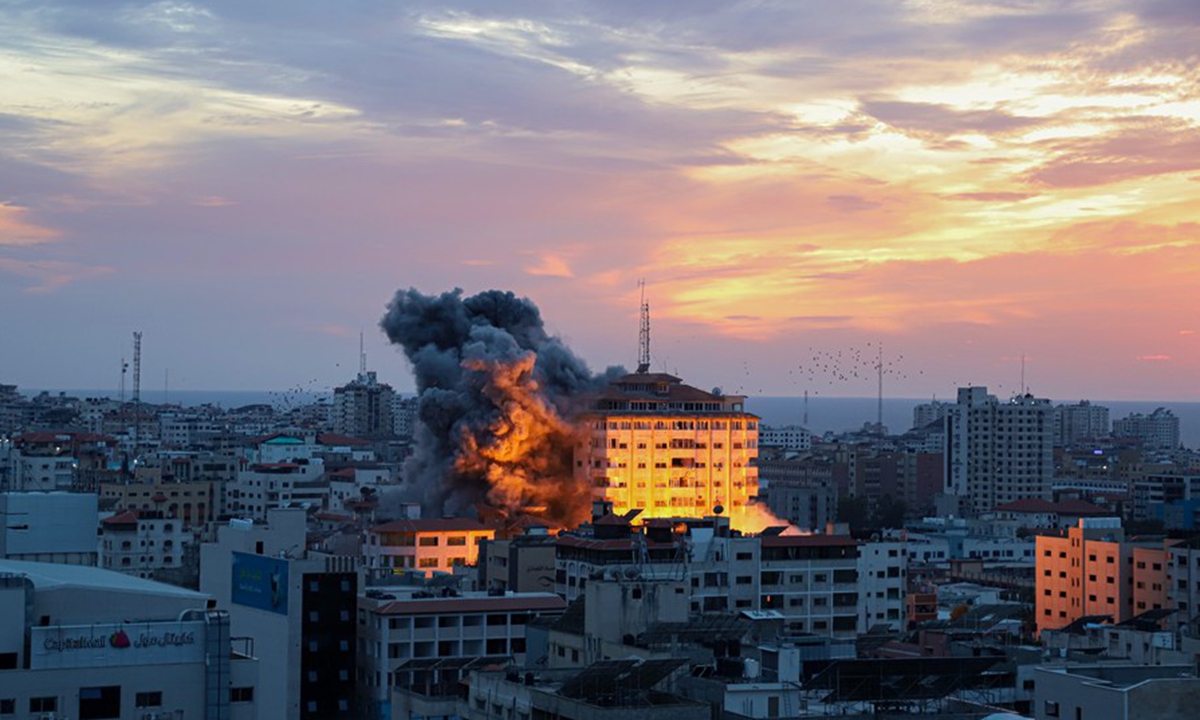
Smoke rises during an Israeli airstrike targeting a residential tower in Gaza City, on Oct. 7, 2023. (Photo by Rizek Abdeljawad/Xinhua)
The ongoing Israeli-Palestinian conflict is creating uncertainty across the global market, as further escalation could potentially drive up global energy prices amid persistently high inflation, Chinese experts said on Tuesday. However, it is unlikely to have a substantial impact on Chinese yuan assets, they noted.
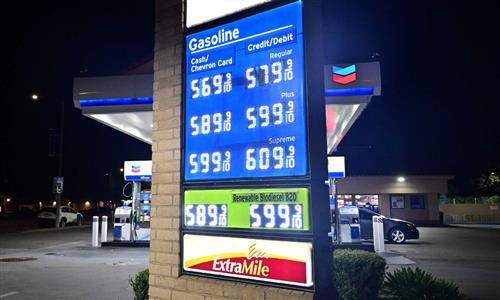
Following the outbreak of the conflict, the price of the global benchmark Brent oil futures increased from $84.58 on Friday to $88.28 during Tuesday's intraday trading, reversing the downward trend see over the previous week. Before the price retreated last week, it had briefly surged to nearly $100 per barrel mark.
Gold futures also see price jumped from $1,845.20 to $1,871.15 during Tuesday's intraday trading, also reversing a downward trend over the past several weeks. Experts noted that the safe-haven assets represented by gold are likely to rise further.
The current rise in oil prices remains within market expectations, and the likelihood of an oil crisis is relatively low. Whether oil prices will continue to increase in the future will depend on the evolving of the conflict situation, Xi Junyang, a professor at the Shanghai University of Finance and Economics, told the Global Times on Tuesday.
If the situation could be contained within a localized scope and doesn't escalate further, then the impact on the overall global financial markets is unlikely to be significant, Xi noted.
The crux lies in the evolution of the situation in the future, experts said.
Though neither party in the Israeli-Palestinian conflict is a major oil-producing or consuming nation, the conflict is situated in a strategically significant oil-producing region. Based on historical precedents, past Israeli-Palestinian conflicts have had a severe impact on the international energy supply, Hu Qimu, a deputy secretary-general of the digital-real economies integration Forum 50, told the Global Times on Tuesday.
The current situation remains uncertain, which therefore creates expectations of future oil supply uncertainties, and capital markets thrive on speculating such uncertainties, Hu said.
In the meantime, due to the extensive monetary stimulus undertaken by the US and other Western nations over the last two years, interest rates are currently stuck at elevated levels, while inflation continues to remain stubbornly high.
The current persistently high and even rising oil prices are certainly unfavorable for global, including US, price levels as they increase the overall cost of economic operations. As a direct consequence, it becomes challenging for interest rates in Europe and the US to decrease and they may continue to remain at elevated levels which will likely hinder the future economic recovery and growth, Xi noted.
For China, the domestic economy is currently on a stable growth trajectory, with demand gradually recovering. In the short term, it is not expected that the Israeli-Palestinian conflict will have a substantial impact on yuan assets, Hu said.
Countries are following the conflict closely, as it came at a tough time for the global economy. South Korean officials said on Monday that as the evolving direction of the Middle East situation remains uncertain, the government will maintain a high level of vigilance, enhance market supervision further, and simultaneously make all possible efforts to mitigate the impact of this event on the South Korean economy, according to Yonhap News Agency.
RELATED ARTICLES