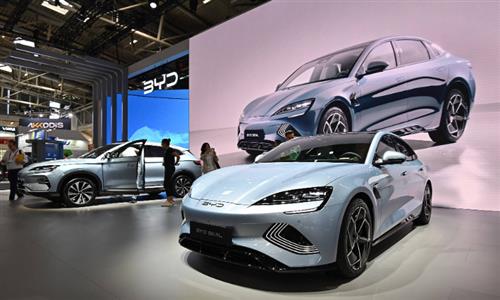
France's decision to exclude Chinese-made EVs from subsidies lacks legal basis: Chinese Embassy
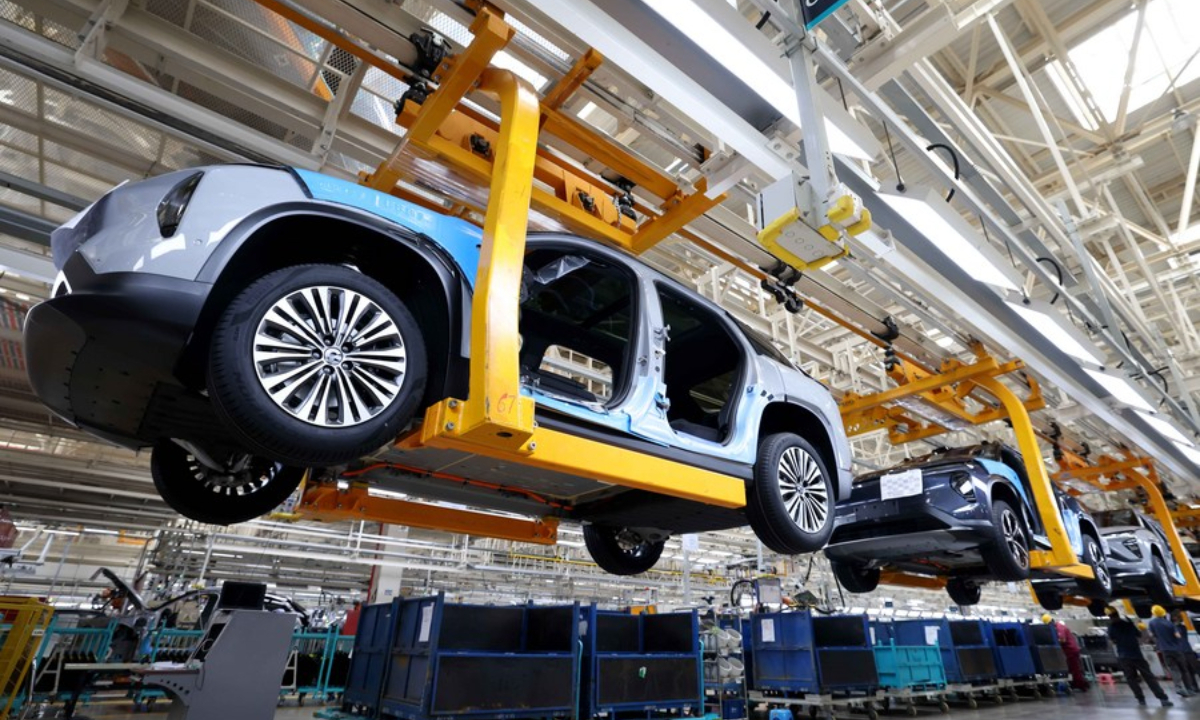
Photo taken on August 28, 2022, shows a complete vehicle production line at a new energy vehicle factory in Hefei, East China's Anhui Province. Photo:Xinhua
France's recent decision to offer incentives for electric vehicle (EV) purchases but exclude Chinese-manufactured models is a discriminatory and protectionist move, said a spokesperson for the Chinese Embassy in France on Friday.
The spokesperson said the action from the French side goes against WTO rules and undermines fair competition. It also contradicts international efforts to combat climate change and harms the interests of various parties, including French consumers.
The remarks came after French government introduced new EV regulations that offer subsidies based on the carbon emissions produced throughout the EV manufacturing process. It claims that this approach will reduce carbon emissions by 800,000 tons annually in France. Chinese-manufactured models are excluded from the first list of vehicles that enjoy the subsidy.
The spokesperson argued that the new regulations on EV subsidies are discriminatory and contradict the French government's stated goals. The subsidy should be offered to encourage the purchase of EVs and reward zero emissions during the use of EVs, regardless of a vehicle's origin. Linking the subsidy to carbon emissions during production process is unreasonable.
A recent report by Deloitte highlighted that the production of an EV actually generates more carbon dioxide, with 11 tons, compared to six tons produced by a conventional fuel car. The majority of emissions, around 90 percent, are attributed to upstream components and raw material production during the manufacturing process.
Based on these assumptions, producing an EV in France would result in 11 tons of carbon emissions, while importing one would indirectly reduce 11 tons of carbon emissions for France, as those emissions are left in the exporting country, the spokesperson said.
Therefore, although the French government's decision to exclude Chinese EVs from subsidies may stimulate its domestic EV manufacturing, this would also increase carbon emissions in France, rather than achieve its stated goal of eliminating 800,000 tons of emissions annually, the spokesperson said.
We hope that France will reconsider its approach and provide a fair, non-discriminatory, and predictable policy environment for foreign EVs, including those from China, the spokesperson added.
China's Ministry of Commerce (MOFCOM) on Thursday said that France's new cash incentives for EV purchases that exclude models manufactured in China amount to discrimination against EVs made outside of the EU, urging Paris to follow WTO rules and provide a fair market environment for Chinese and other firms.
Shu Jueting, a MOFCOM spokesperson, said that China is concerned about the move and believes that the relevant measures constitute discrimination against EVs produced outside the EU, which harm the interests of all parties.
"It is hoped that the French side will abide by WTO rules, proceed from the overall situation of maintaining the stability of global production and supply chains and the healthy and stable development of green and low-carbon industries, and provide a fair, non-discriminatory and predictable market environment for enterprises from all over the world, including those from China," Shu told a press briefing in Beijing.
Global Times
RELATED ARTICLES