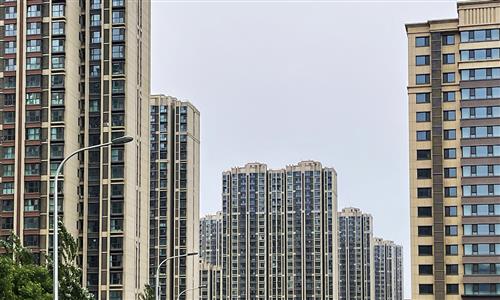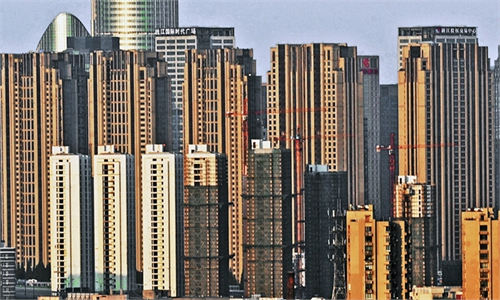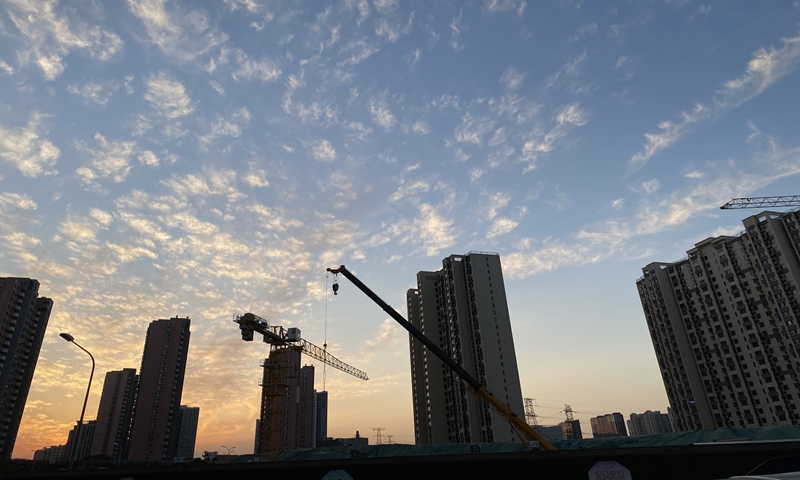
Cranes are seen at a construction site of a housing complex in Beijing. Photo: VCG
Data from China's Ministry of Housing and Urban-Rural Development showed that local governments in 214 cities in 29 provinces have established a real estate financing coordination mechanism, known as the "white list mechanism," which allows city governments to recommend residential projects to banks as being suitable for financial support, and to coordinate with financial institutions to meet project needs.
As of February 20, a total of 5,349 residential projects had been put on the list. Among them, 162 projects in 57 cities received development loans of 29.43 billion yuan ($4.09 billion). The figure was up by 11.3 billion yuan from February 4, days before the Spring Festival.
Some 400 distressed developers are also on the white list. Approved developers such as Country Garden, Sunac, Shimao, Greenland and CIFI were recommended to banks and they're likely to apply for loans, the 21st Century Business Herald reported on Tuesday.
Such efforts are expected to ease the liquidity squeeze for distressed developers, which are eager for financing, experts noted.
China is accelerating the implementation of the urban real estate financing coordination mechanism to dispel market concerns over the property downturn, experts said.
Instead of being reluctant to grant loans to the sector, many financial institutions are actively engaged in the project.
According to the Xinhua News Agency, many banks have set up special teams and working groups at their head offices and local branches for this purpose. Some also established green channels to review and approve applications so developers get funds as soon as possible.
Assisting financially distressed developers with debt restructuring is the key to this policy. The policy on supply-side financing needs has become stronger, and it will offer more accurate support to targeted projects and prevent project delivery risks, experts said.
Global Times
RELATED ARTICLES