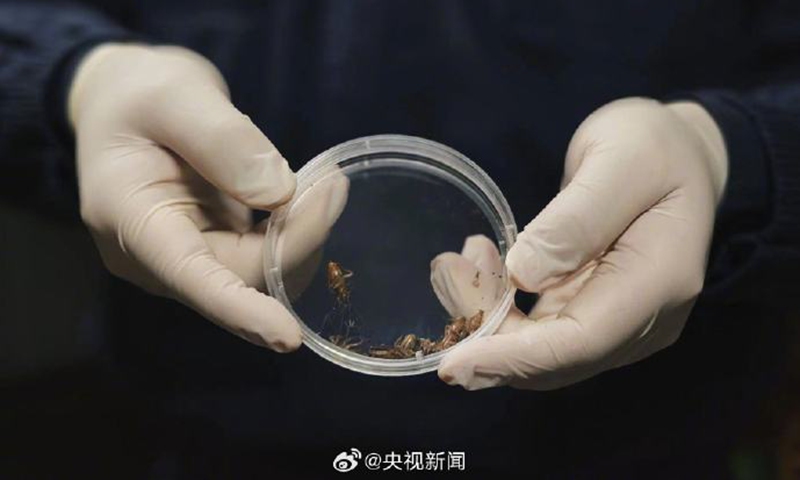
Cockroaches Photo: Screenshot from CCTV news report
Xiamen Customs in East China's Fujian Province intercepted over 20,000 cockroaches on an incoming vessel during a health quarantine inspection on Monday. With temperatures rising, mosquitoes, cockroaches and other pests have been increasing in numbers, with some even attempting to "smuggle in groups."
According to China's state broadcaster China Central Television (CCTV), customs officers discovered a large number of cockroaches stacked in various areas of the ship, including the deck, cabin, restaurant, and food storage rooms.
The officers immediately sealed off the vessel, issued the "Inspection and Quarantine Treatment Notice" to the ship owner, and instructed them to carry out pest control measures. They also supervised the sanitation process. Over 20,000 dead cockroaches were found on the ship.
According to Xiamen Customs officials, cockroaches can carry harmful bacteria such as dysentery bacilli, Salmonella typhi, cholera vibrios, and tuberculosis bacilli on their bodies, making them important vectors for many infectious diseases.
Due to their strong adaptability and reproductive capacity, cockroaches can easily cross borders through transportation vehicles, containers and goods. It is essential for transportation managers, port operators, and related personnel to strengthen daily prevention and control measures against cockroaches and other disease vectors to reduce the risk of invasive species and disease transmission, safeguarding the biological security of the country.
The vessel has since passed the sanitation inspection and departed after unloading cargo.
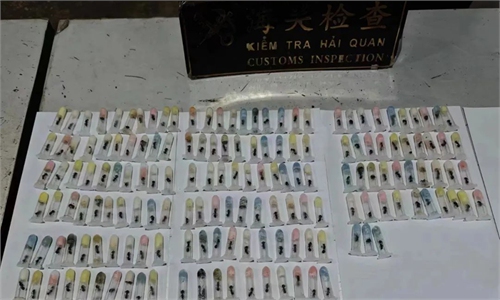
Previsously, according to China's General Administration of Customs in February, customs officers in Kunming, Southwest China's Yunnan Province recently found a nervous and abnormal gaited inbound passenger during supervision at the Nanxi River inspection channel.
The officers conducted an inspection and found 163 ants hidden in the passenger's waist. After identification, it was determined that these ants were messor barbarus.
Messor barbarus is an exotic species that is aggressive, engages in group warfare, and prefers to eat seeds of grass species. It has strong adaptability and reproductive capacity, and once introduced and dispersed, it can easily cause biological invasions, posing a threat to local organisms and the ecological environment once they form a population.
The customs reminded that according to relevant laws and regulations, it is not allowed to introduce exotic species without approval, and it is prohibited to carry or mail live animals and plants into the country. Those who violate the regulations will be held legally responsible by customs.
Global Times
RELATED ARTICLES