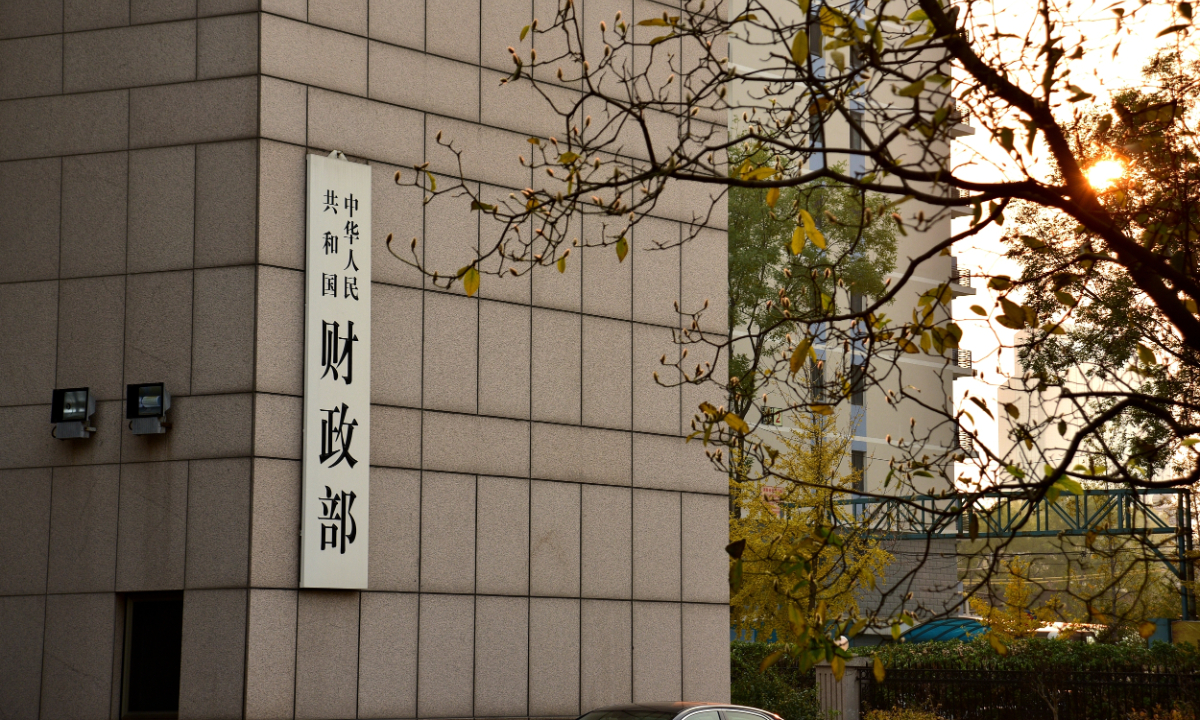
Ministry of Finance Photo: VCG
China's Ministry of Finance (MOF) vowed on Monday to promote the purchase of the nation's saving bonds, including increasing the issuance volume and adjusting purchasing limits for individuals, in response to soaring demand.
The move is related to the economy's performance, and the surging demand reflects investors' upbeat view of the nation's economic development, experts noted.
Li Xianzhong, an official from the MOF, said during a press conference on Monday that the issuance and purchases of saving bonds in March and April this year remained stable, despite supply and demand conflict in some regions.
An issue of e-savings bonds in April, which could be purchased via mobile phones and at banks, was sold at a rate of 99.7 percent of the planned issuance on the first day, a significantly faster pace than the average in recent years, said Li.
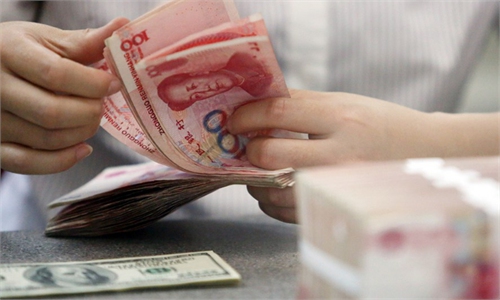
"However, for certificate savings bonds issued in March, which could only be purchased via bank counters, 14 of the 466 outlets in Beijing sold the planned volume within half an hour, and some investors at bank counters were not able to purchase saving bonds," he said.
In order to meet investors' demand, the MOF vowed to focus on sales of savings bonds, study an appropriate increase in the scale of issuance and lower individual purchase limits in order to benefit more investors.
In addition, the MOF will allocate the volume of certificate and e-saving bonds, and increase the planned volume at certain outlets where there's higher demand.
The Chinese government said in October 2024 that it would issue an additional 1 trillion yuan ($140 billion) in special-purpose government bonds for disaster relief and other projects, starting from the final quarter of 2023, which had been deployed to local governments by the end of February 2024, said the MOF.
China's investment fell due to the COVID-19 pandemic, and the issuance of treasury bonds played an important role in carrying forward investment and the economy, Li Chang'an, a professor at the Academy of China Open Economy Studies of the University of International Business and Economics, told the Global Times on Monday.
Global Times
RELATED ARTICLES