China-SK expanded services trade co-op to inject vitality to region amid geopolitical challenges

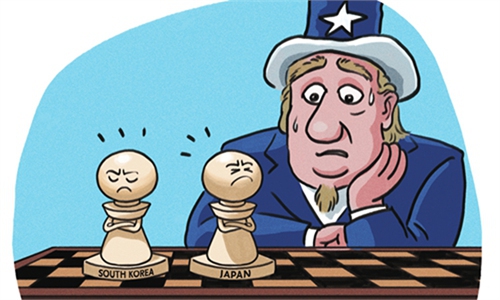
Illustration: Xia Qing/GT
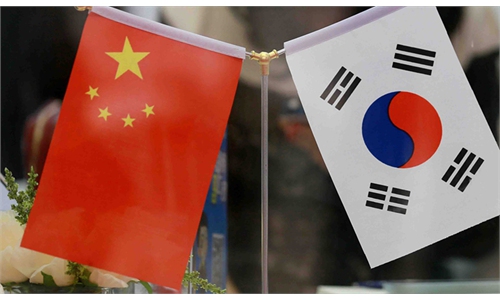
China and South Korea are holding the 10th round of talks to expand their existing free trade agreement (FTA) from Wednesday to Friday in Seoul, to include services and investment, South Korea's trade ministry said on Thursday, according to the Yonhap News Agency. "Amid the weakening multilateral trade system, the importance of bilateral FTAs has been in the spotlight," said Kwon Hye-jin, South Korea's chief negotiator.Chinese and South Korean trade officials in December met to discuss ways to further utilize their FTA while expanding its scope to include services and investment. Both sides agreed to accelerate the second phase of negotiations for the China-South Korea FTA, deepen cooperation in industrial and supply chains, and strengthen cooperation in services trade and investment, China's Commerce Ministry said in a release.
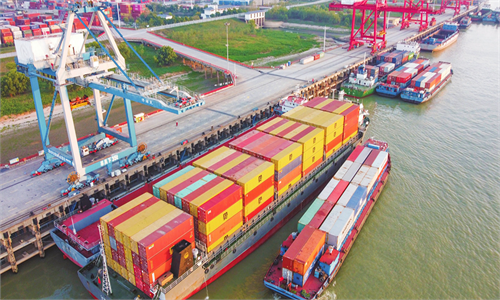
China and South Korea have been and will remain beneficiaries of free trade. Since the official implementation of their FTA in December 2015, both countries have reduced tariffs 10 times, and they have consistently advanced the liberalization and facilitation of services and investment. According to data from Chinese customs, bilateral trade increased from $275.8 billion in 2015 to $328.1 billion in 2024.
Currently, geopolitical factors and protectionism pose severe challenges to global and Asian free trade cooperation. At this critical juncture, China-South Korea economic and trade cooperation faces both challenges and significant opportunities, especially in the areas of services and investment. If China and South Korea can accelerate the expansion of their FTA cooperation into the services and investment sectors, it will inject new vitality into bilateral trade and the regional economy.
With the strong recovery of tourism after the pandemic, the accelerated development of the digital economy, and the potential deepening of bilateral relations between China and South Korea, services trade between the two countries is expected to continue growing, particularly in the fields of technology, online entertainment and education. The share of this segment is expected to increase continuously.
For instance, in terms of personnel exchanges and tourism, there is significant potential for growth. China has fully relaxed and optimized its visa exemption policy, introducing measures to facilitate foreign visitors' trips to China. According to data from China's major online travel agency Ctrip.com, inbound trip reservations from South Korea to China during the pending Spring Festival saw a year-on-year jump of over 400 percent, showcasing the ongoing elevated enthusiasm among South Koreans coming to China since the visa-free policy took effect in November.
There are significant opportunities between the two economies in the area of services trade. In upcoming years, the transformation and upgrading of China's industrial structure and consumption structure will not only generate substantial demand for South Korea's productive and living services trade but will also make services trade a new growth point in China-South Korea economic and trade cooperation.
To fully tap the vast potential of bilateral services trade cooperation, both countries are expected to collaborate on promoting cross-border services trade; reducing barriers to services trade; advancing the alignment of rules, regulations, management and standards in the services industry, and leveraging comparative advantages in research and development, design and manufacturing.
Unilateral trade restrictions and geopolitical interference from outside the region that go against market principles will only increase uncertainty in regional trade and investment cooperation. Whether driven by their own interests or by market development trends, China and South Korea need to eliminate the interference of geopolitical factors from external countries on trade, remain vigilant against "decoupling" and promote greater market openness and interconnection based on market principles and rules.
The author is a reporter with the Global Times. bizopinion@globaltimes.com.cn
RELATED ARTICLES