Pursuing high-quality economic development in 2025
Efforts to boost consumption, optimize economic structure will intensify: economist

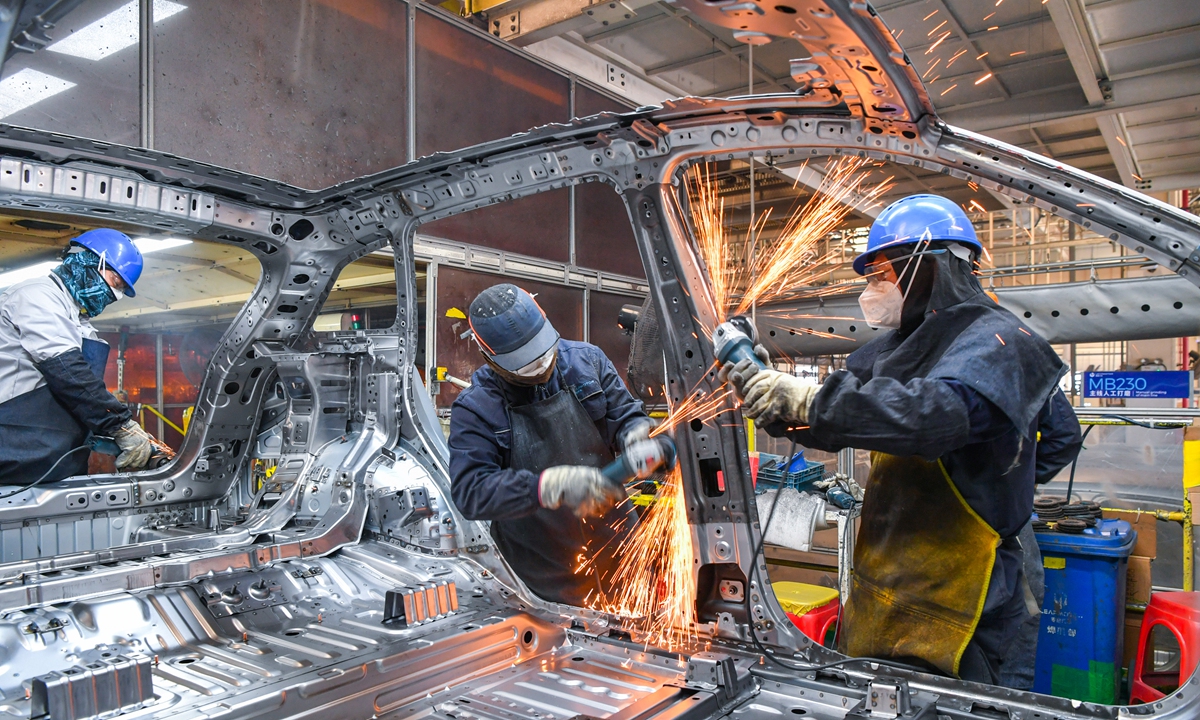
Workers polish components in the smart factory of Leapmotor, a Chinese EV start-up based in Jinhua, East China's Zhejiang Province. Photo: VCG
Editor’s Note:
As the world undergoes changes unseen in a century and the global economy faces growing uncertainty, China’s economic development has garnered increasing global attention. While the Chinese economy is frequently covered by international media, such reports are often biased or inaccurate. To provide an objective and professional perspective and to debunk misconceptions about the world’s second-largest economy, the Global Times is launching a special column entitled China Barometer. In this series, we invite renowned Chinese and foreign economists to share their insights into the latest development trends in China and their global implications.
Regarding China’s economic growth prospects in 2025, analysts are chewing a range of major factors that may define this year’s economic development trend. It is essential to bear in mind the guiding principles set by the Central Economic Work Conference held in December, which emphasized the need to coordinate key relations and tackling the priorities in the economic work.
In 2025, China’s economy is expected to continue on a growth trajectory, maintaining its stability. The GDP will achieve steady expansion despite facing some challenges and global uncertainties, as the government’s pro-growth policies will continue to display their effects.
To put it in perspective, the country’s fiscal policy, monetary policy, employment policy, industrial policy and other associated policies should guide the economy to make sustained progresses.
Optimization of structures
In the process of growth, the economy is expected to see further optimization of structures and a significant push in boosting new quality productive forces. High-quality development is the first and foremost task in building a modern socialist country in all respects. To effectively carry out the economic work in 2025, China needs to continue to focus on pursuing high-quality development.
The Central Economic Work Conference outlined nine key tasks for 2025, with “vigorously boosting consumption, improving investment efficiency, and expanding domestic demand” at the top of the government’s agenda. The efforts in this regard are expected to bring significant changes in the economic structure this year.
China is expected to continue to promote the trade-in policy for durable goods, like automobiles and home appliances, to stimulate domestic consumption. This year is expected to see a notable improvement in the efficiency of capital investments.
The Central Economic Work Conference emphasized the importance of coordinating five pairs of key relations in this year’s economic work, namely, an efficient market and an effective government; balanced aggregate supply and demand; fostering new drivers of the economy and upgrading old ones; optimizing incremental resources and making good use of existing resources, and enhancing quality and expanding total output.
The coordination work is essential for overall economic planning, which often paves the way for well-structured development and progress of the Chinese economy, focusing on high-quality growth, while ensuring sustained vitality.
In 2025, China’s economy still faces significant external uncertainties alongside some internal challenges. For instance, there is insufficient domestic demand, some enterprises are experiencing difficulties in their operations, and there are risk factors in certain areas.
However, the Central Economic Work Conference made comprehensive arrangements to address those issues. China will confront these difficulties by stepping up policy support for the economy.
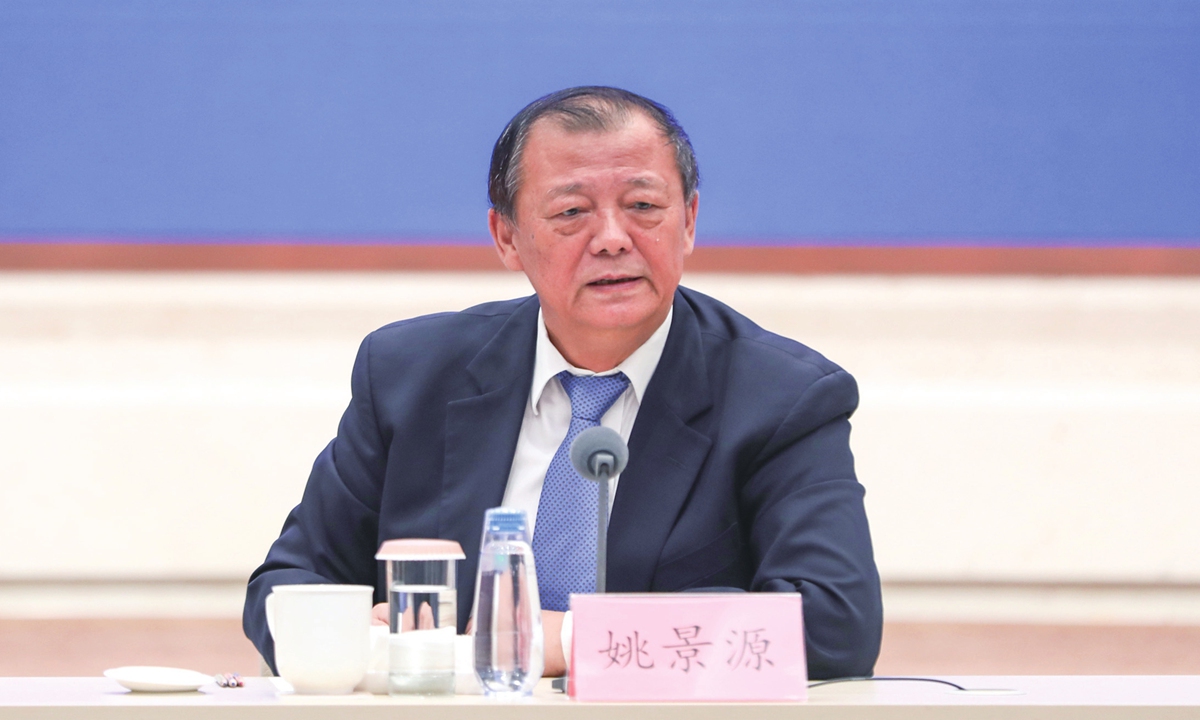
Yao Jingyuan, a special researcher of the Counselors' Office of the State Council. Photo: VCG
Incremental support
Since September, the country has introduced a set of incremental stimulus policies, and as a result, the economic indicators have gradually stabilized. At the beginning of this year, more supportive policies are expected to shore up the economy.
At the beginning of this year, China’s central bank, the People’s Bank of China, said during its 2025 work conference that it will implement a moderately loose monetary policy to create a sound monetary and financial environment for achieving stable economic growth.
China’s top economic planner, the National Development and Reform Commission, has also released a guideline on forming a unified and well-functioning national market. The continuity of these policies has helped boost market confidence and promote high-quality economic development.
It is anticipated the country’s budgetary deficit ratio, which is to be deliberated and approved by the National People’s Congress in March, will be set higher than last year’s levels. At the same time, the issuance of long-term government bonds will be intensified, and fiscal spending will be further enhanced.
In addition, policies aimed at facilitating structural optimization, improving people's livelihoods and promoting domestic consumption will be made more proactive. A series of incremental stimulus policies introduced since September are expected to have a greater impact backing up the economy this year.
Pessimistic views of the Chinese economy, hyped by some Western media are unfounded. According to calculations based on the goals of China’s 14th Five-Year Plan (2021-25) and the medium- to long-term goal of doubling the GDP between 2020 and 2035, the average annual growth rate should be about 4.7 percent during the period. This suggests that as long as China can stabilize economic growth at about 5 percent annually, more importance should be given to high-quality development, optimizing the economic structure, and improving the efficiency of economic growth.
While striving for higher growth rates is important, overly pursuing high growth rates may impact the nation’s high-quality development and hinder structural adjustment. Therefore, it is essential for China to target a proper growth rate in 2025, while continuing to prioritize improvements in quality, structural adjustment, and efficiency enhancement.
China should continue to focus on cultivating new quality productive forces. The Chinese economy is currently in a transformation phase, shifting from the previous model of high-speed growth to a new model of high-quality development.
High-quality development focuses on meeting the people's needs for a better livelihood, while emphasizing a people-centered approach. This commitment is also reflected in the package of incremental policies launched since September 2024 and the measures proposed at the Central Economic Work Conference.
In 2024, one of the notable achievements of Chinese economy was its progress in high-quality development, particularly the further reduction in energy consumption per unit of industrial added value. Green development initiatives aim to reduce carbon emissions and cut pollution. China has made significant strides in these fields, which will also accelerate the economic growth.
The article was compiled based on an interview with Yao Jingyuan, a special researcher of the Counselors' Office of the State Council. bizopinion@globaltimes.com.cn
RELATED ARTICLES