Chinese commerce minister voices opposition to US tariffs, calls for equal dialogue in letter to USTR
Nation's stance toward US tariffs 'clear, persistent': expert
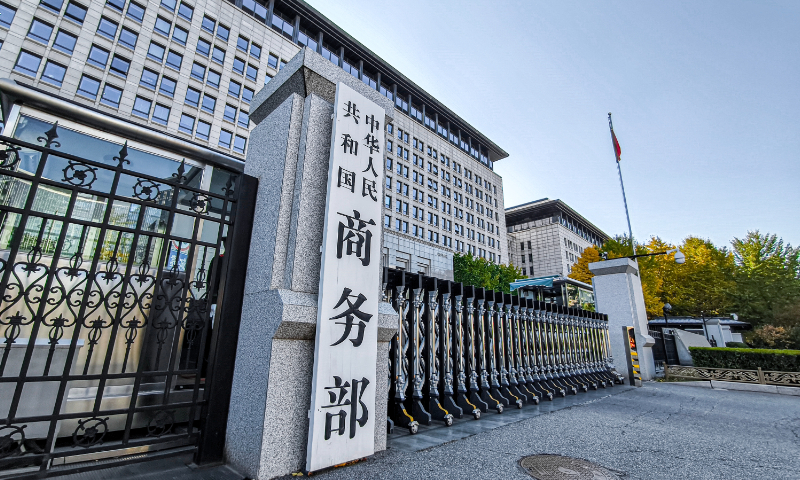
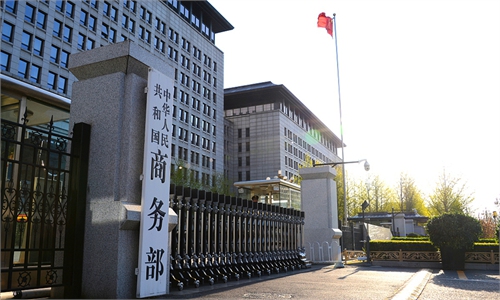
The Ministry of Commerce of China File photo: VCG
Chinese Commerce Minister Wang Wentao sent a letter to the newly appointed US Trade Representative (USTR) Jamieson Greer, congratulating Greer on becoming the 20th USTR, while also expressing China's concerns regarding the US imposition of additional tariffs on Chinese products, the Ministry of Commerce (MOFCOM) said in a statement on Thursday night.
Wang noted that the US has recently imposed a 10 percent tariff on Chinese products on the grounds of fentanyl and other issues. China has expressed resolute opposition to this and has taken corresponding countermeasures, which are necessary to safeguard China's legitimate rights and interests.
China has also noticed that US President Donald Trump signed a memorandum titled "America First Investment Policy" on January 20, under which a number of investigations target China. It is hoped that the US will carry out investigations in an objective, rational and professional manner, and improve transparency, Wang said in the letter.
It is normal for China and the US to have differences in the economic and trade fields, but they should address each other's concerns through dialogue and consultation on an equal footing, Wang noted.
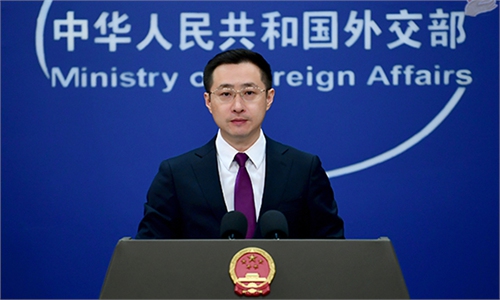
At a press conference on Thursday, He Yadong, a spokesperson for the MOFCOM, said that the Chinese and US commerce departments have been in constant communication, when asked about latest communication between Chinese and US trade officials after Trump's reported remarks about a possible deal.
Bloomberg reported on February 20 that Trump said that a fresh trade deal with China was possible, signaling a willingness to head off a brewing trade war between Washington and Beijing.
Asked whether Chinese and US trade teams have conducted any type of communication or dialogue recently and whether the two sides discussed topics such as tariffs, He Yadong said that China firmly opposes the US' unilateral tariff measures, will resolutely defend its legitimate rights and interests, and is also willing to solve the problem through dialogue and consultation.
The remarks came after recent important interactions between senior officials of the world's two biggest economies since Trump took office last month.
On February 21, Chinese Vice Premier He Lifeng held a video call with US Treasury Secretary Scott Bessent on bilateral important economic issues. On February 19, Wang also sent a letter to Howard Lutnick, the newly appointed US secretary of commerce, expressing strong opposition to the US' tariff hike, according to Xinhua.
China's stance has been clear and persistent that China has always been willing to resolve problems through dialogue and consultation, while firmly defending its legitimate rights and interests, He Weiwen, a senior fellow at the Center for China and Globalization, told the Global Times on Thursday.
Despite Trump's remarks about a possible deal, however, the US has also taken a slew of protectionist actions against China, including a probe into copper imports, a proposal to charge Chinese ships entering US ports and new curbs on two-way investments with China, which drew firm opposition from China.
China has noticed the decision by the US to initiate a Section 232 investigation into copper imports, and though the investigation was launched under the pretext of "national security," it is in fact an act of unilateralism and protectionism, the MOFCOM spokesperson said at the press conference on Thursday.
When asked about the US' probe, He Yadong pointed out that China is a net importer of refined copper and exports only limited quantities. Allegations that China relies on subsidies and China's so-called overcapacity distorts competition are entirely baseless, the spokesperson said.
"We urge the US side to withdraw the investigation as soon as possible. If the US insists on imposing additional tariffs and other restrictive measures, China will resolutely take necessary measures to safeguard its legitimate rights and interests," He Yadong stressed.
Moreover, a WTO panel ruled in 2022 that the US' Section 232 tariff measures violated WTO rules. Still, not only has the US recently reinstated the steel and aluminum Section 232 tariffs, but it has also unilaterally launched a new Section 232 investigation into copper. This will further undermine the rules-based multilateral trading system and disrupt the stability of global production and supply chains, said He Yadong.
Also on Thursday, commenting on a reported proposal by the Office of the US Trade Representative to charge fees to Chinese ships entering US ports, He Yadong stated that if the US insists on imposing the fees, it will push up global shipping costs, disrupt the stability of global supply chains, increase US inflationary pressures, weaken the global competitiveness of US goods, harm the interests of US consumers and businesses, and inflict multiple adverse effects on the US economy and employment.
China urges the US to respect facts and multilateral rules to avoid compounding its mistakes, and China will closely monitor US actions and will take all necessary measures to firmly defend its legitimate rights and interests, the spokesperson said.
Gao Lingyun, an expert at the Chinese Academy of Social Sciences in Beijing, said that the recent US moves sent mixed signals. On the one hand, the US continues its containment and suppression of China, while on the other hand, it wants to profit from China's development. "However, its unilateral approach will definitely backfire," Gao said.
Some US organizations have also warned of potential damage on the US economy. Last week, an analysis by the Tax Foundation, a Washington-based think-tank, estimated that the imposed tariffs on China would reduce the US' long-run GDP by 0.1 percent, the proposed tariffs on Canada and Mexico by 0.3 percent, the proposed expansion of steel and aluminum tariffs by less than 0.05 percent, and the proposed tariffs on motor vehicles and motor vehicle parts by 0.1 percent.
He Weiwen urged the US to work with the Chinese side on the basis of mutual benefits, as the world's two biggest economies have more potential for cooperation, instead of confrontation. "China and the US can enhance cooperation in sectors including high tech and energy, and a stable bilateral relationship will inject more certainty into the world," He Weiwen noted.
In the letter to Greer, Wang said that since the establishment of diplomatic relations between China and the US, the economic and trade relations between the two countries have achieved tremendous development, and economic and trade cooperation has made important contributions to the two countries' economic growth, employment and people's well-being.
Healthy and stable China-US economic and trade relations are in line with the common interests of the two countries and the expectations of the international community. China is willing to work with the US to create a better business environment for enterprises in the two countries and bring more tangible benefits to the people of the two countries, Wang said.
RELATED ARTICLES