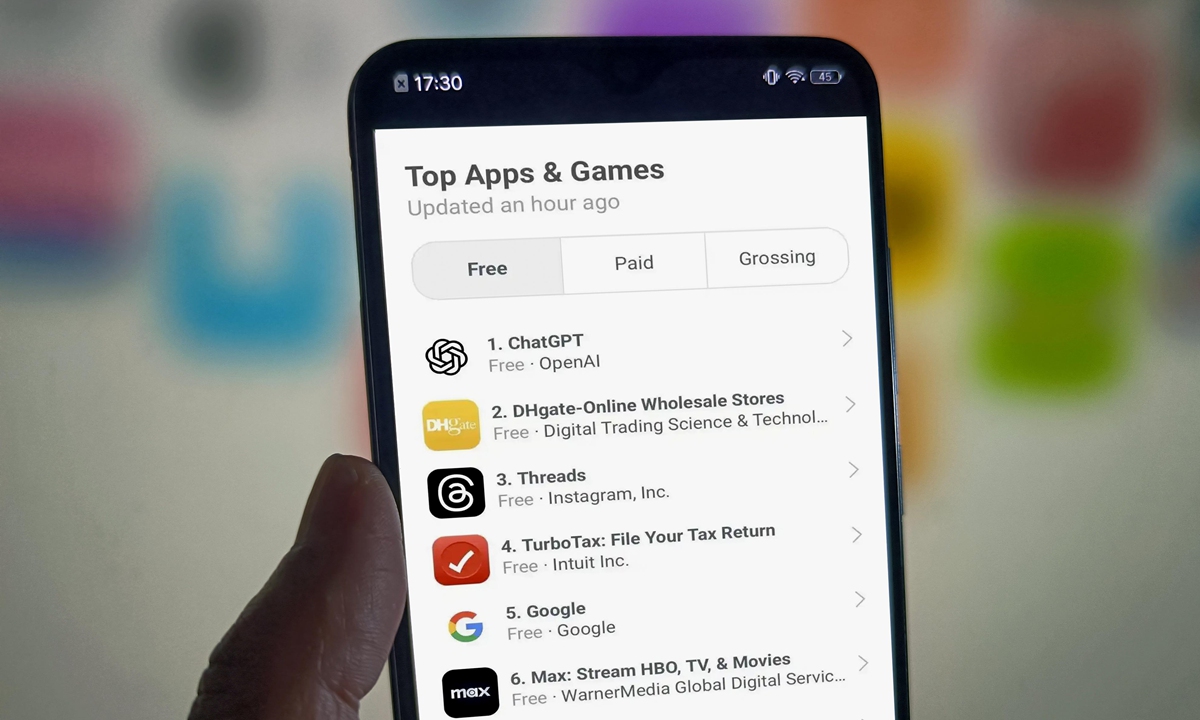
A smartphone displays the top free apps in the US Apple App Store on April 16, 2025. Photo: VCG
Despite the disruptive impact of US tariff policies on global trade, these measures have fueled a hoarding frenzy among Americans for ”Made in China" products, driving Chinese e-commerce apps to the top of the US Apple Store rankings.
As of press time on Wednesday, Chinese apps secured three of the top five positions in the US Apple Store's shopping category, with DHgate ranking first, Taobao second and Alibaba the fourth, while five of the top 10 apps come from China.
DHgate, a business-to-business (B2B) e-commerce platform, became the first Chinese app to lead the North American market, ranking second overall among free iPhone apps, trailing only ChatGPT, per the company's official WebChat account.
As a result, CTS International Logistics Corp, a comprehensive strategic partner of DHgate, saw its stock prices surge by over 10 percent to hit the daily limit on the Shanghai Stock Exchange on Wednesday.
Hot on DHgate's heels, Alibaba's e-commerce platform Taobao also saw an explosive growth in popularity and downloads. The Chinese online retailer briefly, on the same day, climbed to the second spot on the US app download chart, while also reaching the same position in countries like Canada and the UK, and hitting the first place in France, with downloads soaring compared to pre-tariff levels, cnr.cn reported on Wednesday.
DHgate's downloads surged 800 percent month-over-month in April, with over 3,000 US wholesalers snapping up orders daily on the platform, per a video posted on Tuesday by DHgate's WeChat account.
Founded in 2004, DHgate is a pioneer in China's cross-border e-commerce, serving as the country's first one-stop B2B export platform and ranking as the world's second-largest B2B marketplace for Chinese cross-border exports, according to the company.
Behind this download frenzy is a "Chinese factory whirlwind" sweeping social media platform TikTok, driving platforms like DHgate into the global spotlight.
As the US ramps up tariffs on Chinese goods, some TikTok users have taken to posting short videos explaining how global markets work, showing that many brand-name products originate in Chinese factories, and recommend buying directly from Chinese cross-border e-commerce sites to get "source goods" without middlemen inflating prices.
In response, numerous Chinese suppliers and manufacturers have jumped in, posting videos showcasing their products with links and contact details, drawing hordes of overseas consumers.
"I'm Alex, and I've been in procurement and wholesale for 10 years. If you want to purchase cheap goods from China, I have thousands of sources of goods here, whether you are purchasing dozens or hundreds, you can purchase them all I will help you pack shit and clear customs," said a Yiwu-based vendor promoting their products on TikTok.
The video garnered thousands of likes from TikTok users, saying that they were "very interested," asking how to "get in touch with you" and praising Chinese people all "standing on business."
Another Yiwu-based jewelry merchant shared in a TikTok video: "This is my jewelry warehousing in your city. No middleman, no commission — 20,000 styles starting at $1."
On major social platforms, "How to shop on Taobao" has become a viral topic. Many foreign users have left remarks like "found a gem" and "didn't realize that there were such great, affordable Chinese products," in social media posts and video comment sections.
According to Taobao, some stores in the apparel and 3C electronics sectors have seen traffic spikes of 1,000 percent, with customer service systems overwhelmed by English inquiries, per the cnr report.
Promotional campaigns by Chinese cross-border e-commerce platforms have also played a key role in boosting downloads. On April 10, DHgate launched its "Stock & Save Sale" for US consumers.
DHgate noted that the promotion was designed to address the uncertainty of US tariff policies and cater to strong hoarding demand among US consumers, and will leverage resource allocation, traffic support, and targeted marketing to help merchants reach more customers, according to the company's WeChat release.
RELATED ARTICLES