High-level meeting opens new chapter of China-Cambodia cooperation: chamber head
Chinese enterprises represent real opportunities for regional growth

Chen Yanhua, executive chairman of the Cambodia Chinese Chamber of Commerce Photo: Courtesy of Chen Yanhua
The high-level meeting between the leaders of China and Cambodia is of great significance in carrying forward the traditional friendship and opening a new chapter of cooperation between the two sides, said Chen Yanhua, executive chairman of the Cambodia Chinese Chamber of Commerce, noting that this not only demonstrates the deep mutual trust between the two governments but also injects strong momentum into the future of bilateral economic and trade relations.
During the meeting of the two countries' leaders, the two sides agreed on Thursday to build an all-weather China-Cambodia community with a shared future in the new era, and designated 2025 the China-Cambodia Year of Tourism, Xinhua News Agency reported.
Leaders of the two countries also witnessed the exchange of more than 30 bilateral cooperation documents, the report said.
As the head of the Chinese chamber in the Southeast Asian country, Chen said that he believes this will further promote practical cooperation in infrastructure, investment, trade, and other key areas. With continued support from the Chinese government and enterprises, more high-quality projects will take root in Cambodia, contributing to win-win development between the two countries, Chen noted.
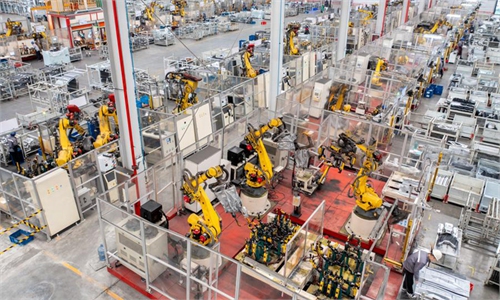
In recent years, Chinese enterprises have actively participated in the Cambodian market and helped establish relatively complete industrial chains in various sectors, including textile and garment manufacturing, agricultural product processing, construction materials, renewable energy, and electronics assembly, according to Chen.
"These developments have created a large number of jobs and significantly enhanced Cambodia's capacity to undertake industrial manufacturing and absorb new technologies," said Chen.
Latest official data underscored the growing momentum of Chinese business activities in the Southeast Asian country. In 2024, China continued to be the largest source of foreign investment in Cambodia, with investments exceeding $3.4 billion, accounting for around 49.8 percent of the total, the People's Daily reported.
Moreover, the number of Chinese enterprises registered in Cambodia in 2024 reached 2,921, marking a year-on-year increase of 20.65 percent, the report said, citing data from Cambodia's Ministry of Commerce.
"For many Cambodians, the arrival of Chinese enterprises represents real opportunities for growth. They have witnessed improvements in infrastructure, increased employment, and visible transformations in both urban and rural areas," Chen said, adding that many young people in Cambodia have received technical training and career opportunities through Chinese companies, which in turn strengthens Cambodia's endogenous momentum for sustainable development.
The economic relationship between China and Cambodia is highly complementary. China contributes strong capital, advanced technology, and a robust industrial system, while Cambodia offers a strategic geographic location, a young labor force, and a favorable investment environment, Chen said, noting that these complementary advantages enable the two countries to collaborate deeply in areas such as agriculture, manufacturing, infrastructure and green energy, among others.
One of the key complementary advantages is Cambodia's active participation in the Belt and Road Initiative (BRI), which has provided the Southeast Asian country with direct benefits for its high-quality development. Flagship projects under the BRI, including the Sihanoukville Special Economic Zone, the Phnom Penh-Sihanoukville Expressway, and Siem Reap Angkor International Airport, which is now Cambodia's largest airport, have all delivered tangible benefits to Cambodia, according to the Chinese Embassy in Cambodia.
Under the BRI, Chinese-supported infrastructure projects, such as roads, ports, and power systems, have significantly improved Cambodia's logistics efficiency and regional connectivity, Chen said, as a direct witness to the regional development.
"This development lays a solid foundation for attracting more investment and accelerating industrialization. In this way, the joint initiative is playing an essential role in helping Cambodia transition from growth in quantity to development in quality," said the chamber head.
RELATED ARTICLES