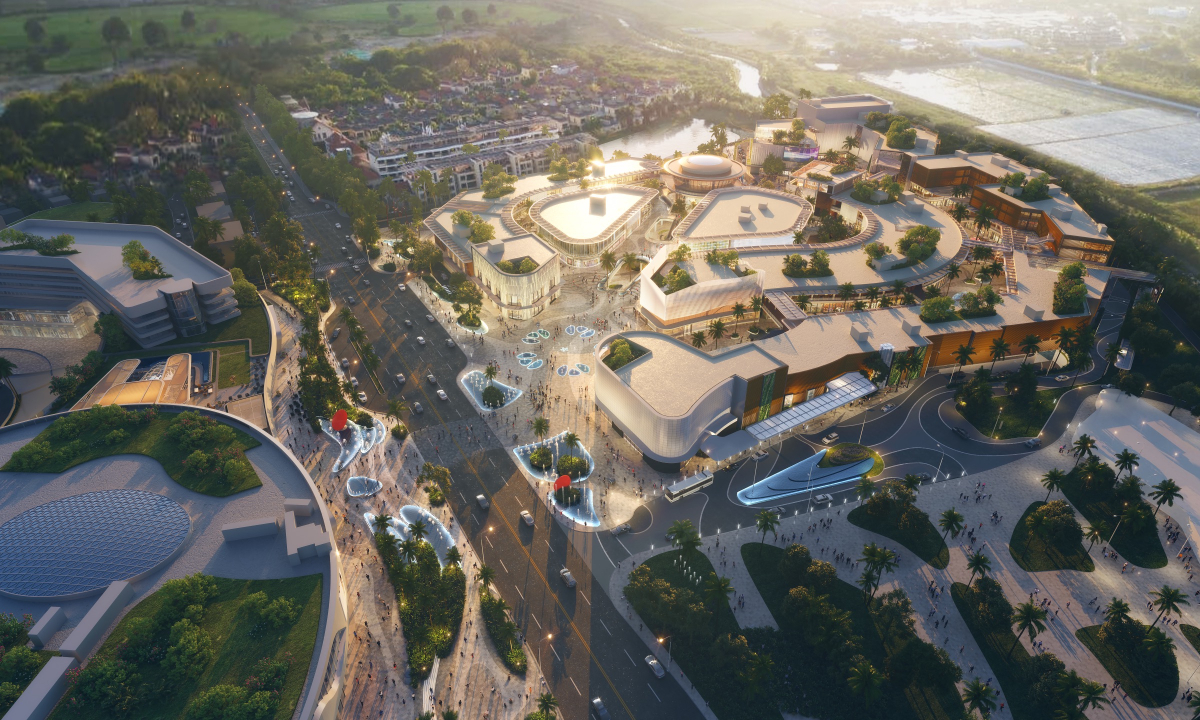
The concept picture of constructing DFS Yalong Bay Project, a luxury retail and entertainment complex in Sanya, South China's Hainan Province Photo: Courtesy of DFS
Young people were found flocking to the Irish whiskey booth, enthusiastically capturing photos and sharing them on social media, before taking a sampling. "This whiskey has a rich, mellow taste with floral and fruity aromas, complemented by unique Irish spices. The offline tasting and the local Irish explanation made for a fantastic experience," said one visitor at the exposition.
"Our tastings have been a runaway hit these past two days," an Irish whiskey brand ambassador told to the Global Times at 5th China International Consumer Products Expo held in South China's Hainan Province, gesturing to crowds sipping whiskey-based cocktails. "Nothing beats seeing guests savor Ireland's flavors while discovering the craft behind them - it's culture you can taste!"
Yuan Wei, head of the Ireland whiskey booth and CEO of Shanghai Fengxun International Trade Co, told the Global Times that their whiskey sells even better in China than in the European market, as Chinese consumers are more willing to spend on premium products of high quality and memorable experience.
"Our Irish whiskey, celebrated for its craftsmanship, has seen strong sales growth in recent years. We've also launched two boutique stores in Shanghai and Suzhou to showcase our brands, which is warmly received," Yuan said.
The Irish whiskey is just one example. In China, more and more mid-to-high-end products such as clothing, cosmetics, and cultural tourism projects are focusing on quality and the overall experience.
Over 1,700 companies from 71 countries and regions are showcasing more than 4,100 brands at the expo which offers a major platform for exchanges between Chinese and international exhibitors.
China's premium consumption market reached 1.63 trillion yuan ($226 billion) in 2024. Despite a 2-percent decline from 2023, the sector continues to be a significant component of domestic demand, according to the Hurun Chinese Luxury Consumer Survey & Hurun Best of the Best Awards 2025 in March this year.
China's high-net-worth individuals are shifting from traditional luxury goods toward experience-driven and service-oriented spending, with emotional fulfilment becoming a key growth driver. While the traditional luxury sector faces challenges, premium service value such as hotels and tourism grew 17 percent year-on-year. Cultural tourism, high-end hotels, private jets, and luxury yachts are emerging as new growth areas, according to Hurun report.
Emerging trends
Nancy Liu, President of DFS China, told the Global Times that Chinese consumers are increasingly experience-driven, seeking emotional value, exclusivity, personalization, and cultural relevance beyond traditional luxury. As a global leader in luxury travel retail and part of the LVMH Group, DFS is responding by blending retail and entertainment through "retailtainment."
Liu said the upcoming DFS Yalong Bay Project in Sanya will showcase this approach, featuring 128,000 square meters of space with 700 brands, 45 high-end dining concepts, the world's largest DFS Beauty World, and integrated digital innovations such as AI-powered personalization and AR/VR virtual try-ons. "It is the single largest project in DFS' 60-year history, and a testament to our belief to the bright future of Hainan."
Beyond retail, Liu said DFS is incorporating local Hainan cultural elements to create more authentic consumer journeys. "Our goal is to bring global luxury closer to home while empowering Chinese consumers to define future high-end lifestyles," she said.
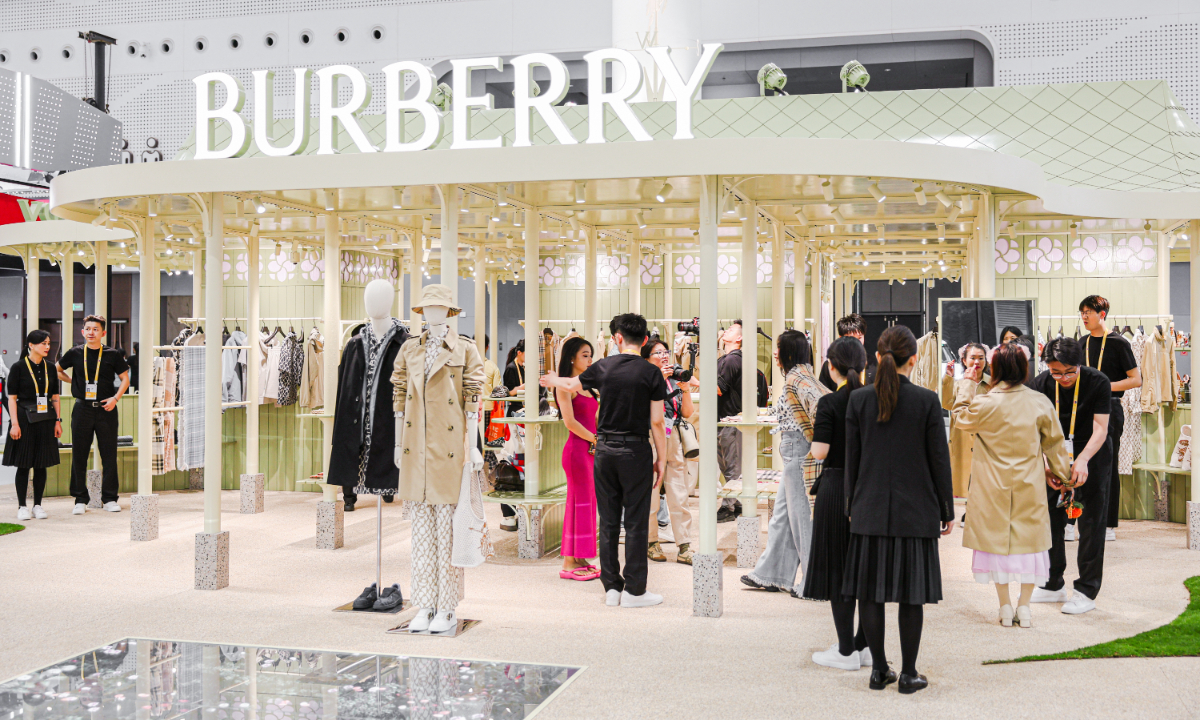
Visitors select clothing at Burberry's booth at the 2025 China International Consumer Products Expo in South China's Hainan Province, April 13, 2025. Photo: Courtesy of Burberry
"Burberry's booth, inspired by London street corners and park pavilions, featured a light green exterior. Inside, we could watch a promotional film set against London's changing weather, blending romance and everyday moments for an immersive experience," a visitor told the Global Times, "I'm paying for the atmosphere, not just the products. The design matches my taste, which is why I felt compelled to shop," she said.
China's growth is being fueled by increasingly diverse consumer groups, with new segments emerging and shopping channels expanding, a representative of Burberry China, told the Global Times. "To meet evolving market demand, Burberry has introduced localized product and services specially tailored to Chinese consumers," the representative said, adding that the brand is also strengthening emotional connections through integrated online and offline experiences.
Jesus Abia, Managing Director of L'Oréal Travel Retail Asia Pacific, told the Global Times in a statement that "travelers seek more than just products, they want personalized, immersive and memorable moments to enhance their journey. We are proud to lead this transformation, creating unforgettable experiences that resonate with travellers on a deeper level, to meet the needs of the modern consumer."
Huge opportunities
China remains the world's largest luxury market, Liu told the Global Times, "We see strong, long-term fundamentals underpinning this growth. One of the most significant drivers is the rapidly expanding, digitally native middle class, which is reshaping consumer behavior."
With the 90s and 00s becoming the dominant consumer groups, the proportion of highly educated and globally-minded individuals is steadily increasing. These young consumers are not only driving China's industrial upgrade and innovation, but are also leading the development of high-value industries, with the rise of sectors like robotics showcasing their creativity and unique taste, Tian Yun, a veteran economist, told the Global Times on Thursday.
As a result, consumers are becoming more, shifting their focus from brand logos to experiences and quality, he said.
"China's market is no longer only about physical products; it is increasingly about selling concepts and values. To succeed in China, the world's second-largest consumer market, international brands are now adjusting their marketing strategies and gaining a deeper understanding of local consumer psychology and cultural context," Tian said.
Zhang Yi, CEO of the iiMedia Research Institute, told the Global Times that China's growing openness toward foreign investment, combined with policies like the Hainan Free Trade Port, is creating greater opportunities for global brands to enter the Chinese market. As a result, China has become a key testing ground for international brand strategies. Zhang noted that brands that truly understand the evolving needs of Chinese consumers and swiftly localize their offerings will be best positioned to succeed.
"Contrary to foreign reports on a slowdown, China's premium market continues to grow, with consumers becoming more discerning. Regardless of external pressures, China's position as the world's second-largest consumer market remains unchanged," said Tian.
RELATED ARTICLES