Photo: VCG
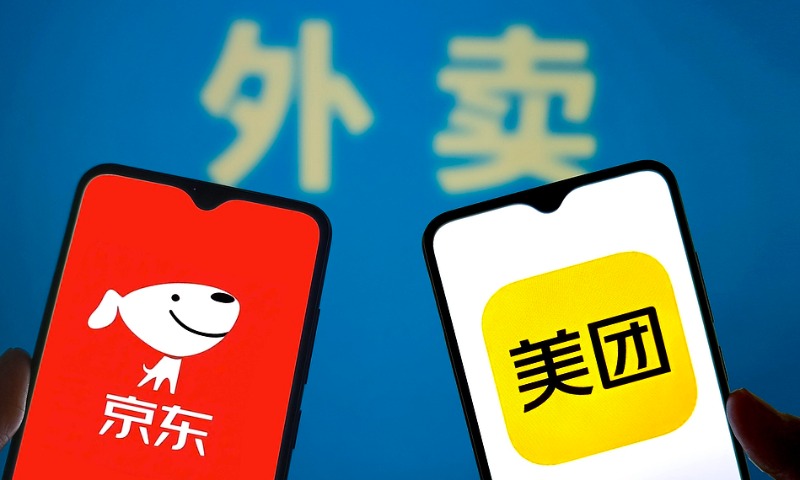
Share prices of Chinese e-commerce giants JD and Meituan plunged on the Hong Kong Stock Exchange on Tuesday, with JD stocks down by 6.32 percent and Meituan shares falling 4.62 percent. This came as the two firms have engaged in an escalating competition over food delivery services that has gained widespread attention on Chinese social media.
An industry analyst attributed the hefty share price drops to market concerns over the two companies' escalating competition battle.
The rivalry intensified when JD founder Liu Qiangdong was seen making food deliveries in Beijing on Monday, which sparked online discussions about the nature of the widely publicized move, amid widespread public attention on the competition between JD and Meituan, according to multiple posts seen on Xiaohongshu. JD has confirmed Liu Qiangdong's move, according to the National Business Daily.
On Monday, JD issued an open letter to all food delivery riders, addressing concerns that some platforms forcing riders into an "exclusive choice" policy, preventing them from accepting JD orders. The company announced measures to support riders' freedom in choosing orders and ensuring their income, according to the letter posted on JD's WeChat account.
Also on Monday, Meituan issued a statement on its WeChat account, denying allegations about its rider policies, calling the related content fabricated. The company clarified that it is recruiting quality riders across the industry and will not restrict any rider's entry or exit, nor will it permanently ban any rider, according to the statement.
In February, JD officially entered the food delivery market and promised full-time riders' benefits like social security and housing funds. After JD's move, Meituan also announced that it would pay social security for full-time and stable part-time delivery riders starting in the second quarter of 2025, the Securities Times reported on February 19.
Following the launch of JD Food Delivery, the company reported that its daily order volume surpassed 5 million as of April 15, according to a post on its official WeChat account, the company also rolled out a "self-operated instant delivery" service, which now covers over 100,000 JD-branded stores nationwide, offering delivery within 30 minutes across various categories, including groceries, electronics, and pharmaceuticals, aiming to deliver a superior user experience.
Meanwhile, Meituan reported that its non-food instant retail orders had surpassed 18 million and launched a new independent brand "Meituan Flash Purchase," enhancing its service of "30-minute delivery of anything," Wang Puzhong, CEO of the core local commerce division at Meituan, wrote in a post on Zhihu.com on April 12.
Commenting on the stock price declines of the two firms on Tuesday, Liu Dingding, a veteran tech industry analyst, attributed the volatility to market concerns over unproductive "disputes" between the two platforms, among other factors.
While competition is conducive to driving industry-wide quality upgrades, engaging in zero-sum competition is bad for the two companies and the industry, Liu Dingding told the Global Times on Tuesday, adding that there is plenty of room for the two companies to coexist, and jointly expand the delivery market.
By 2030, the scale of China's instant retail market is projected to exceed 2 trillion yuan. Industry insiders believe that amid the competition in this trillion-yuan market, it is essential to recognize the new opportunities in the consumer market, while also being cautious of the hidden risks behind high growth, promoting the industry to shift from "rapid expansion" to "refined operations," said a report on xinhuanet.com on Monday.
RELATED ARTICLES