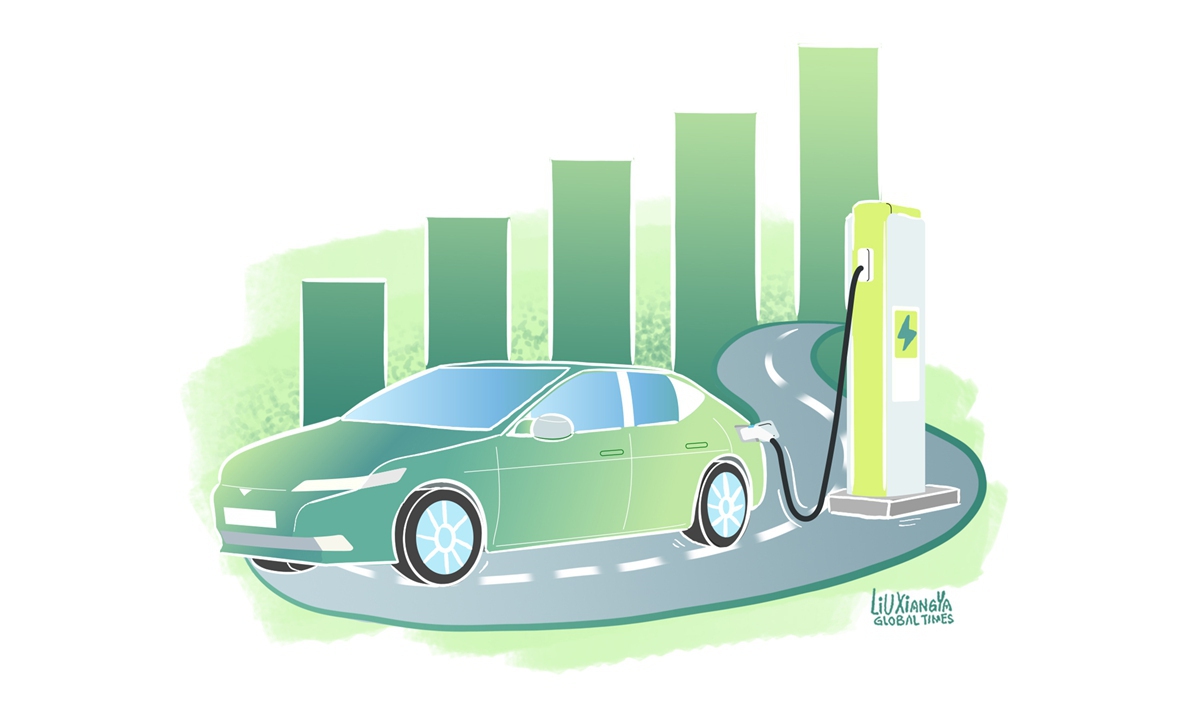
llustration: Liu Xiangya/GT
The innovation achievements of China's new-energy vehicle (NEV) industry in key technology areas are providing more diversified technological pathways and supply chain support for the global industry. The continuous release of this innovation potential further consolidates China's pivotal role in the global automotive industry chain, rendering any attempts to exclude China's EV technology from global supply chains futile.Chinese battery giant CATL on Monday unveiled three new upcoming products - the second-generation version of its fast-charging Shenxing battery, a new brand for its sodium-ion batteries, Naxtra, and a dual-power battery system.
In a post on its WeChat account, the company said its second-generation Shenxing battery could add 520 kilometers of driving range from just five minutes of charging time, which has attracted widespread attention within the industry.
This accomplishment not only addresses the long-standing "range anxiety" challenge for electric vehicle (EV) users but also demonstrates China's technological prowess in pushing the boundaries of rapid-charging technology.
As a key player in the EV industrial chain, CATL's technological breakthroughs exemplify the innovative spirit of China's NEV sector. These advancements reflect a broader trend: Chinese innovation is increasingly marked by agile technical adaptability and a forward-looking vision, consistently setting global industry trends and solidifying its position as an indispensable pillar in the global NEV ecosystem.
While some technological innovations may take years to be integrated into new vehicle models, their influence on advancing the NEV sector is already apparent. By consistently pushing the boundaries of performance and reducing costs, these innovations are making EVs increasingly competitive against gasoline-powered models in terms of price and performance.
In the context of the global auto industry's shift toward electrification and smarter models, China's innovative capabilities highlight its strategic significance, characterized by both technical depth and substantial industrial influence. This influence extends well beyond domestic markets, where demand for high-performance, efficient and sustainable mobility is surging, to provide critical technological support for global NEV companies.
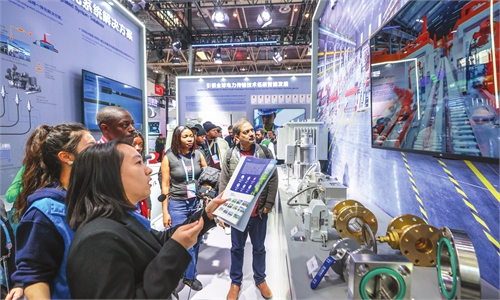
China's role in the global auto industry has evolved dramatically. In the past, multinational automakers viewed China primarily as a market for sales and cost-efficient manufacturing, but today, China's deep expertise in batteries, intelligent driving systems and supply chain integration makes it an indispensable part of technological transformation in the global auto industry. The burgeoning partnerships between international automakers and Chinese suppliers exemplify this trend, showcasing the increasing integration of Chinese technologies into global supply chains.
For instance, in January, Chinese NEV maker XPENG and German automobile giant Volkswagen announced a strategic collaboration on a superfast charging network in China. In March, German carmaker BMW and Chinese e-commerce giant Alibaba announced an expanded strategic partnership to integrate artificial intelligence into BMW's next-generation vehicles.
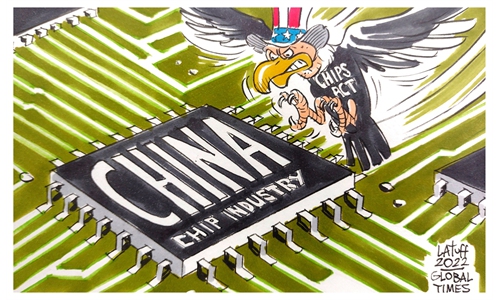
In this context, attempts to decouple or marginalize China from the global auto supply chain are not only impractical but counterproductive. Given China's position in the global auto supply chain and value chain and its unparalleled capacity for rapid technological upgrades, its development is unstoppable. Any effort to exclude Chinese suppliers would result in higher costs, slower innovation and diminished competitiveness for global automakers. Moreover, China's vast domestic market serves as a unique testing ground for new technologies, enabling faster refinement and scalability.
Therefore, what is important now is that the US and the West need to adopt a correct attitude toward Chinese technology and development, fostering cooperation with an open mind to advance the sustainable development of the global auto industry in a collaborative way.
In a multipolar world, industrial development should not be a zero-sum game but a trend of win-win co-evolution. As the world moves toward greener, smarter mobility, embracing and leveraging China's innovations and expertise will be crucial in unlocking the full potential of this transformation.
RELATED ARTICLES